Công ty Hải Đức Bột với hơn 10 năm kinh nghiệm vận chuyển khí, cung cấp hệ thống‑thiết bị‑quạt gió và nhận dự án tổng thầu bột cả nước
Iron powder, a vital material in numerous industrial applications, demands efficient and reliable conveying methods to ensure seamless production workflows. The selection of a conveying method hinges on factors such as the powder's characteristics, required throughput, and operational environment. This article examines several common methods for iron powder conveying, detailing their advantages and typical applications.
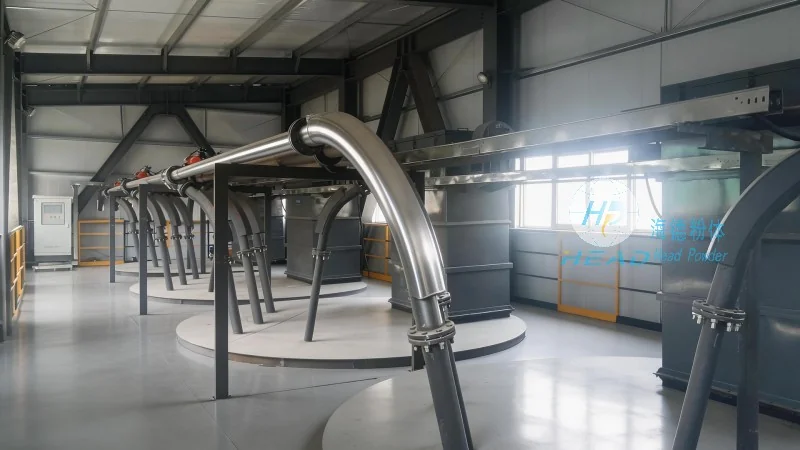
1. Mechanical Conveying Systems
Belt conveyors represent a widely adopted mechanical method for iron powder transport, suitable for short to medium distances. These systems feature a continuous loop of material moving over rollers or pulleys, efficiently carrying bulk iron powder from the source to the destination. Ideal for handling large volumes with minimal maintenance, belt conveyors can adjust speed and inclination to control flow rates, ensuring consistent delivery. They are versatile for both dry and slightly moist iron powders, making them adaptable to diverse production settings.
Screw conveyors, or auger conveyors, utilize a rotating screw to propel iron powder forward. These systems excel in vertical or inclined transport, enabling movement from lower to higher levels without additional equipment. Particularly effective for fine iron powders prone to clogging, screw conveyors can be customized with adjustable pitch and speed to match the powder's properties. However, they may experience wear from abrasive iron powders and require regular maintenance to sustain performance.
2. Gravity Conveying
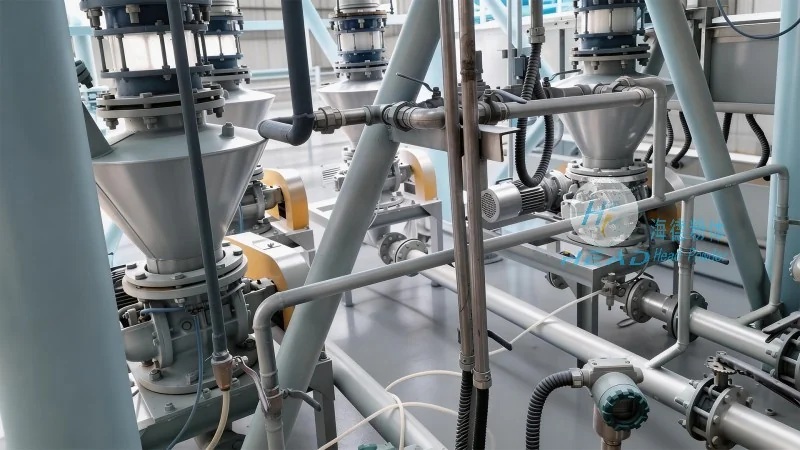
Gravity conveying leverages the natural force of gravity to move iron powder from elevated to lower positions, offering a simple and cost-effective solution. Iron powder is typically stored in a hopper or bin at a higher level and flows down through a chute or pipe due to gravity. This method is optimal for short vertical distances, such as transferring from a storage silo to a processing unit. It is particularly effective for free-flowing iron powders but is limited by vertical drop distance and chute angle, as excessive slopes can cause airborne particles or blockages. Proper chute design—smooth interior and optimal slope—is crucial for maintaining consistent flow.
3. Pneumatic Conveying
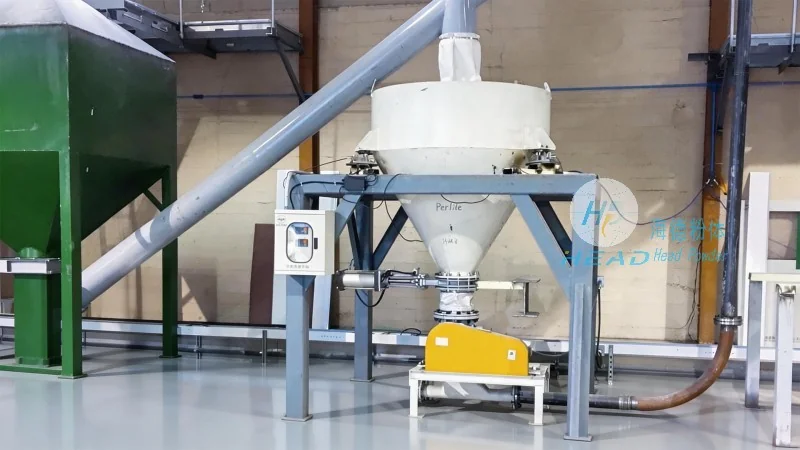
Pneumatic conveying employs air or gases to transport iron powder within a closed system, offering high versatility across various powder types. Two primary types exist: pressure and vacuum. Pressure systems use compressed air to push the powder through pipelines, suitable for long-distance transport and high volumes. They are effective for distances exceeding several hundred meters but require robust air compression and may experience pressure drops over long runs. Vacuum systems, conversely, draw powder into pipelines using a vacuum, ideal for short to medium distances and cleaning tasks. They are gentler on powder, reducing degradation or agglomeration risks.
Both pressure and vacuum systems can be tailored with pipeline diameter, length, and cyclone separators/filters to optimize flow and prevent contamination. Pneumatic conveying excels in closed environments, such as food or pharmaceutical industries, where dust control is critical.
4. Combination Conveying Systems
Complex industrial operations often require integrated systems combining multiple methods. For example, a belt conveyor may transport iron powder to a hopper, followed by a screw conveyor for vertical movement. Alternatively, pneumatic systems can work with mechanical conveyors for varied transport needs. These combinations enhance flexibility and adapt to changing production demands, particularly in large-scale operations with diverse requirements. However, their design and integration demand careful planning to ensure smooth operation and minimize downtime.
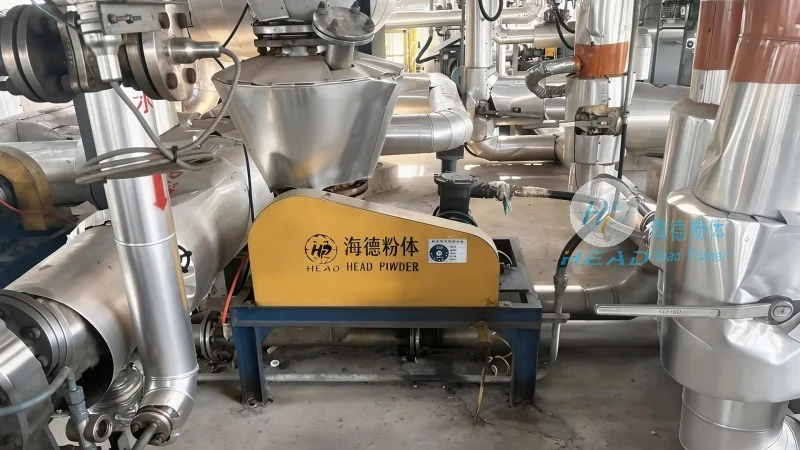
5. Factors Influencing Method Selection
The choice of iron powder conveying method is shaped by several key factors. First, the powder's physical properties—particle size, density, and flowability—dictate suitability. Fine, moist powders may need pneumatic or specialized mechanical systems to avoid clogging, while coarse powders suit gravity or mechanical systems. Second, throughput and distance: high-volume, long-distance transport favors pneumatic or belt conveyors, whereas low-volume, short-distance tasks use gravity or screw conveyors. Third, operational environment: dust control and safety considerations often lead to enclosed systems. Finally, cost and maintenance: mechanical systems have lower initial costs but higher long-term maintenance, while pneumatic systems may have higher upfront costs but lower upkeep.
Conclusion
Efficient iron powder conveying is essential for industrial productivity, and selecting the right method is critical for reliability. Mechanical systems like belt and screw conveyors provide robust, cost-effective bulk handling. Gravity conveying offers simple, energy-efficient vertical transport. Pneumatic conveying, with its adaptability, excels in long-distance or closed-system applications. Combination systems tailor to complex needs. Ultimately, the method depends on powder properties, throughput, and environment. Shandong HeadPowder Engineering Co., Ltd., a leading iron powder handling solutions provider, offers customized conveying systems to meet client-specific requirements, ensuring efficient and reliable iron powder transport across various industrial applications.

 Công ty TNHH Kỹ thuật Công trình Bột Hải Đức Sơn Đông
 156-6277-7102(Quản lý Trương)
  0531-83386006
  Quận Chương Khâu, Thành phố Tế Nam, Tỉnh Sơn Đông, Trung Quốc
Điện thoại
WeChatTư vấn
Lên đầu