Công ty Hải Đức Bột với hơn 10 năm kinh nghiệm vận chuyển khí, cung cấp hệ thống‑thiết bị‑quạt gió và nhận dự án tổng thầu bột cả nước
Cement dry powder conveying is a critical process in various industrial applications, from construction sites to manufacturing facilities. The efficient and safe transportation of cement powder directly impacts production efficiency, material handling costs, and overall operational safety. As a result, selecting the appropriate conveying method is essential. This article explores the primary methods used for cement dry powder conveying, detailing their mechanisms, advantages, and typical applications.
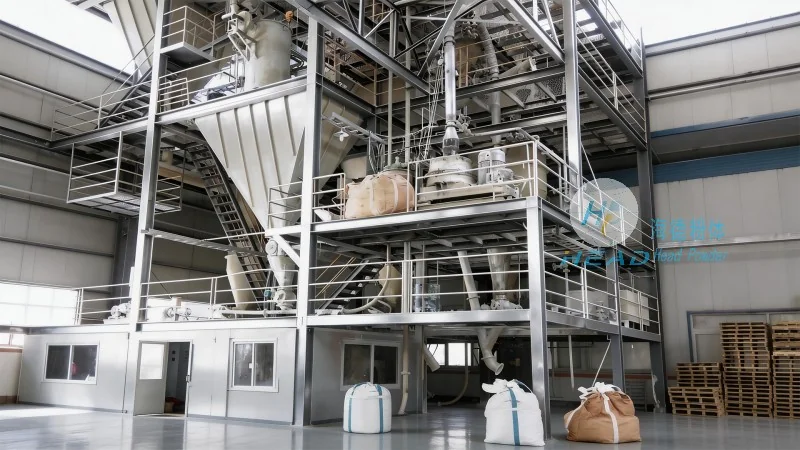
1. Pneumatic Conveying Systems
Pneumatic conveying systems are among the most common solutions for transporting cement dry powder over medium to long distances. These systems utilize compressed air or other gases to move the material through a network of pipes. There are two main types: dilute-phase and dense-phase pneumatic conveying. Dilute-phase systems are suitable for high-volume, low-density materials like cement, as they can handle large quantities with minimal pressure. Dense-phase systems, on the other hand, operate at higher pressures and are ideal for transporting sensitive or abrasive materials, ensuring minimal product degradation. The key components of a pneumatic conveying system include a hopper for material storage, a feeder to control the flow rate, a compressor to generate the necessary air pressure, and a receiver to collect the conveyed material. This method offers advantages such as continuous operation, low labor requirements, and the ability to transport materials over long distances without the need for intermediate storage. However, it requires proper maintenance of the air filtration system to prevent dust accumulation and ensure air quality compliance.
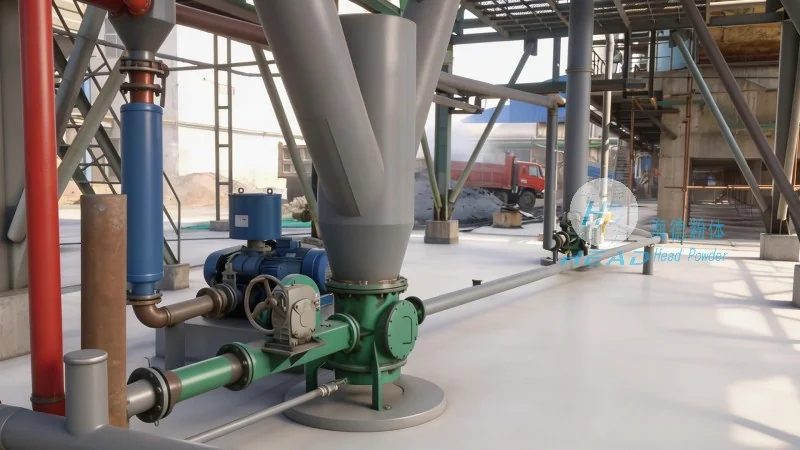
2. Screw Conveyors
Screw conveyors, also known as auger conveyors, are mechanical devices that use a rotating screw to move cement dry powder. These systems are particularly effective for short to medium-distance conveying, typically up to 30 meters, and are commonly used in batching plants, storage silos, and processing facilities. The screw, which is enclosed in a trough or tube, rotates and pushes the material forward. The speed and pitch of the screw can be adjusted to control the flow rate and prevent material bridging or blockages. Screw conveyors are advantageous for their simplicity, low maintenance, and ability to handle a wide range of materials, including those with varying particle sizes and moisture content. They are also suitable for vertical lifting applications, making them versatile in different plant layouts. However, they have limitations in terms of conveying distance and material capacity compared to pneumatic systems. For cement dry powder, screw conveyors are often used in conjunction with other equipment, such as hoppers and storage tanks, to facilitate the material flow from storage to processing areas.
3. Air-Driven Conveying with Baghouse Filters
For applications requiring high efficiency and dust control, air-driven conveying systems equipped with baghouse filters are employed. These systems combine the benefits of pneumatic conveying with advanced filtration technology. The material is transported through a sealed pipe network, and the air used to convey the powder is filtered through a baghouse system, which captures fine dust particles and returns clean air to the system. This approach ensures that the conveying process is both efficient and environmentally compliant. The baghouse filters are designed to handle high dust loads and can be cleaned automatically or manually, maintaining optimal performance. Air-driven conveying with baghouse filters is particularly suitable for industries where dust emissions are strictly regulated, such as cement manufacturing and construction material processing. The system provides a closed-loop operation, minimizing the risk of dust dispersion and improving workplace safety. Additionally, it allows for the transportation of cement dry powder over longer distances while maintaining low pressure and reducing energy consumption compared to traditional dense-phase systems.
4. Other Conveying Methods
Beyond the primary methods mentioned above, other techniques are sometimes used for cement dry powder conveying. For example, bucket elevators are employed for vertical lifting of large quantities of material, while belt conveyors are suitable for horizontal or slight incline transport over longer distances. However, these methods are less common for cement due to their limitations in handling fine powders and potential for material degradation. In some cases, a combination of multiple systems is used to optimize the conveying process, such as using a screw conveyor for initial transport and a pneumatic system for final delivery to the processing unit. The choice of method depends on factors like the distance to be covered, the volume of material, the required speed, and the specific characteristics of the cement powder (e.g., particle size, moisture content, and abrasiveness).
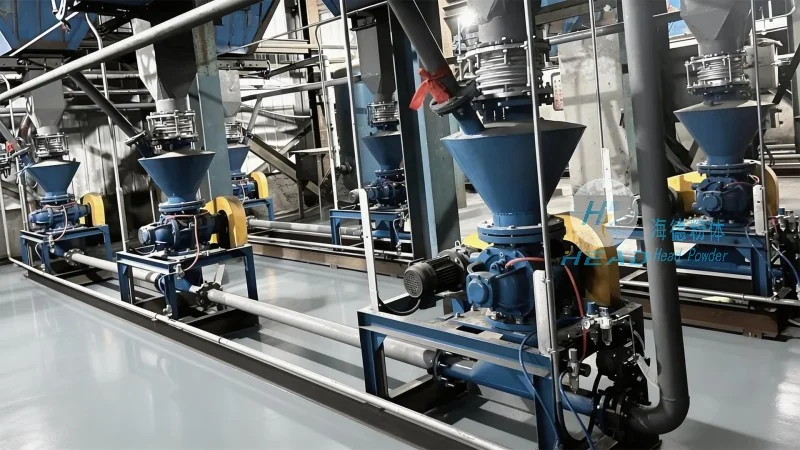
Company Overview: Shandong HeadPowder Engineering Co., Ltd.
Shandong HeadPowder Engineering Co., Ltd., operating under the brand name headpowder, is a leading provider of specialized equipment and solutions for cement dry powder conveying. With a focus on innovation and quality, the company designs and manufactures a range of conveying systems tailored to meet the diverse needs of the construction and manufacturing industries. HeadPowder's products include pneumatic conveying systems, screw conveyors, and other material handling equipment, all engineered to ensure efficient, safe, and reliable transport of cement powder. The company's facilities are located in Shandong, China, where it leverages advanced manufacturing technologies and a team of experienced engineers to deliver high-performance solutions. By adhering to strict quality standards and providing comprehensive after-sales support, HeadPowder has established itself as a trusted partner for businesses seeking reliable cement dry powder conveying solutions. Whether for new installations or system upgrades, the company's expertise ensures that clients receive equipment that meets their specific operational requirements and enhances overall productivity.

 Công ty TNHH Kỹ thuật Công trình Bột Hải Đức Sơn Đông
 156-6277-7102(Quản lý Trương)
  0531-83386006
  Quận Chương Khâu, Thành phố Tế Nam, Tỉnh Sơn Đông, Trung Quốc
Điện thoại
WeChatTư vấn
Lên đầu