Công ty Hải Đức Bột với hơn 10 năm kinh nghiệm vận chuyển khí, cung cấp hệ thống‑thiết bị‑quạt gió và nhận dự án tổng thầu bột cả nước
When it comes to the production and processing of lithium-ion battery materials, efficient material handling is a critical factor that directly impacts production efficiency, safety, and overall cost-effectiveness. The choice of material handling method for lithium-ion battery materials is not a simple decision; it involves weighing various factors such as material properties, production scale, and operational environment. In this article, we will explore several common lithium-ion battery material handling methods, analyzing their advantages and disadvantages to help manufacturers make informed decisions. As a leading provider of specialized material handling solutions, Shandong HeadPowder Engineering Co., Ltd. (headpowder) understands the importance of selecting the right equipment for lithium-ion battery material processing.
Introduction to Lithium-Ion Battery Material Handling
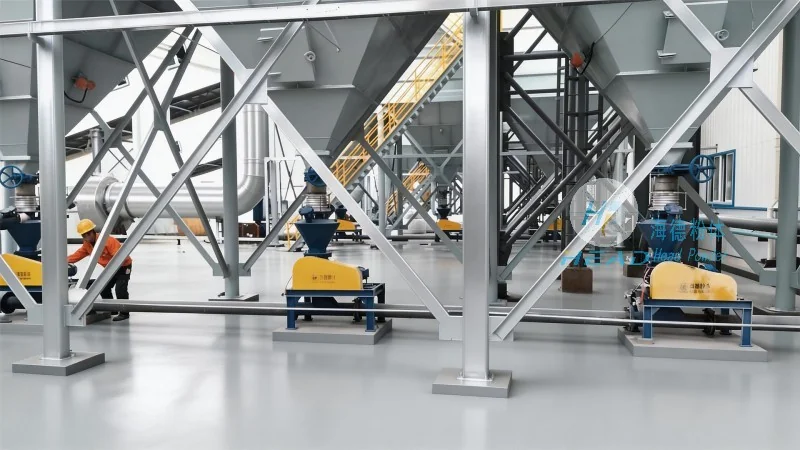
Lithium-ion battery materials, including active materials like lithium cobalt oxide (LiCoO₂), lithium iron phosphate (LiFePO₄), and ternary materials (NMC, NCA), require specialized handling due to their chemical properties and physical characteristics. These materials are often fine powders or granules, which can be dusty, reactive, or sensitive to moisture and contamination. Therefore, selecting the right material handling system is essential to ensure product quality, worker safety, and compliance with industry standards.
1. Screw Conveyor (Auger Conveyor)
Screw conveyors are widely used in the lithium-ion battery material processing industry for transporting bulk materials over short to medium distances. This type of conveyor consists of a rotating screw (helix) inside a cylindrical tube, which moves material forward through the rotation. The screw conveyor is particularly suitable for handling free-flowing powders and granules with low to moderate moisture content. One of the key advantages of screw conveyors is their ability to operate in a closed system, which helps contain dust and prevent material contamination. Additionally, screw conveyors are relatively simple in structure, easy to install, and can be integrated into existing production lines with minimal modifications.
However, screw conveyors have some limitations when handling lithium-ion battery materials. For instance, they may not be suitable for materials with high moisture content or those that are prone to caking, as the screw can cause blockages. Moreover, the friction between the screw and the material can generate heat, which may affect the material's properties, especially for temperature-sensitive materials like some active battery components. Another drawback is that screw conveyors are generally less effective for vertical or steep incline transport compared to other methods, and they may require more maintenance due to the moving parts.
2. Vibrating Conveyor
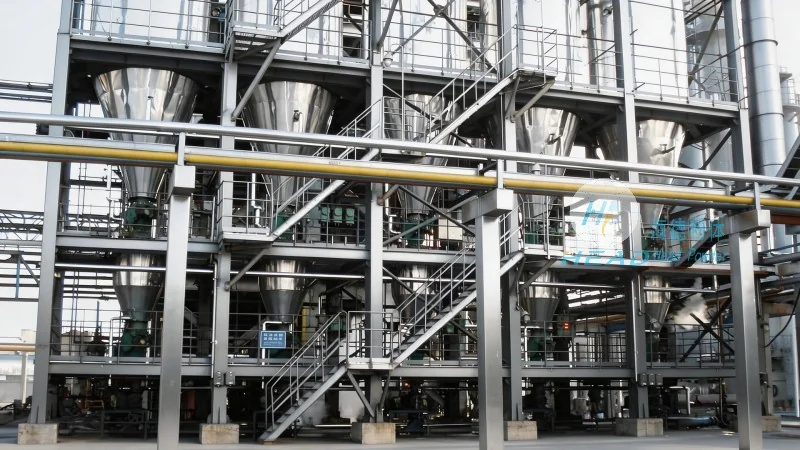
Vibrating conveyors use vibration to move materials along a trough. The system typically consists of a conveyor bed that is vibrated at a specific frequency and amplitude, causing the material to move forward. Vibrating conveyors are often preferred for handling materials that are sticky, have high moisture content, or are prone to caking, as the vibration helps break up clumps and prevent blockages. This makes them ideal for processing materials like lithium iron phosphate or other powders that may agglomerate during handling.
The advantages of vibrating conveyors include their ability to handle a wide range of material types, including those with high moisture content or low flowability. They are also relatively low in maintenance compared to screw conveyors, as they have fewer moving parts. Vibrating conveyors can also be designed for both horizontal and inclined transport, making them versatile for various production layouts.
Despite these benefits, vibrating conveyors have some disadvantages. The vibration can generate noise, which may require noise control measures in the production environment. Additionally, the power consumption of vibrating conveyors is generally higher than that of screw conveyors. Another limitation is that they may not be suitable for materials that are extremely fine or dust-sensitive, as the vibration can cause excessive dust generation and potential health hazards. Furthermore, the design and maintenance of vibrating conveyors require specialized knowledge to ensure optimal performance and prevent equipment failure.
3. Pneumatic Conveying System
Pneumatic conveying systems use air or other gases to transport materials through a pipeline. This method is particularly effective for handling fine powders and granules that are difficult to transport with mechanical systems. Pneumatic conveyors can be categorized into two main types: dilute-phase and dense-phase systems. Dilute-phase systems use high-velocity air to move material in a suspended state, while dense-phase systems use lower air velocity and higher material concentration to transport material in a plug flow.
One of the primary advantages of pneumatic conveying is its ability to transport materials over long distances and even vertically, with minimal material degradation. This makes it suitable for large-scale production lines where materials need to be moved between different processing stages. Pneumatic systems also offer a high degree of containment, as the material is enclosed within the pipeline, reducing dust exposure and environmental impact. Additionally, they can be designed for both positive and negative pressure operation, providing flexibility in material handling applications.
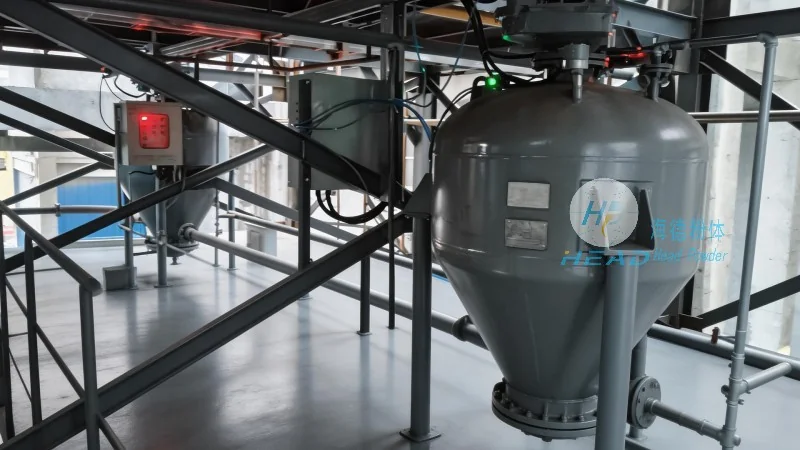
However, pneumatic conveying systems have significant drawbacks that must be considered. The most notable is the high energy consumption, as they require powerful air compressors and large volumes of air. This can increase operational costs, especially for large-scale operations. Another disadvantage is the potential for material degradation due to friction and impact within the pipeline, which may affect the quality of the lithium-ion battery materials. Furthermore, pneumatic systems are more complex to install and maintain compared to mechanical conveyors, as they involve air handling equipment and pipeline networks. Additionally, they may not be suitable for materials that are highly abrasive or corrosive, as this can lead to equipment wear and increased maintenance costs.
4. Bucket Elevator
Bucket elevators are vertical or inclined conveyors that use a series of buckets attached to a chain or belt to transport materials. The buckets are filled with material at the bottom and then lifted to the top, where the material is discharged. Bucket elevators are commonly used for vertical transport of bulk materials, including lithium-ion battery powders and granules.
The main advantage of bucket elevators is their high capacity and ability to transport materials vertically over long distances with minimal space requirements. They are also relatively simple in operation and can be integrated into existing production lines with ease. Bucket elevators are particularly effective for handling materials that are prone to caking or require vertical transport, as the buckets can lift material without causing blockages.
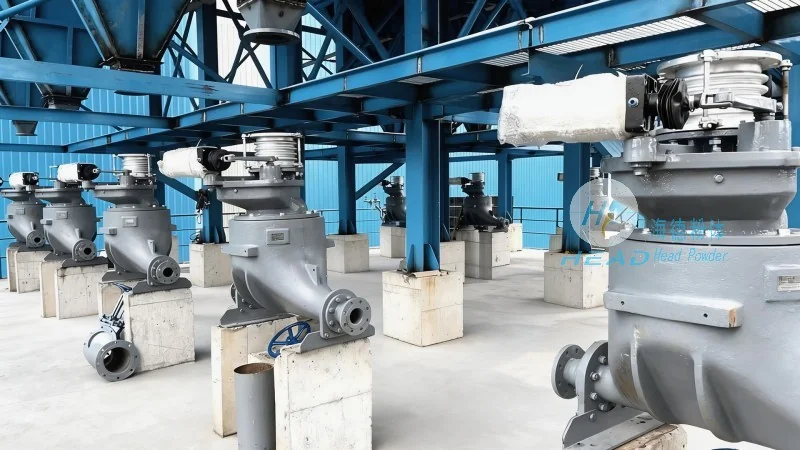
However, bucket elevators have some limitations. They are generally less effective for horizontal transport and may require additional equipment for horizontal movement. The design and installation of bucket elevators can be complex, especially for large-scale operations, as they need to be carefully aligned and balanced to prevent vibration and equipment failure. Another drawback is the high maintenance cost due to the moving parts, such as chains and buckets, which may wear out over time and require frequent replacement. Additionally, bucket elevators may not be suitable for extremely fine or dust-sensitive materials, as the buckets can cause excessive dust generation and potential health hazards.
5. Combination Systems
In many cases, manufacturers may opt for a combination of different material handling methods to meet their specific production needs. For example, a screw conveyor might be used for horizontal transport, followed by a vibrating conveyor for material conditioning, and then a pneumatic system for vertical transport to a storage silo. This integrated approach allows for more efficient material flow and better control over material properties throughout the production process.
Combination systems offer the advantage of leveraging the strengths of each individual method while mitigating their weaknesses. For instance, using a screw conveyor for initial transport can help contain dust, while a pneumatic system can handle the final vertical transport with minimal material degradation. However, combination systems are more complex to design and maintain, as they require coordination between different equipment and control systems. They also increase the overall capital and operational costs compared to a single method.
Conclusion: Choosing the Right Material Handling Method
Selecting the appropriate material handling method for lithium-ion battery materials is a critical decision that requires careful consideration of various factors. The choice should be based on the specific material properties, production scale, operational environment, and cost constraints. For example, screw conveyors may be suitable for small-scale operations with free-flowing materials, while pneumatic systems are better for large-scale, long-distance transport of fine powders. Vibrating conveyors are ideal for handling sticky or moisture-rich materials, and bucket elevators are effective for vertical transport.
It is also important to consider the long-term operational costs, including energy consumption, maintenance requirements, and material degradation. A well-designed material handling system should not only improve production efficiency but also ensure product quality, worker safety, and compliance with industry regulations. By carefully evaluating the advantages and disadvantages of each method, manufacturers can select the most suitable solution for their lithium-ion battery material processing needs. Shandong HeadPowder Engineering Co., Ltd. (headpowder) offers a range of customized material handling solutions tailored to the unique requirements of lithium-ion battery manufacturers, helping them optimize their production processes and achieve higher efficiency and safety standards.

 Công ty TNHH Kỹ thuật Công trình Bột Hải Đức Sơn Đông
 156-6277-7102(Quản lý Trương)
  0531-83386006
  Quận Chương Khâu, Thành phố Tế Nam, Tỉnh Sơn Đông, Trung Quốc
Điện thoại
WeChatTư vấn
Lên đầu