Công ty Hải Đức Bột với hơn 10 năm kinh nghiệm vận chuyển khí, cung cấp hệ thống‑thiết bị‑quạt gió và nhận dự án tổng thầu bột cả nước
For industrial applications, the efficient and reliable transportation of fly ash particles is crucial to ensure smooth operations in various sectors such as power generation, construction materials, and environmental management. Fly ash, a byproduct of coal combustion, requires specialized handling due to its fine particle size and potential for dust generation. The choice of conveying method significantly impacts operational efficiency, safety, and environmental compliance. This article explores the common methods used for fly ash particle conveyance, highlighting the expertise and solutions offered by Shandong HeadPowder Engineering Co., Ltd., a leading provider in the field.
1. Air-Pneumatic Conveying Systems
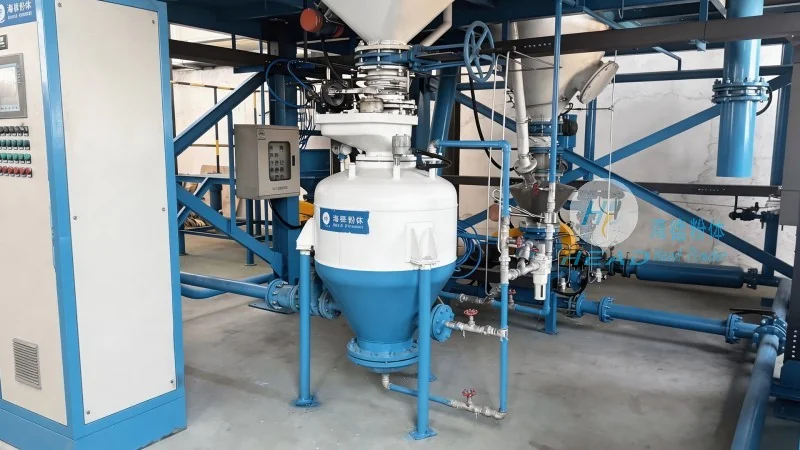
Air-pneumatic conveying, also known as pneumatic transport, is a widely adopted method for transporting fly ash particles due to its ability to handle fine powders over long distances with minimal maintenance. This system operates by using compressed air to create a flow that propels the particles through a pipeline. There are two primary types: dilute-phase and dense-phase conveying. Dilute-phase systems are suitable for short to medium distances and low to medium particle loads, while dense-phase systems are preferred for longer distances and higher particle concentrations, as they reduce the risk of clogging and particle degradation. Shandong HeadPowder Engineering Co., Ltd. specializes in designing and manufacturing customized air-pneumatic conveying solutions tailored to the specific characteristics of fly ash, ensuring optimal performance and energy efficiency.
2. Belt Conveyor Systems
Belt conveyors are another common method for fly ash particle transport, particularly in bulk material handling applications. These systems utilize a continuous belt that moves the particles from the source to the destination. Belt conveyors are highly effective for transporting large volumes of fly ash over horizontal or slightly inclined distances. They are known for their durability, low operating costs, and ability to handle abrasive materials without significant wear. The design of the belt conveyor, including the type of belt material, idler spacing, and drive system, is critical to ensure efficient and safe operation. Shandong HeadPowder Engineering Co., Ltd. offers robust belt conveyor solutions that are engineered to withstand the harsh conditions associated with fly ash handling, providing reliable performance in industrial settings.
3. Screw Conveyors
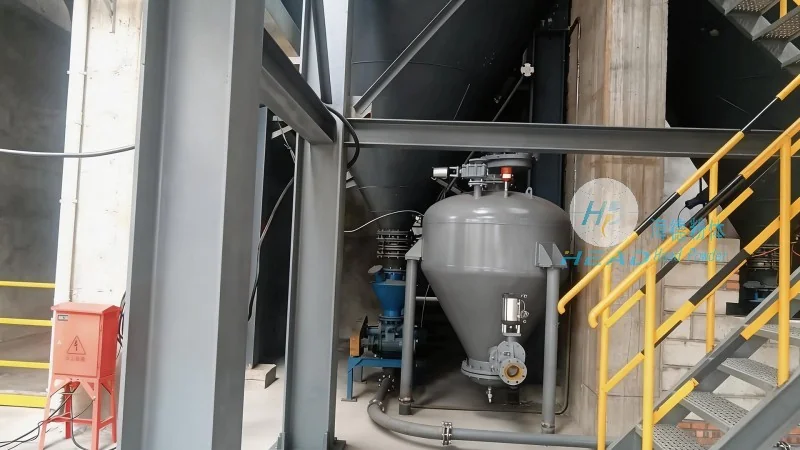
Screw conveyors, also known as auger conveyors, are an alternative method for transporting fly ash particles, especially in applications where vertical or inclined movement is required. This system consists of a rotating screw inside a trough, which moves the particles along the length of the conveyor. Screw conveyors are suitable for handling dry, free-flowing materials and are often used in processing plants where the material needs to be elevated or transferred between different levels. They are compact, easy to install, and can be integrated with other processing equipment. However, screw conveyors may experience issues with clogging if the fly ash particles are too fine or have high moisture content. Shandong HeadPowder Engineering Co., Ltd. provides screw conveyor systems that are designed to mitigate these challenges, ensuring consistent and efficient material transport.
4. Hydraulic Conveying Systems
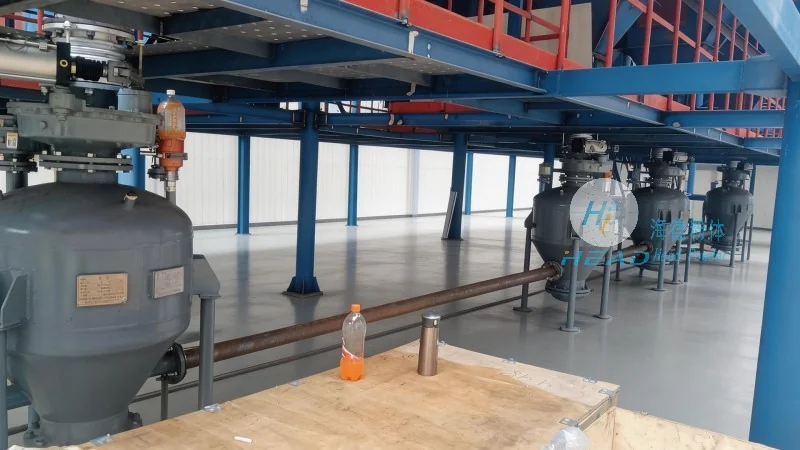
Hydraulic conveying systems use water or a slurry to transport fly ash particles, making them suitable for applications where dust control and environmental protection are priorities. This method involves mixing the fly ash with water to form a slurry, which is then pumped through a pipeline to the destination. Hydraulic conveying is particularly effective for long-distance transport and can handle high volumes of material. However, it requires additional equipment for slurry separation and drying, which adds to the operational complexity and cost. Shandong HeadPowder Engineering Co., Ltd. offers hydraulic conveying solutions that are optimized for fly ash characteristics, ensuring minimal environmental impact and efficient material recovery.
5. Combination Conveying Systems
In many industrial settings, a single conveying method may not be sufficient to meet all the requirements of fly ash transport. Therefore, combination systems that integrate multiple technologies are often employed. For example, a system might use a belt conveyor for initial transport and then switch to an air-pneumatic system for final delivery. These hybrid systems offer flexibility and can adapt to varying operational conditions. Shandong HeadPowder Engineering Co., Ltd. specializes in designing and implementing combination conveying systems that maximize efficiency and minimize downtime, providing customized solutions that address the unique challenges of each project.
Conclusion
The selection of the appropriate fly ash particle conveying method depends on several factors, including the distance to be covered, the volume of material, the particle size and characteristics, and the specific operational requirements. Shandong HeadPowder Engineering Co., Ltd. leverages its expertise in material handling and industrial engineering to provide comprehensive solutions that meet these diverse needs. By understanding the advantages and limitations of each conveying method, industrial operators can choose the most suitable approach to ensure efficient, safe, and cost-effective fly ash transport. With a focus on innovation and customer-centric design, Shandong HeadPowder Engineering Co., Ltd. continues to deliver high-quality conveying systems that enhance the performance of industrial processes and contribute to sustainable material management.

 Công ty TNHH Kỹ thuật Công trình Bột Hải Đức Sơn Đông
 156-6277-7102(Quản lý Trương)
  0531-83386006
  Quận Chương Khâu, Thành phố Tế Nam, Tỉnh Sơn Đông, Trung Quốc
Điện thoại
WeChatTư vấn
Lên đầu