Công ty Hải Đức Bột với hơn 10 năm kinh nghiệm vận chuyển khí, cung cấp hệ thống‑thiết bị‑quạt gió và nhận dự án tổng thầu bột cả nước
Plaster powder, a fundamental material in construction and interior finishing, requires efficient and reliable transportation systems to ensure smooth workflow and quality control. The choice of conveying method significantly impacts operational efficiency, material integrity, and overall project success. This article explores various plaster powder conveying methods, with a particular focus on the advantages and features of pneumatic conveying, a technology widely adopted in modern industrial applications.
Overview of Plaster Powder Conveying Methods
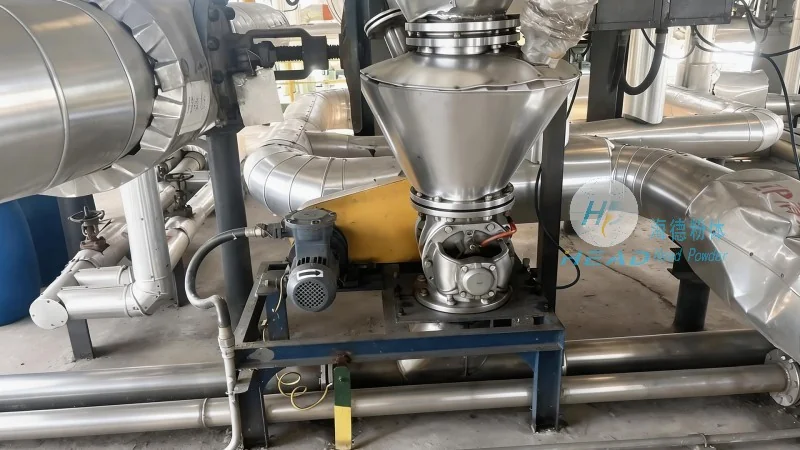
Plaster powder, often used in construction for wall finishing and interior decoration, is typically transported from storage silos or production facilities to mixing stations or application points. The primary methods for conveying this material include mechanical conveyors, such as belt conveyors and screw conveyors, and pneumatic systems. Each method has its own set of characteristics, making the selection dependent on factors like material properties, distance, and operational requirements.
Pneumatic Conveying: A Comprehensive Solution for Plaster Powder
Pneumatic conveying, also known as air conveying, utilizes compressed air to transport bulk materials like plaster powder through a pipeline system. This method offers several advantages over traditional mechanical conveyors, particularly in terms of flexibility, cleanliness, and material handling efficiency. The core components of a pneumatic conveying system include a hopper, a rotary airlock valve, a filter, and a receiver, all working in tandem to ensure consistent and controlled material flow.
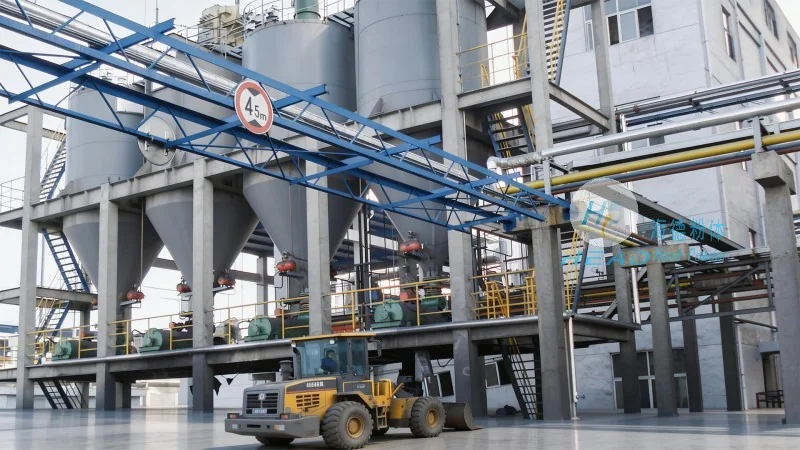
Key Advantages of Plaster Powder Pneumatic Conveying
One of the most significant advantages of pneumatic conveying for plaster powder is its ability to handle fine powders without causing dust accumulation or material degradation. Unlike mechanical systems that may cause friction and particle breakdown, pneumatic systems maintain the integrity of the plaster powder, ensuring consistent quality for subsequent applications. Additionally, pneumatic conveying systems are highly flexible, allowing for changes in the conveying route without major structural modifications, which is crucial for adapting to different project layouts.
Another key benefit is the hygienic nature of pneumatic systems. By containing the material within a sealed pipeline, the risk of dust exposure and contamination is minimized, making it suitable for applications where cleanliness is paramount, such as in food processing or pharmaceutical industries (though plaster powder is primarily used in construction, the principle applies to maintaining material purity). The enclosed system also reduces the need for manual handling, enhancing workplace safety and reducing labor costs.
Technical Features and Operational Efficiency
The efficiency of a pneumatic conveying system for plaster powder is determined by several technical features. The system's design, including the size of the pipeline, the pressure of the compressed air, and the speed of the air flow, directly impacts the conveying capacity and distance. For instance, higher air pressure can increase the conveying distance but may also lead to higher energy consumption. Modern pneumatic systems often incorporate advanced control mechanisms, such as variable frequency drives (VFDs), which adjust the air flow and pressure based on real-time demand, optimizing energy use and reducing operational costs.
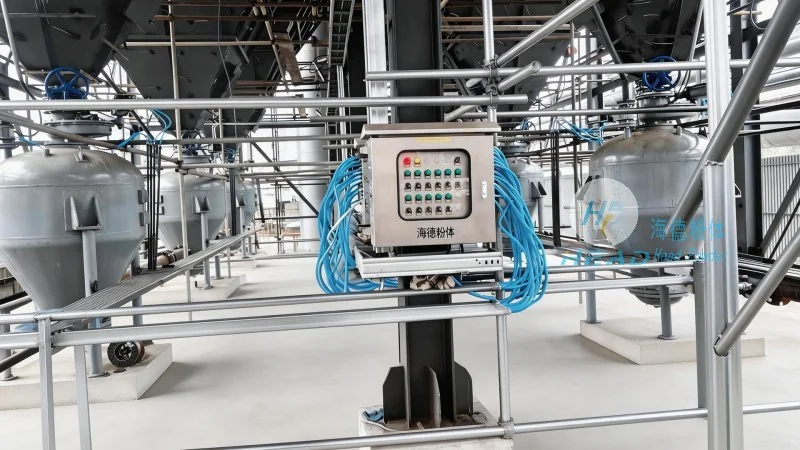
Furthermore, the use of rotary airlock valves in pneumatic conveying systems ensures a continuous and controlled flow of plaster powder from the hopper to the pipeline. These valves prevent backflow and maintain a consistent material feed rate, which is critical for maintaining the quality of the plaster mixture. The filter system at the end of the pipeline is essential for capturing any fine particles and preventing them from entering the air compressor or other equipment, thus extending the lifespan of the system and maintaining air quality.
Application Scenarios and Practical Considerations
Pneumatic conveying is particularly well-suited for plaster powder applications where long distances or complex layouts are involved. For example, in large construction projects with multiple mixing stations or application points, a pneumatic system can efficiently transport plaster powder from a central storage silo to various locations without the need for multiple mechanical conveyors. This not only simplifies the logistics but also reduces the overall footprint of the conveying infrastructure.
When implementing a pneumatic conveying system for plaster powder, several practical considerations must be addressed. The first is the selection of the appropriate air pressure and pipeline diameter, which depends on the bulk density and flow rate of the plaster powder. A higher bulk density may require higher air pressure to achieve the desired conveying speed. Additionally, the system must be designed to handle the potential for material bridging or caking in the hopper, which can be mitigated by using hopper designs with proper angles and agitators.
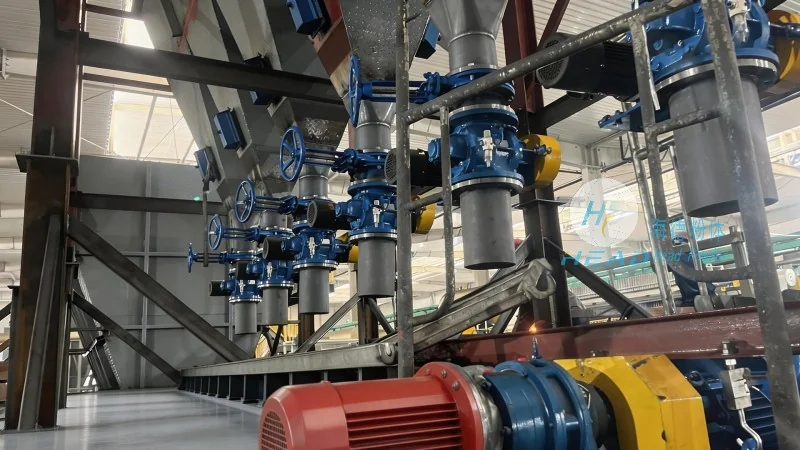
Another consideration is the maintenance of the system. Pneumatic conveying systems, while generally low-maintenance, require regular checks of the air filter, rotary airlock valves, and pipeline for any signs of wear or blockage. Proper maintenance ensures the system operates at optimal efficiency and prevents downtime, which is critical for maintaining project timelines.
Conclusion: The Role of Pneumatic Conveying in Plaster Powder Handling
In conclusion, pneumatic conveying stands out as a highly effective and efficient method for transporting plaster powder in construction and related industries. Its ability to maintain material integrity, provide flexibility, and ensure operational safety makes it a preferred choice over traditional mechanical conveyors. As technology advances, modern pneumatic systems continue to evolve, incorporating energy-efficient designs and advanced control systems to further enhance their performance and reduce operational costs.
For businesses involved in plaster powder production and distribution, investing in a well-designed pneumatic conveying system can lead to significant improvements in productivity, material quality, and overall operational efficiency. By understanding the technical features and practical considerations of pneumatic conveying, companies can make informed decisions that align with their specific needs and contribute to the success of their projects.

 Công ty TNHH Kỹ thuật Công trình Bột Hải Đức Sơn Đông
 156-6277-7102(Quản lý Trương)
  0531-83386006
  Quận Chương Khâu, Thành phố Tế Nam, Tỉnh Sơn Đông, Trung Quốc
Điện thoại
WeChatTư vấn
Lên đầu