Công ty Hải Đức Bột với hơn 10 năm kinh nghiệm vận chuyển khí, cung cấp hệ thống‑thiết bị‑quạt gió và nhận dự án tổng thầu bột cả nước
Phosphate powders are widely utilized across multiple industries, including agriculture, food processing, and chemical manufacturing. The efficient and reliable transportation of these powders is essential for maintaining production efficiency and ensuring product quality. Various conveying methods are employed based on the material's characteristics, the distance to be covered, and the operational requirements of the facility. This article provides an overview of common phosphate powder conveying methods, with a particular focus on pneumatic conveying systems.
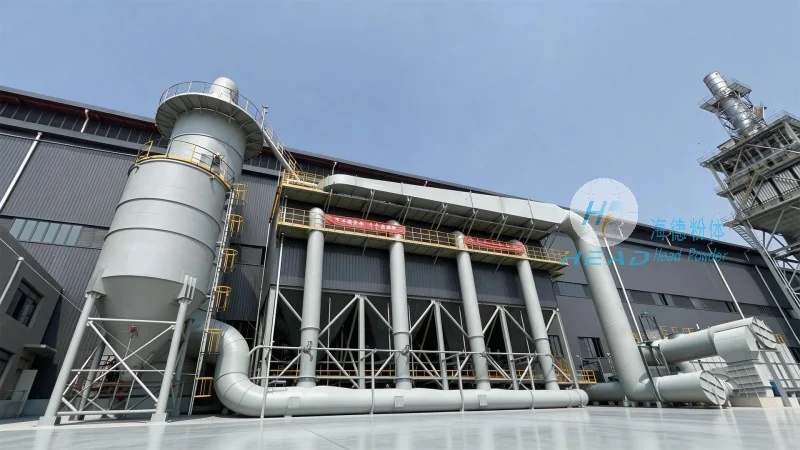
Overview of Common Phosphate Powder Conveying Methods
Several methods are commonly used for transporting phosphate powders, including mechanical systems like belt conveyors and screw conveyors, as well as pneumatic conveying systems. Mechanical systems are typically suitable for short distances and bulk materials, whereas pneumatic systems are ideal for longer distances and more delicate powders.
Pneumatic Conveying Systems for Phosphate Powders
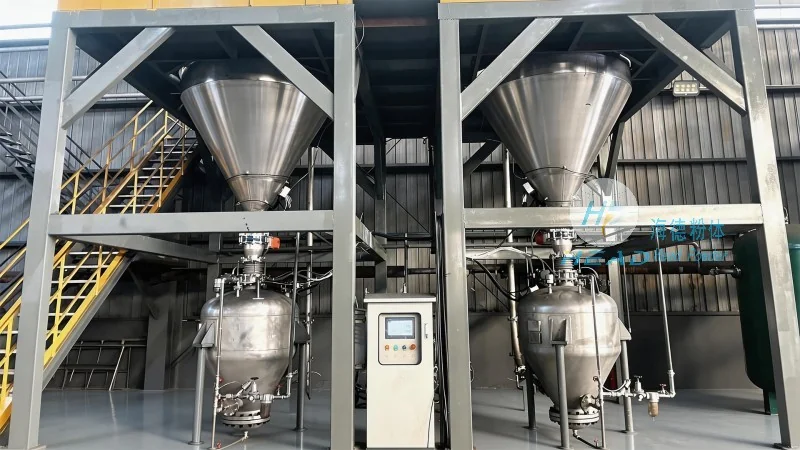
Pneumatic conveying, also known as air conveying, is a widely adopted method for transporting phosphate powders due to its flexibility and ability to handle fine, abrasive, or dusty materials. This system utilizes compressed air to move the powder through a pipeline. There are two main types of pneumatic conveying: dilute phase and dense phase. Dilute phase systems are suitable for short to medium distances and low to medium powder concentrations, while dense phase systems are used for longer distances and higher powder loads.
Key Components of Pneumatic Conveying Systems
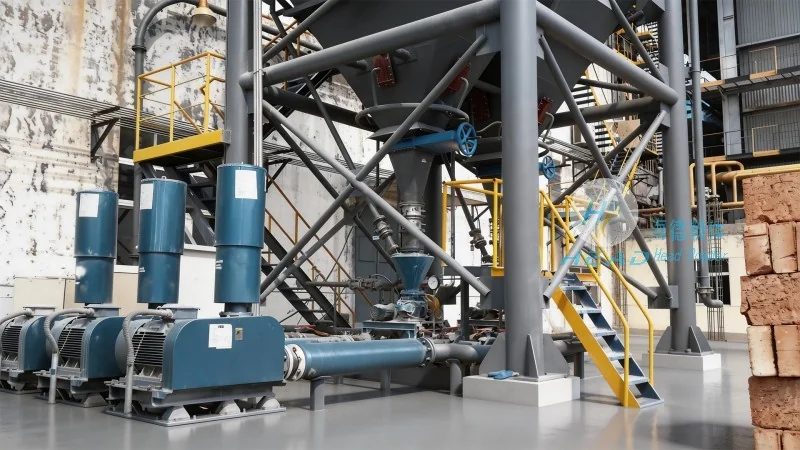
A typical pneumatic conveying system for phosphate powders consists of several key components. These include a material feeder, a compressor or blower to generate the air flow, a pipeline network, and a receiver or silo for the discharged material. The material feeder ensures a consistent flow of powder into the system, while the compressor provides the necessary pressure to move the material through the pipeline. The pipeline network is designed to handle the air and powder mixture efficiently, minimizing pressure losses and ensuring smooth operation. The receiver or silo collects the conveyed powder and can be integrated with downstream processing equipment.
Advantages of Pneumatic Conveying for Phosphate Powders
There are several advantages of using pneumatic conveying systems for phosphate powders. First, it offers a closed system, which helps to contain dust and prevent contamination, ensuring product purity. Second, it can handle a wide range of powder characteristics, including fine, coarse, and abrasive particles. Third, pneumatic systems are flexible and can be easily modified or expanded to accommodate changes in production volume or facility layout. Fourth, they can operate at relatively low speeds, reducing the risk of material degradation or degradation. Finally, pneumatic conveying systems are generally more energy-efficient than mechanical systems for longer distances.
Applications of Pneumatic Conveying in Phosphate Processing
Pneumatic conveying systems are widely used in various stages of phosphate processing. For example, in the mining and crushing stage, phosphate ore is crushed and ground into fine powders, which are then conveyed to the grinding mills. In the chemical processing stage, phosphate powders are conveyed to reactors or storage tanks for further processing. In the packaging stage, the final phosphate products are conveyed to packaging lines. The versatility of pneumatic systems makes them suitable for these diverse applications.
Conclusion and Company Information
Phosphate powder conveying is a critical aspect of the phosphate industry, and the choice of conveying method depends on several factors. Pneumatic conveying systems, particularly dilute and dense phase systems, offer significant advantages in terms of efficiency, flexibility, and product protection. As a leading provider of phosphate powder conveying solutions, Shandong HeadPowder Engineering Co., Ltd. specializes in designing and manufacturing customized pneumatic conveying systems tailored to the specific needs of phosphate processing facilities. With years of experience and a commitment to quality, HeadPowder provides reliable and efficient solutions for the transportation of phosphate powders, ensuring optimal performance and product quality for its clients.

 Công ty TNHH Kỹ thuật Công trình Bột Hải Đức Sơn Đông
 156-6277-7102(Quản lý Trương)
  0531-83386006
  Quận Chương Khâu, Thành phố Tế Nam, Tỉnh Sơn Đông, Trung Quốc
Điện thoại
WeChatTư vấn
Lên đầu