Công ty Hải Đức Bột với hơn 10 năm kinh nghiệm vận chuyển khí, cung cấp hệ thống‑thiết bị‑quạt gió và nhận dự án tổng thầu bột cả nước
In the battery manufacturing industry, the efficient and reliable conveyance of cathode materials is crucial for ensuring production line stability and product quality. Cathode materials, such as lithium cobalt oxide, lithium iron phosphate, and other active materials, require specialized handling to prevent contamination and degradation. This article explores the common methods used for cathode material conveyance, focusing on the technical aspects and practical applications in industrial settings.
1. Belt Conveyor Systems
Belt conveyors are one of the most widely used methods for transporting cathode materials due to their simplicity, high capacity, and adaptability to various material types. These systems consist of a continuous loop of conveyor belt supported by rollers or pulleys, with the material placed on the belt surface and moved by the belt's motion. For cathode materials, which are often in powder or granular form, belt conveyors can be equipped with special surfaces or liners to prevent material buildup and ensure smooth transport. The design of the belt conveyor, including the angle of inclination, speed, and material loading, is critical to maintaining material flow and preventing clogging. Many manufacturers opt for belt conveyors because they can handle large volumes of material with minimal maintenance and are suitable for both short and long-distance transport. The headpowder company, Shandong HeadPowder Engineering Co., Ltd., offers customized belt conveyor solutions tailored to the specific needs of battery manufacturers, ensuring optimal performance and durability in harsh industrial environments.
2. Screw Conveyors
Screw conveyors, also known as auger conveyors, are another common method for cathode material transport. These systems use a rotating screw (auger) inside a tube to move material forward. The screw's rotation causes the material to be pushed along the tube, making it suitable for vertical or inclined transport. Screw conveyors are particularly effective for handling fine powders and granules, as the screw's design can prevent material segregation and ensure uniform flow. They are often used in applications where space is limited or where the material needs to be elevated to a higher level. The key advantages of screw conveyors include their compact design, low maintenance requirements, and ability to operate in a closed system, which helps maintain material purity. However, they may not be as efficient for very large volumes or for materials that are prone to bridging or clogging. The headpowder engineering team has developed advanced screw conveyor systems that incorporate anti-clogging features and adjustable speed controls to enhance performance and reliability.
3. Pneumatic Conveying Systems
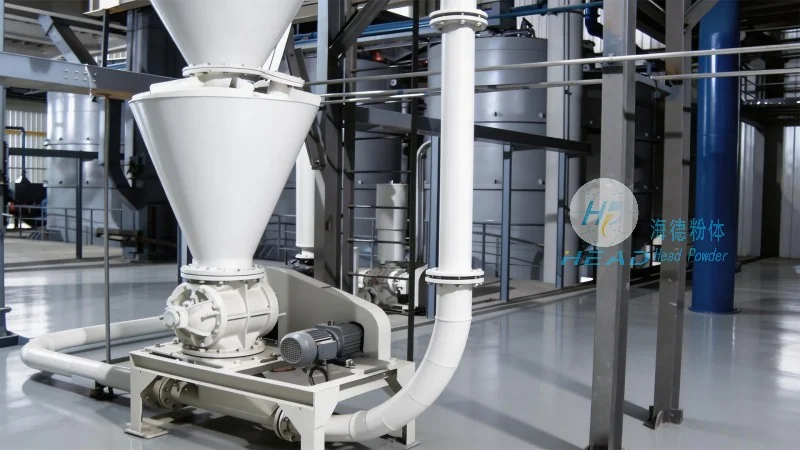
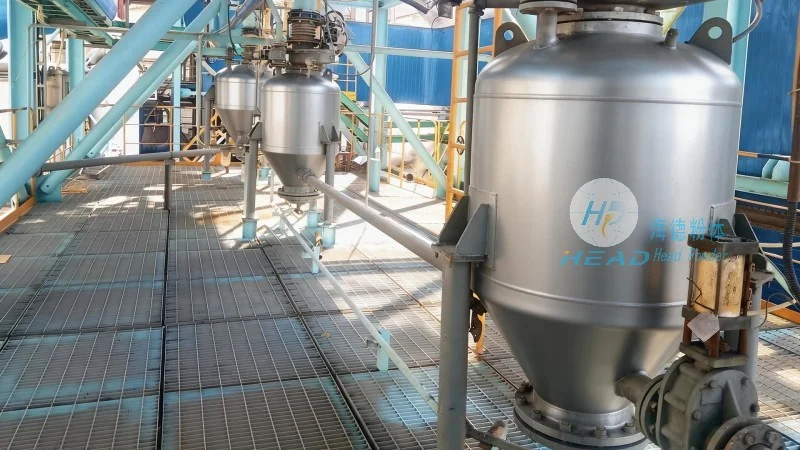
Pneumatic conveying systems use air or other gases to transport cathode materials through a pipeline. This method is particularly useful for handling fine powders that are difficult to convey with mechanical systems. There are two main types of pneumatic conveyors: dilute-phase and dense-phase. Dilute-phase systems use low-pressure air to move material in a dispersed state, while dense-phase systems use higher pressure to push material in a concentrated stream. Pneumatic conveying offers advantages such as the ability to transport materials over long distances, the elimination of mechanical contact (which reduces contamination risk), and the flexibility to integrate with other processing equipment. However, it requires careful control of air pressure and flow rates to prevent material degradation or system blockages. The headpowder company specializes in designing and manufacturing pneumatic conveying systems that meet the strict requirements of cathode material transport, ensuring consistent material quality and efficient operation.
4. Vibrating Conveyors
Vibrating conveyors utilize vibrations to move cathode materials along a trough. The conveyor is mounted on a frame with vibration motors that cause the trough to oscillate, causing the material to move forward. This method is effective for handling sticky or cohesive materials that may clog other types of conveyors. The vibration frequency and amplitude can be adjusted to optimize material flow and prevent material buildup. Vibrating conveyors are often used in applications where the material needs to be transported at a controlled speed and where the system must be able to handle variations in material consistency. They are also suitable for transporting materials that are sensitive to impact or friction. The headpowder engineering solutions include vibrating conveyors with adjustable vibration parameters, allowing for customization based on the specific characteristics of the cathode material being transported.
5. Hydraulic Conveyors
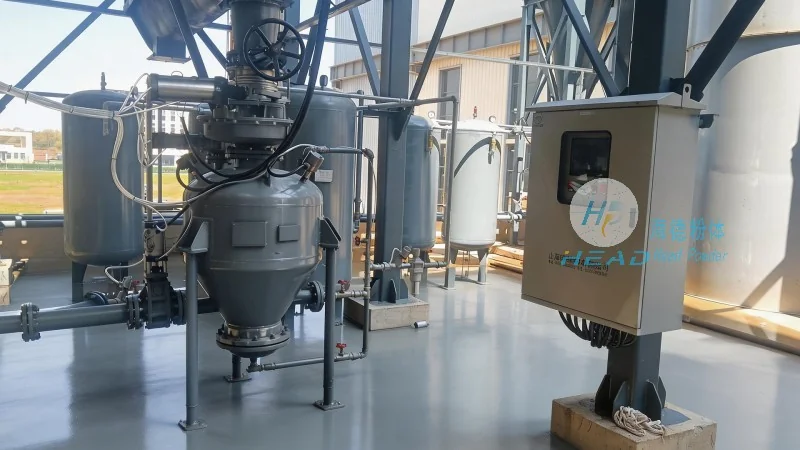
Hydraulic conveyors use fluid pressure to transport cathode materials through a pipeline. This method is less common for cathode material transport but is used in specialized applications where other systems are not suitable. Hydraulic conveyors can handle high-viscosity materials or materials that require a closed system to maintain purity. The system consists of a pump that forces fluid through a pipe, carrying the material along with it. The key advantage of hydraulic conveyors is their ability to transport materials over long distances with minimal energy consumption and low maintenance. However, they require specialized equipment and expertise to operate and maintain. The headpowder company has experience in designing hydraulic conveying systems for unique industrial applications, ensuring that the technology is applied effectively and safely.
6. Combination Systems
In many battery manufacturing facilities, a combination of conveyance methods is used to optimize material transport. For example, a belt conveyor might be used to transport large batches of cathode material from a storage silo to a processing area, followed by a screw conveyor to feed the material into a mixing or blending machine. Pneumatic conveying might then be used to transport the blended material to a final packaging or loading station. The use of combination systems allows for greater flexibility and efficiency, as each method can be selected based on the specific requirements of the material and the transport distance. The headpowder company provides comprehensive engineering services to design and integrate these combination systems, ensuring seamless operation and maximum productivity.
When selecting a cathode material conveyance method, manufacturers must consider factors such as material properties (e.g., particle size, moisture content, and cohesive tendency), production volume, distance to be covered, and environmental requirements. Each method has its strengths and limitations, and the choice of system should be based on a thorough analysis of these factors. The headpowder team at Shandong HeadPowder Engineering Co., Ltd., based in Shandong, China, offers expert consultation and customized solutions to help battery manufacturers choose the most appropriate conveyance method for their specific needs. By leveraging their experience and advanced technology, headpowder ensures that cathode material transport is efficient, reliable, and cost-effective, supporting the overall success of battery production operations.

 Công ty TNHH Kỹ thuật Công trình Bột Hải Đức Sơn Đông
 156-6277-7102(Quản lý Trương)
  0531-83386006
  Quận Chương Khâu, Thành phố Tế Nam, Tỉnh Sơn Đông, Trung Quốc
Điện thoại
WeChatTư vấn
Lên đầu