Công ty Hải Đức Bột với hơn 10 năm kinh nghiệm vận chuyển khí, cung cấp hệ thống‑thiết bị‑quạt gió và nhận dự án tổng thầu bột cả nước
When it comes to handling PVC resin in industrial applications, selecting the right conveying method is crucial for efficiency, cost-effectiveness, and operational safety. Shandong HeadPowder Engineering Co., Ltd., a leading provider in the field, understands the importance of choosing the most suitable system for specific production needs. This article provides a detailed comparison of common PVC resin conveying methods, highlighting their advantages and disadvantages to help businesses make informed decisions.
1. Screw Conveyors: A Traditional and Reliable Option
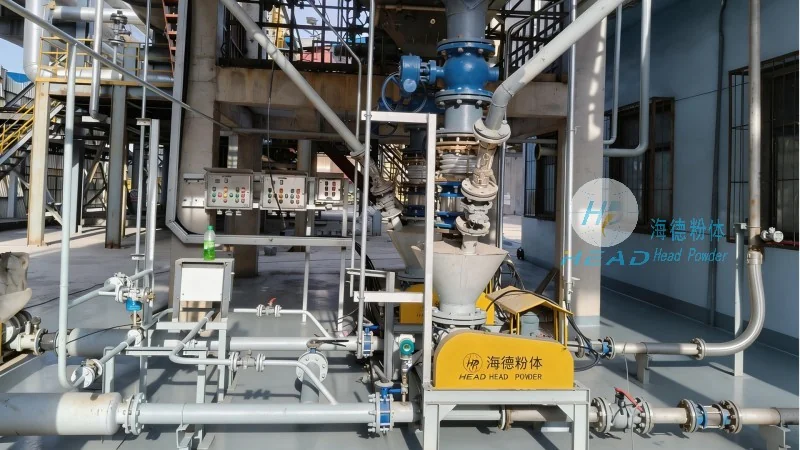
Screw conveyors, also known as auger conveyors, are one of the most widely used methods for transporting PVC resin. These systems consist of a rotating helical screw inside a trough or tube, which moves material from one point to another through gravity and mechanical force. The primary advantage of screw conveyors is their simplicity and low maintenance requirements. They are particularly effective for handling free-flowing materials like PVC resin, as the screw design minimizes blockages and ensures consistent flow. Additionally, screw conveyors can operate in a variety of environments, including indoor and outdoor settings, making them versatile for different industrial applications.
However, screw conveyors have some limitations. They are not suitable for handling highly abrasive or sticky PVC resin, as the screw and trough can wear out quickly, leading to increased maintenance costs. Moreover, the conveyor's capacity is limited by the screw size and speed, which may not meet the demands of high-volume production lines. Another drawback is that screw conveyors are not ideal for vertical lifting, as they require a steep incline to move material vertically, which can be inefficient and costly in terms of energy consumption.
2. Vacuum Conveying Systems: Efficient for Light and Powdery Materials
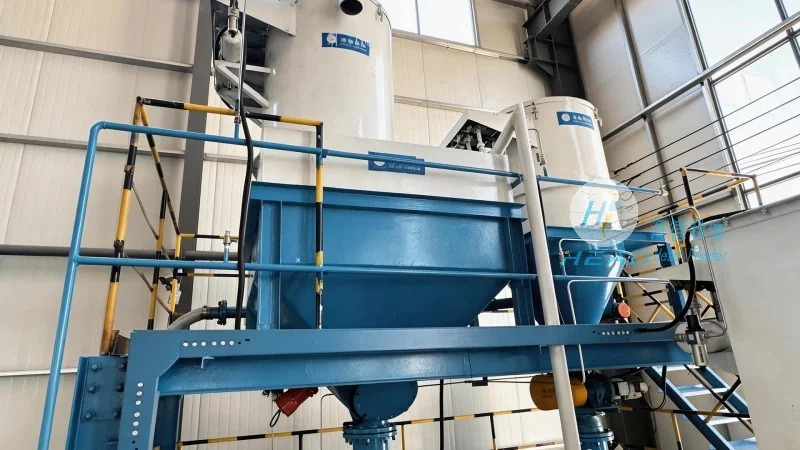
Vacuum conveying systems use a vacuum pump to draw PVC resin from a storage container to a processing unit. This method is particularly effective for handling light, powdery, or fine-grained PVC resin, as it can transport materials over long distances with minimal dust generation. The primary advantage of vacuum conveying is its ability to handle materials that are difficult to convey with other methods, such as those with high moisture content or low bulk density. Additionally, vacuum systems are relatively quiet and can operate in enclosed spaces, reducing the risk of dust exposure and improving workplace safety.
Despite these benefits, vacuum conveying has its drawbacks. The system requires a continuous power supply and is more complex to install and maintain compared to screw conveyors. The vacuum pump and associated components can be expensive to purchase and replace, increasing the overall cost of ownership. Furthermore, vacuum systems are not suitable for handling heavy or abrasive PVC resin, as the suction force may not be sufficient to move such materials effectively. Another limitation is that the conveying distance is limited by the vacuum pressure, which may not be sufficient for long-distance transport.
3. Air-Pressure Conveying Systems: High-Pressure Solutions for Dense Materials
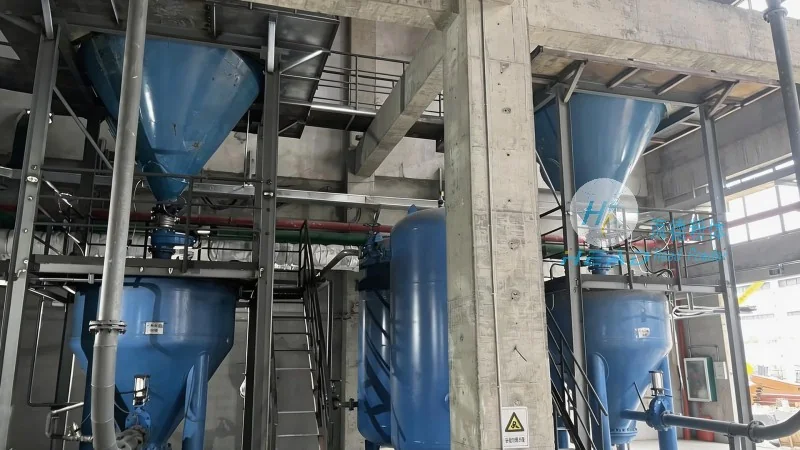
Air-pressure conveying systems, also known as pressure conveyors, use compressed air to push PVC resin through a pipeline. This method is ideal for handling dense, heavy, or abrasive PVC resin, as the high-pressure air can overcome the material's resistance and ensure efficient transport. The primary advantage of air-pressure conveying is its ability to transport materials over long distances with high capacity, making it suitable for large-scale production lines. Additionally, pressure conveyors can operate in a closed system, reducing dust and improving environmental compliance.
However, air-pressure conveying systems have significant drawbacks. The high-pressure air requires a robust and expensive compressor, which increases energy consumption and maintenance costs. The system is also more complex to install and maintain compared to other methods, as it involves high-pressure components and safety measures. Another limitation is that the conveying distance is limited by the pressure drop in the pipeline, which can affect the system's efficiency over long distances. Furthermore, air-pressure systems are not suitable for handling light or powdery PVC resin, as the material may not be sufficiently dense to be pushed effectively.
4. Pneumatic Conveying: A Versatile and Flexible Option
Pneumatic conveying combines elements of vacuum and pressure conveying, using both suction and pressure to transport PVC resin. This method is highly versatile and can handle a wide range of materials, including light, powdery, dense, and abrasive PVC resin. The primary advantage of pneumatic conveying is its flexibility, as it can be adapted to different production needs and environments. Additionally, the system can operate in a closed loop, reducing dust and improving safety. Pneumatic conveyors are also relatively compact and can be installed in tight spaces, making them suitable for facilities with limited floor space.
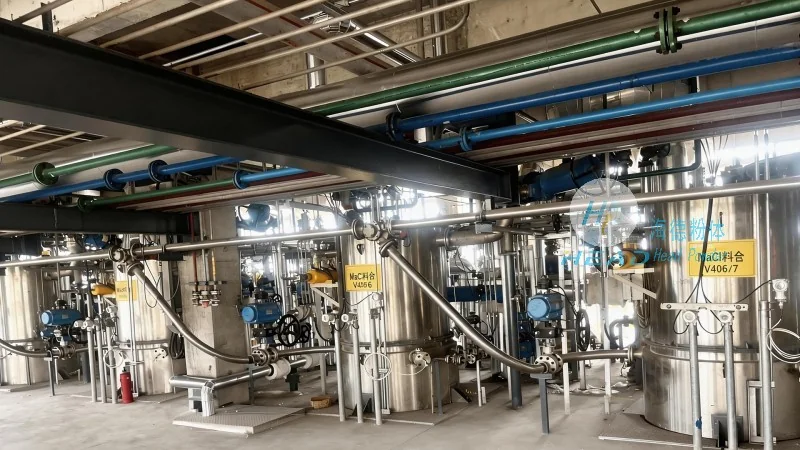
However, pneumatic conveying has some limitations. The system requires a combination of vacuum and pressure components, which increases the complexity and cost of installation and maintenance. The conveying distance is limited by the combined effect of suction and pressure, which may not be sufficient for long-distance transport. Another drawback is that the system can be noisy due to the air movement, which may require additional noise control measures. Furthermore, the material's properties, such as moisture content or particle size, can affect the system's performance, requiring careful selection of the conveying method.
5. Comparison Summary: Choosing the Right Conveying Method
When selecting a PVC resin conveying method, it is essential to consider several factors, including the material's properties, production volume, conveying distance, and operational environment. Screw conveyors are ideal for simple, low-volume applications with free-flowing materials. Vacuum conveying is suitable for light, powdery materials over moderate distances. Air-pressure conveying is best for dense, heavy materials over long distances. Pneumatic conveying offers versatility for a wide range of materials and applications.
Shandong HeadPowder Engineering Co., Ltd. specializes in providing customized conveying solutions tailored to specific industrial needs. By understanding the advantages and disadvantages of each method, businesses can choose the most efficient and cost-effective system for their PVC resin handling requirements. Whether it's a screw conveyor, vacuum system, or pneumatic conveyor, the right choice can significantly improve operational efficiency, reduce maintenance costs, and enhance workplace safety.

 Công ty TNHH Kỹ thuật Công trình Bột Hải Đức Sơn Đông
 156-6277-7102(Quản lý Trương)
  0531-83386006
  Quận Chương Khâu, Thành phố Tế Nam, Tỉnh Sơn Đông, Trung Quốc
Điện thoại
WeChatTư vấn
Lên đầu