Công ty Hải Đức Bột với hơn 10 năm kinh nghiệm vận chuyển khí, cung cấp hệ thống‑thiết bị‑quạt gió và nhận dự án tổng thầu bột cả nước
Efficient and reliable transportation of powdered solids is a critical aspect in various industrial applications, from manufacturing to processing. The choice of conveying method significantly impacts operational efficiency, cost, and product quality. This article provides a detailed comparison of common powdered solid conveying methods, highlighting their advantages and disadvantages to help industrial professionals make informed decisions.
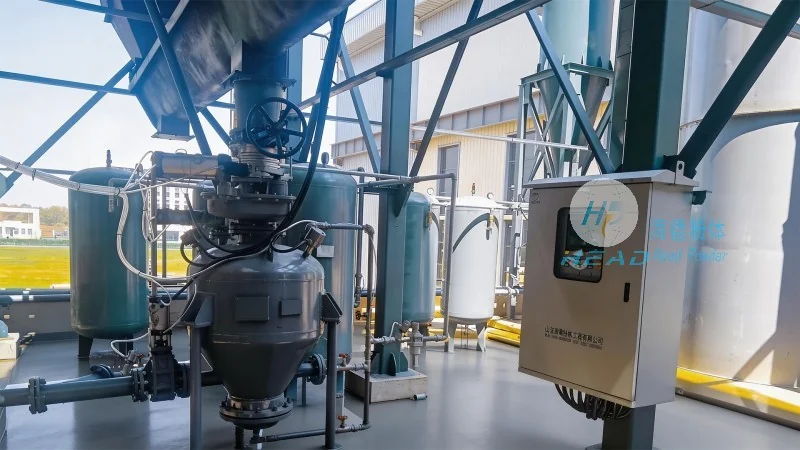
1. Screw Conveyors (Auger Conveyors)
Screw conveyors, also known as auger conveyors, are among the most widely used equipment for transporting bulk materials, including powdered solids. Manufactured by companies like Shandong HeadPowder Engineering Co., Ltd., these systems utilize a rotating helical screw within a trough to move material forward. The primary advantage of screw conveyors is their simplicity and low maintenance requirements. They are particularly effective for horizontal or slightly inclined transport, with the ability to handle a wide range of materials, from free-flowing powders to semi-solid slurries. However, their limitations include the risk of material degradation due to friction and the need for proper sealing to prevent dust emissions. Additionally, screw conveyors may experience clogging with sticky or cohesive powders, requiring regular cleaning and maintenance.
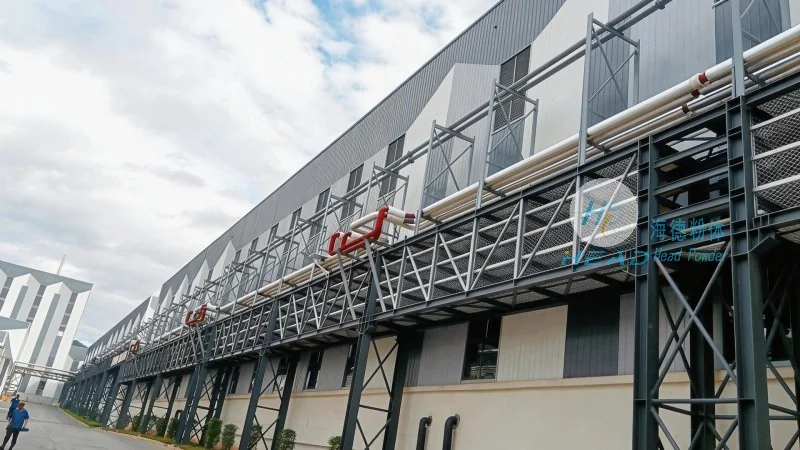
2. Pneumatic Conveying Systems
Pneumatic conveying systems use air or other gases to transport powdered solids through a pipeline. This method is highly versatile and can handle materials with varying properties, including fine powders, granules, and even liquids. One of the key advantages of pneumatic conveying is its ability to transport materials over long distances and through vertical lifts, making it suitable for complex layouts. The system also offers excellent containment, as the material is enclosed within the pipeline, reducing dust and environmental impact. However, pneumatic conveying systems require higher energy consumption compared to other methods, as they need to generate sufficient air pressure to move the material. Furthermore, the design and maintenance of the system can be more complex, with potential issues such as particle segregation and system wear. Companies like HeadPowder specialize in designing and manufacturing advanced pneumatic conveying solutions tailored to specific industrial needs.
3. Vibrating Conveyors
Vibrating conveyors utilize vibration to move powdered solids along a trough. This method is particularly effective for handling cohesive or sticky materials that may clog other systems. The conveyor consists of a trough supported by vibration motors, which create a sinusoidal motion to propel the material forward. A significant advantage of vibrating conveyors is their ability to handle a wide range of material types, including those with high moisture content or high density. They are also relatively low in energy consumption and easy to install. However, the design and maintenance of vibrating conveyors require careful consideration of the material's properties to ensure optimal performance. Issues such as wear on the trough and vibration motors can occur over time, necessitating regular inspections and replacements. Additionally, the system may not be as efficient for long-distance transport as other methods like screw or pneumatic conveyors.
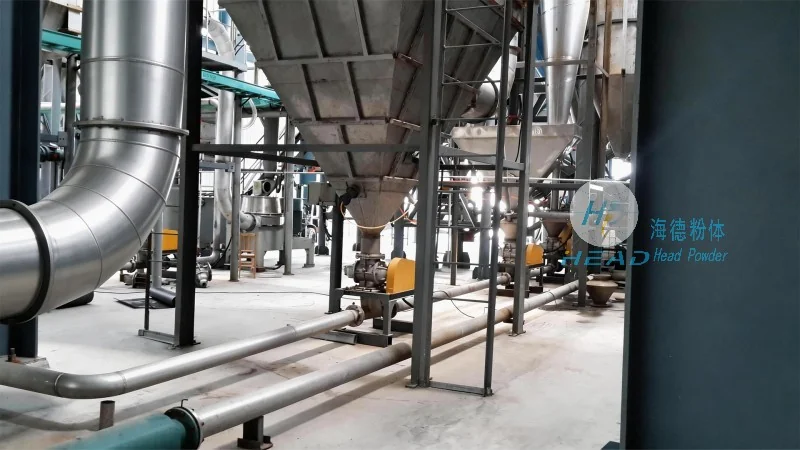
4. Belt Conveyors
Belt conveyors are a classic method for transporting bulk materials, including powdered solids, over short to medium distances. These systems consist of a continuous belt that moves over rollers or pulleys, carrying the material from one point to another. The primary advantage of belt conveyors is their high capacity and ability to handle large volumes of material efficiently. They are also relatively simple to operate and maintain, with minimal moving parts. However, belt conveyors are generally limited to horizontal or slightly inclined transport and may not be suitable for fine powders that can cause belt wear or slip. The system also requires regular tension adjustments and belt replacement to ensure smooth operation. For industrial applications requiring reliable and high-capacity transport, companies like Shandong HeadPowder Engineering Co., Ltd. offer customized belt conveyor solutions.
5. Hydraulic Conveying
Hydraulic conveying systems use water or other liquids to transport powdered solids through a pipeline. This method is particularly effective for handling materials that are difficult to convey by other means, such as very fine powders or those with high moisture content. The primary advantage of hydraulic conveying is its ability to transport materials over long distances with minimal energy consumption. The system also offers excellent mixing and homogenization of the material as it moves through the pipeline. However, hydraulic conveying requires a continuous supply of water or liquid, which can increase operational costs and maintenance. The system may also be less suitable for materials that are sensitive to moisture or that can cause corrosion in the pipeline. Companies specializing in bulk material handling, such as HeadPowder, provide hydraulic conveying solutions tailored to specific industrial requirements.

 Công ty TNHH Kỹ thuật Công trình Bột Hải Đức Sơn Đông
 156-6277-7102(Quản lý Trương)
  0531-83386006
  Quận Chương Khâu, Thành phố Tế Nam, Tỉnh Sơn Đông, Trung Quốc
Điện thoại
WeChatTư vấn
Lên đầu