Công ty Hải Đức Bột với hơn 10 năm kinh nghiệm vận chuyển khí, cung cấp hệ thống‑thiết bị‑quạt gió và nhận dự án tổng thầu bột cả nước
Quartz sand, a widely used industrial material, often requires efficient and reliable transportation methods. Pneumatic conveying systems offer a viable solution for moving quartz sand particles from one location to another. However, designing an effective system that meets operational requirements and ensures long-term performance demands careful consideration of several key factors. This article provides insights into the essential steps and considerations for designing a reasonable quartz sand particle pneumatic conveying system plan.
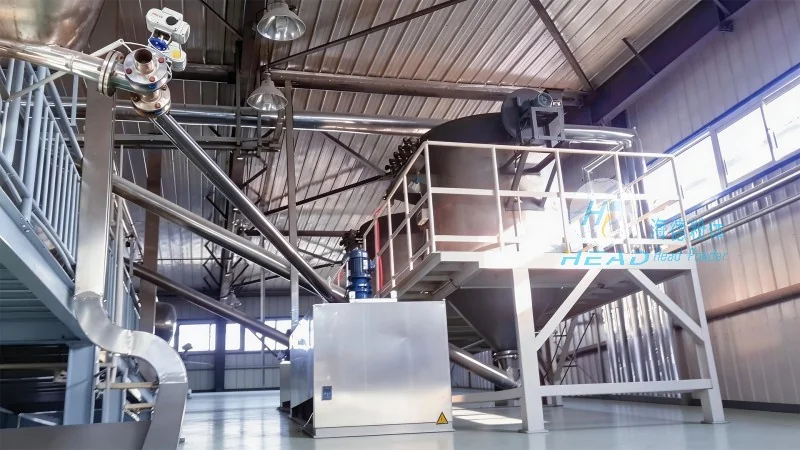
Understanding the Basics of Pneumatic Conveying
Pneumatic conveying systems utilize air or gas to transport bulk materials like quartz sand. The process involves creating a pressure differential or using vacuum to move particles through a pipeline. There are two primary types: pressure and vacuum systems. Pressure systems use positive pressure to push material, while vacuum systems use negative pressure to pull material. The choice between these depends on factors such as material characteristics, distance, and system complexity. For quartz sand, which is typically fine to medium in particle size, a pressure system may be more suitable due to its ability to handle higher material loads and maintain consistent flow rates.
Key Design Considerations for Quartz Sand Pneumatic Conveying
Designing a pneumatic conveying system for quartz sand involves evaluating multiple parameters to ensure optimal performance. First, the particle size distribution and density of the quartz sand must be analyzed. Quartz sand particles are generally spherical or irregularly shaped, with densities around 2.65 g/cm³. These properties affect the system's air velocity requirements and the risk of particle degradation or blockage. The system's capacity, which is the amount of material to be conveyed per hour, is another critical factor. It determines the size of the pipeline, the air compressor capacity, and the number of conveying lines needed. Additionally, the distance between the source and destination points influences the system design. Longer distances may require intermediate booster stations to maintain pressure and prevent material settling in the pipeline.
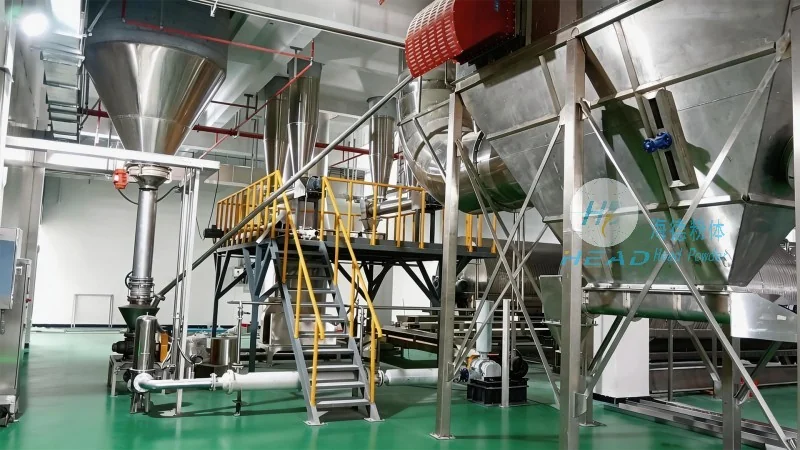
Material Handling Equipment Selection
The selection of material handling equipment is crucial for the efficiency of the quartz sand pneumatic conveying system. The feeder, which is responsible for introducing quartz sand into the conveying line, must be chosen based on the material's flow characteristics. For quartz sand, which can be cohesive or have a tendency to arch, a rotary valve or a star feeder may be appropriate. These devices ensure a consistent flow rate and prevent blockages. The air compressor is another key component, as it provides the necessary air pressure to move the material. The compressor's capacity should match the system's required air volume and pressure. For quartz sand applications, a centrifugal or positive displacement compressor may be used, depending on the system's pressure requirements and flow rate. The pipeline design, including the diameter and material of the pipes, also plays a significant role. Stainless steel or PVC pipes are commonly used for quartz sand due to their resistance to corrosion and wear from the abrasive particles.
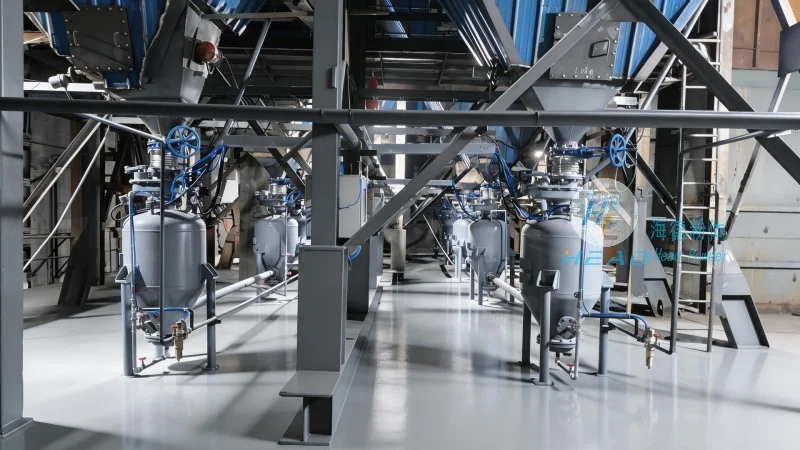
System Layout and Components
The layout of the pneumatic conveying system should be designed to minimize pressure losses and ensure smooth material flow. The system typically includes a hopper for material storage, a feeder to control the flow rate, a pipeline network, and a receiver for the delivered material. The hopper should be sized to accommodate the material volume and provide a sufficient residence time to prevent material degradation. The feeder should be positioned to ensure a uniform flow into the pipeline, avoiding surges or fluctuations that could lead to system instability. The pipeline network should be laid out to minimize bends and changes in direction, as these can cause pressure drops and increase the risk of particle separation. The receiver should be designed to handle the incoming material and prevent dust emissions, often equipped with a dust collection system.
Control and Monitoring Systems
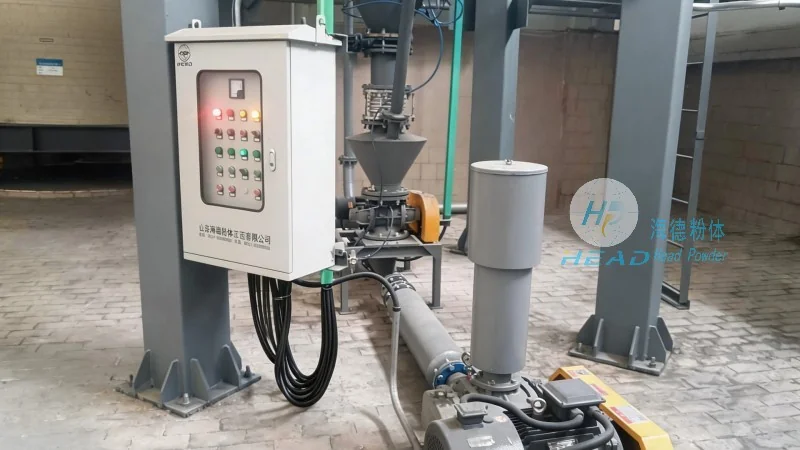
Implementing a control and monitoring system is essential for maintaining the efficiency and reliability of the quartz sand pneumatic conveying system. The system should include sensors to monitor air pressure, flow rate, and material level. These sensors provide real-time data that can be used to adjust the system's operation and prevent issues such as overloading or underpressure. The control system may also include alarms and automatic shut-off features to respond to abnormal conditions. For example, if the air pressure drops below a certain threshold, the system can automatically stop the feeder to prevent material from being introduced into a low-pressure zone. Additionally, the system should be equipped with a dust collection system to capture any particles that escape from the pipeline, ensuring compliance with environmental regulations and maintaining a safe working environment.
Installation and Maintenance Considerations
Proper installation and regular maintenance are critical for the long-term performance of the quartz sand pneumatic conveying system. Installation should follow the manufacturer's guidelines, ensuring that all components are properly aligned and secured. The pipeline should be checked for leaks and proper connections to prevent air loss and pressure drops. Regular maintenance includes cleaning the feeder and pipeline to remove accumulated dust and debris, which can affect the system's efficiency and cause blockages. The air compressor should be inspected regularly to ensure it is operating within its specified parameters, and the filters should be replaced as needed to maintain air quality. Additionally, the system should be inspected for signs of wear and tear, such as corrosion or abrasion, and replaced or repaired as necessary. Regular maintenance can extend the system's lifespan and reduce the risk of costly downtime.
Conclusion
Designing a reasonable quartz sand particle pneumatic conveying system requires a comprehensive approach that considers the material's properties, system requirements, and operational constraints. By carefully evaluating the key factors discussed in this article, such as particle size, system capacity, and layout, engineers can develop a system that is efficient, reliable, and cost-effective. The involvement of experienced professionals, such as those from Shandong HeadPowder Engineering Co., Ltd., can provide valuable expertise in designing and implementing such systems. With proper design, installation, and maintenance, a pneumatic conveying system can effectively transport quartz sand, meeting the needs of various industrial applications and ensuring smooth operations.

 Công ty TNHH Kỹ thuật Công trình Bột Hải Đức Sơn Đông
 156-6277-7102(Quản lý Trương)
  0531-83386006
  Quận Chương Khâu, Thành phố Tế Nam, Tỉnh Sơn Đông, Trung Quốc
Điện thoại
WeChatTư vấn
Lên đầu