Công ty Hải Đức Bột với hơn 10 năm kinh nghiệm vận chuyển khí, cung cấp hệ thống‑thiết bị‑quạt gió và nhận dự án tổng thầu bột cả nước
Masterbatch, as a critical additive in the plastic manufacturing industry, demands efficient and reliable conveying solutions to maintain smooth production processes. For companies like Shandong HeadPowder Engineering Co., Ltd., selecting the appropriate masterbatch conveying method is vital for optimizing operational efficiency and ensuring product quality. This article delves into the common methods used for masterbatch conveying, offering a detailed overview of each approach's benefits and practical applications.
1. Gravity Conveying Systems
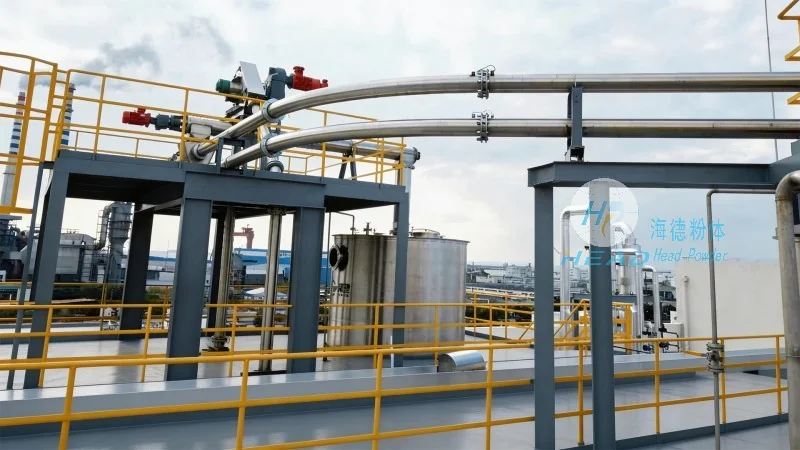
Gravity conveying systems utilize the natural force of gravity to move masterbatch from one location to another. These systems typically consist of inclined chutes or hoppers that allow the material to flow downward under its own weight. The design of gravity conveyors is straightforward, making them an economical and low-maintenance option. They are particularly well-suited for short-distance transfers where the masterbatch is in a free-flowing state. For example, in a production line where masterbatch is stored in a hopper above the processing equipment, a gravity chute can direct the material directly into the extruder or mixer. The primary advantage of gravity conveying is its simplicity and minimal energy consumption, as it relies solely on the material's weight for movement. However, it has limitations in terms of the vertical and horizontal distance between the source and destination, and may not be suitable for large volumes or materials with poor flow characteristics.
2. Mechanical Conveying Systems
Mechanical conveying systems employ mechanical components such as screws, belts, or chains to transport masterbatch. The most prevalent type is the auger conveyor, which uses a rotating screw to push material forward. Auger conveyors are highly versatile and can handle a wide range of masterbatch types, including those with varying moisture content or particle sizes. They are capable of both horizontal and vertical transport, making them suitable for complex production layouts. For instance, a horizontal auger conveyor can move masterbatch from a storage silo to a blending unit, while a vertical auger can lift it from a lower level to an upper processing station. Mechanical conveyors offer better control over conveying speed and volume compared to gravity systems, enabling precise dosing and seamless integration with other production equipment. Nevertheless, they require more maintenance and energy input, as the mechanical components need regular inspection and lubrication to ensure smooth operation.
3. Pneumatic Conveying Systems
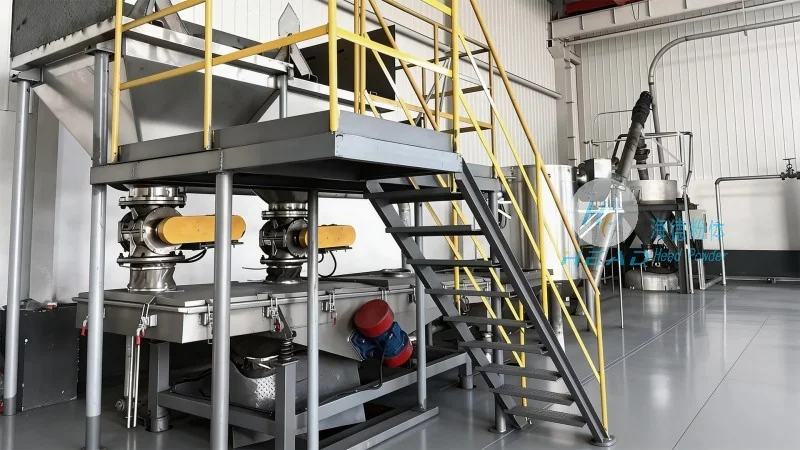
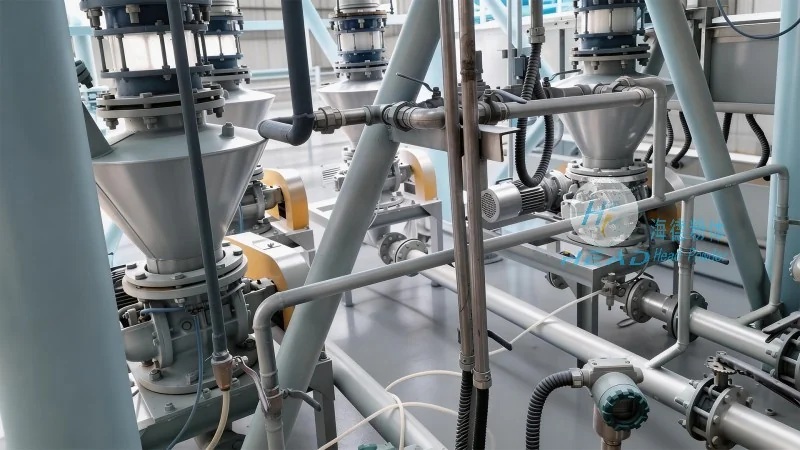
Pneumatic conveying systems utilize air or other gases to transport masterbatch through a pipeline. This method is especially effective for handling fine or dusty masterbatch, as it prevents material degradation and contamination. There are two main types of pneumatic conveyors: pressure and vacuum. Pressure systems use compressed air to push material through the pipeline, while vacuum systems use a vacuum to draw material in. Pneumatic conveying is ideal for long-distance transfers and can handle both small and large volumes of masterbatch. For example, a pressure conveyor can transport masterbatch from a warehouse to a production facility located several hundred meters away, without the need for intermediate storage. The flexibility of pneumatic systems allows for easy integration with existing production lines and adaptation to various masterbatch characteristics. However, they require a reliable air supply system and may experience pressure drops over long distances, which can affect conveying efficiency. Additionally, the cost of air compressors and the potential for material buildup in the pipeline are factors to consider when implementing pneumatic conveying.
4. Hybrid Conveying Systems
Hybrid conveying systems combine two or more of the above methods to leverage their respective advantages. For example, a system might use gravity for short horizontal transport and mechanical or pneumatic components for vertical or long-distance moves. This approach allows for greater flexibility and efficiency in complex production environments. Shandong HeadPowder Engineering Co., Ltd. often recommends hybrid systems for clients with diverse production needs, as they can be customized to meet specific operational requirements. A typical hybrid system might include a gravity chute for initial material transfer from a hopper, followed by an auger conveyor to lift the material vertically, and then a pneumatic conveyor to transport it to the final processing location. By combining different technologies, hybrid systems can optimize material flow, reduce energy consumption, and improve overall production throughput. However, the design and maintenance of hybrid systems are more complex, requiring expertise to ensure proper integration and operation.

 Công ty TNHH Kỹ thuật Công trình Bột Hải Đức Sơn Đông
 156-6277-7102(Quản lý Trương)
  0531-83386006
  Quận Chương Khâu, Thành phố Tế Nam, Tỉnh Sơn Đông, Trung Quốc
Điện thoại
WeChatTư vấn
Lên đầu