Công ty Hải Đức Bột với hơn 10 năm kinh nghiệm vận chuyển khí, cung cấp hệ thống‑thiết bị‑quạt gió và nhận dự án tổng thầu bột cả nước
Carbon additive powders are essential in various industrial applications, and efficient transportation of these powders is crucial for maintaining production efficiency and product quality. This article provides a detailed comparison of common conveying methods used for carbon additive powders, highlighting their advantages and disadvantages to help industrial operators make informed decisions.
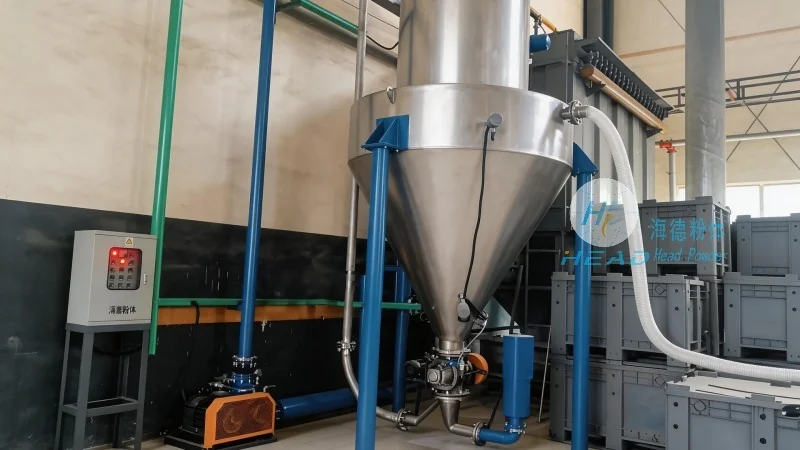
Company Overview: Shandong HeadPowder Engineering Co., Ltd.
Shandong HeadPowder Engineering Co., Ltd., a leading manufacturer based in China, specializes in the production and supply of high-quality carbon additive powders and related conveying equipment. With a strong commitment to technological innovation and customer satisfaction, the company has established itself as a reliable partner in the industry. HeadPowder's products are designed to meet the diverse needs of clients, ensuring optimal performance and durability in demanding industrial environments.
1. Pneumatic Conveying Systems
Pneumatic conveying, also known as air conveying, is a widely used method for transporting carbon additive powders. This system utilizes compressed air to move the powder through a pipeline. The primary advantage of pneumatic conveying is its ability to transport powders over long distances with minimal maintenance. It is particularly effective for handling fine powders and can be integrated with other processing equipment, such as mixers and reactors. However, pneumatic conveying has some drawbacks. It requires a significant amount of energy to operate, and the system can be prone to clogging if the powder is too fine or has high moisture content. Additionally, the initial investment for a pneumatic system is relatively high compared to other methods.
2. Screw Conveyors
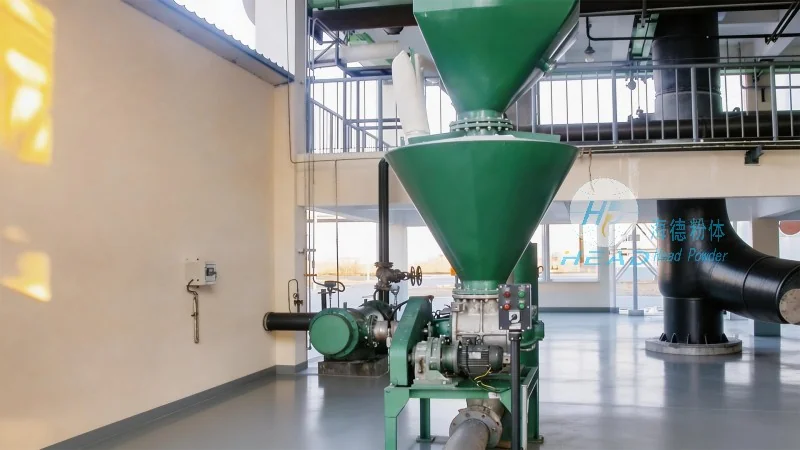
Screw conveyors, also known as auger conveyors, are another common method for transporting carbon additive powders. These systems consist of a rotating screw inside a tube, which moves the powder forward. Screw conveyors are relatively simple in design and easy to install. They are suitable for handling bulk quantities of powder and can operate continuously without the need for external power sources beyond the motor. The main advantage of screw conveyors is their low cost and simplicity. However, they have limitations in terms of distance and angle. The powder can settle in the conveyor if the angle is too steep or the distance is too long, leading to uneven flow. Screw conveyors are also less effective for fine powders that may stick to the screw or the tube walls.
3. Vibrating Conveyors
Vibrating conveyors use vibrations to move carbon additive powders along a trough. The system consists of a conveyor bed that is vibrated at a specific frequency and amplitude. This method is effective for transporting powders with high moisture content or those that are prone to clumping. Vibrating conveyors can handle a wide range of particle sizes and are relatively low maintenance. The primary advantage is their ability to handle sticky or cohesive powders without the need for additional additives. However, vibrating conveyors have some disadvantages. They can be noisy and may require regular maintenance of the vibration mechanism. The system is also less efficient for long-distance transport compared to pneumatic systems.
4. Belt Conveyors
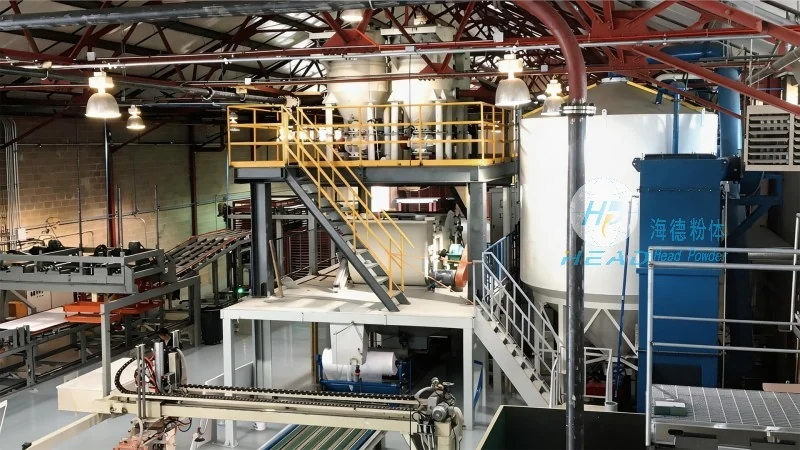
Belt conveyors are a traditional method for transporting bulk materials, including carbon additive powders. These systems use a continuous belt that moves the powder from one point to another. Belt conveyors are suitable for handling large quantities of powder and can operate at high speeds. The main advantage is their high capacity and ability to transport materials over long distances. However, belt conveyors have limitations in terms of space and cost. They require a significant amount of floor space and a substantial initial investment. Additionally, the system can be prone to wear and tear, especially when handling abrasive powders. Regular maintenance is necessary to ensure the longevity of the conveyor belt and the system as a whole.
Conclusion and Recommendations
When selecting a conveying method for carbon additive powders, it is essential to consider the specific requirements of the application, such as the powder's properties, the distance to be covered, and the available budget. Pneumatic conveying is ideal for long-distance transport and fine powders, while screw conveyors are suitable for short distances and bulk quantities. Vibrating conveyors are best for sticky or cohesive powders, and belt conveyors are appropriate for high-capacity applications. Shandong HeadPowder Engineering Co., Ltd. offers a range of conveying solutions tailored to meet these needs, ensuring optimal performance and reliability in industrial settings.

 Công ty TNHH Kỹ thuật Công trình Bột Hải Đức Sơn Đông
 156-6277-7102(Quản lý Trương)
  0531-83386006
  Quận Chương Khâu, Thành phố Tế Nam, Tỉnh Sơn Đông, Trung Quốc
Điện thoại
WeChatTư vấn
Lên đầu