Công ty Hải Đức Bột với hơn 10 năm kinh nghiệm vận chuyển khí, cung cấp hệ thống‑thiết bị‑quạt gió và nhận dự án tổng thầu bột cả nước
When it comes to transporting cement and mineral powders in industrial applications, selecting the right conveying method is crucial for efficiency, cost-effectiveness, and operational safety. Various technologies are available, each with distinct characteristics that make them suitable for different scenarios. This article provides an overview of common conveying methods used for cement and mineral powders, examining their advantages and disadvantages to help industrial operators make informed decisions.
1. Screw Conveyors (Auger Conveyors)
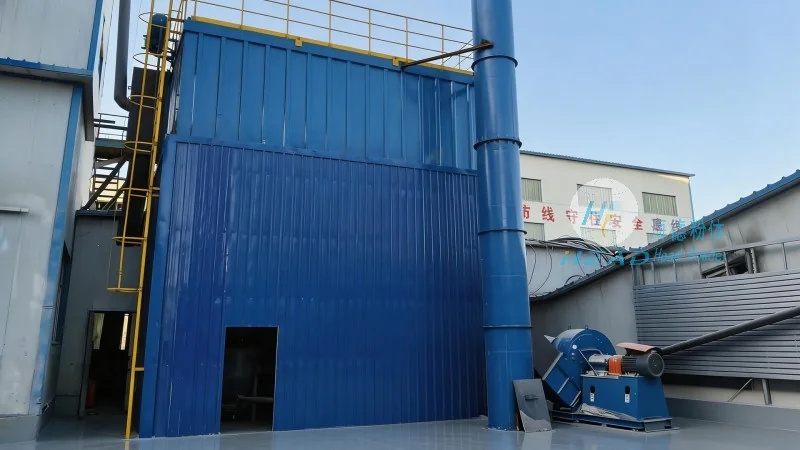
Screw conveyors are among the most widely used equipment for transporting bulk materials like cement and mineral powders. These systems consist of a rotating helical screw inside a U-shaped or tubular housing. The screw rotates, pushing the material forward through the conveyor. The primary advantages of screw conveyors include their simplicity, low maintenance requirements, and ability to handle a wide range of materials, including those with varying moisture content. They are also relatively inexpensive to install and can be easily integrated into existing production lines. However, screw conveyors have limitations, particularly when dealing with abrasive or highly cohesive materials. The screw and housing can wear quickly, leading to increased maintenance costs and potential downtime. Additionally, screw conveyors are not suitable for vertical lifting over long distances, as the power requirements increase significantly with height. They also have a lower capacity compared to other methods like pneumatic conveying for certain applications.
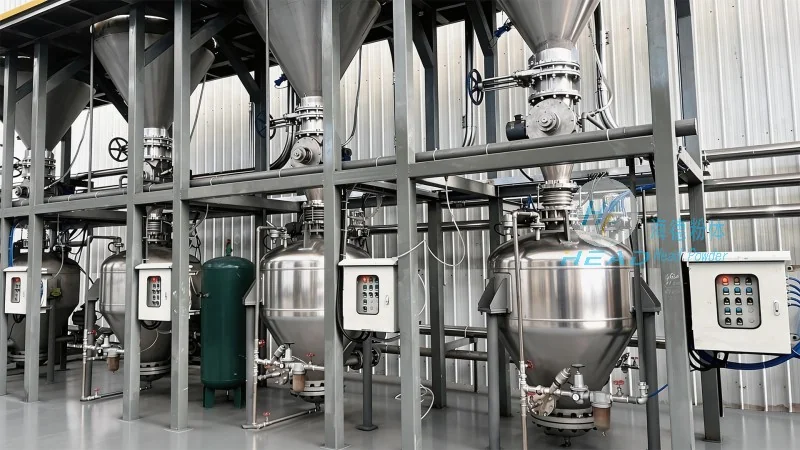
2. Pneumatic Conveying Systems
Pneumatic conveying systems use air or other gases to transport bulk materials through a pipeline. There are two main types: pressure and vacuum systems. In pressure systems, compressed air pushes the material through the pipeline, while vacuum systems use suction to draw the material from the source. Pneumatic conveying offers several advantages, including high capacity, the ability to transport materials over long distances (both horizontally and vertically), and the option to integrate multiple transfer points. This method is particularly effective for handling fine powders and can be used for both short and long-distance transport. Another key advantage is the ability to handle materials with high moisture content or those that are prone to caking, as the air flow helps to keep the material in suspension. However, pneumatic conveying has significant drawbacks. The equipment is more complex and expensive to install compared to screw conveyors. High-pressure systems require robust pipelines and powerful air compressors, which increase operational costs. Vacuum systems can be less efficient for long-distance transport and may require additional booster fans. Furthermore, the system is sensitive to material properties; if the powder is too fine or has high moisture content, it can cause blockages or reduce conveying efficiency. Maintenance is also more involved, as filters and air compressors need regular cleaning and replacement.
3. Belt Conveyors
Belt conveyors are another common method for transporting cement and mineral powders, especially in applications requiring long-distance horizontal transport. These systems consist of a continuous belt that moves over rollers or idlers, carrying the material from one point to another. The primary advantage of belt conveyors is their high capacity and ability to transport materials over long distances with minimal energy consumption. They are particularly suitable for bulk material handling in mining, construction, and cement production facilities. Belt conveyors are also relatively simple to operate and maintain, with fewer moving parts compared to screw or pneumatic systems. However, belt conveyors have limitations when dealing with fine powders or materials that are prone to dust generation. The open design of the conveyor can lead to dust emissions, which may require additional dust control measures. Belt conveyors are also not suitable for vertical lifting, as the belt would need to be inclined at a steep angle, which is impractical for most applications. The initial cost of installation is higher than that of screw conveyors, and the maintenance of the belt and rollers can be costly over time, especially when handling abrasive materials.
4. Bucket Elevators
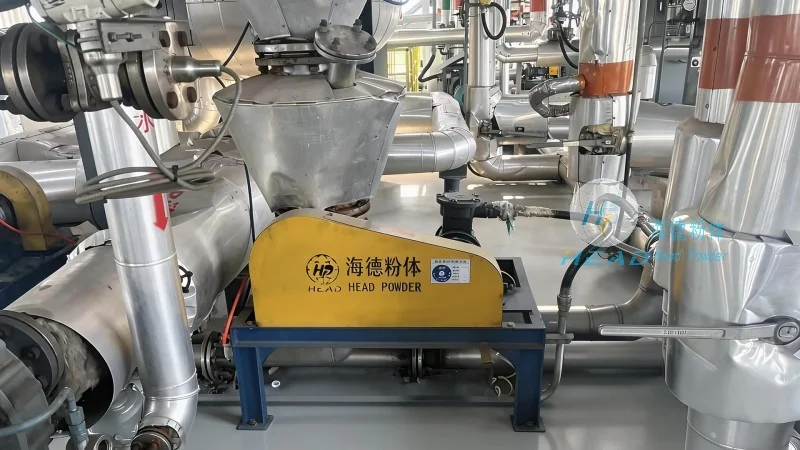
Bucket elevators are specialized equipment designed for vertical or steeply inclined transport of bulk materials, including cement and mineral powders. These systems consist of a continuous chain or belt with attached buckets that move vertically or at a steep angle. The buckets scoop up the material at the bottom and discharge it at the top. The main advantage of bucket elevators is their high vertical lifting capacity, making them ideal for applications where materials need to be moved from a lower to a higher level. They can handle large volumes of material and are suitable for both fine and coarse powders. Bucket elevators also have a relatively simple design and are easy to maintain, with fewer components compared to other vertical transport systems. However, bucket elevators have significant drawbacks. The equipment is more expensive to install compared to screw or belt conveyors, especially for large-scale applications. The vertical design requires careful alignment and installation to ensure smooth operation. Bucket elevators are also not suitable for horizontal transport, as the steep angle is necessary for lifting. Additionally, the buckets and chains can wear quickly when handling abrasive materials, leading to increased maintenance costs and potential downtime. The system is also sensitive to the material's flow characteristics; if the powder is too fine or has high moisture content, it can cause the buckets to stick or the material to fall through the gaps.
5. Hydraulic Conveying Systems
Hydraulic conveying systems use water or other liquids to transport bulk materials through a pipeline. The material is suspended in the liquid and carried to the destination. This method is particularly effective for handling fine powders and materials with high moisture content. The primary advantage of hydraulic conveying is its ability to transport materials over long distances with high capacity and low energy consumption. It is also suitable for materials that are difficult to handle with other methods, such as those that are prone to caking or have high abrasiveness. Hydraulic systems are relatively simple and can be easily integrated into existing facilities. However, hydraulic conveying has significant limitations. The equipment is more complex and expensive to install compared to other methods. The system requires a pump and a filtration system to maintain the liquid's quality, which increases operational costs. The liquid used for conveying must be carefully managed to prevent contamination and ensure the material is not damaged. Additionally, the system is not suitable for materials that are water-sensitive or those that cannot be mixed with liquids. The maintenance of the pump and filtration system is also more involved, as these components need regular cleaning and replacement.
6. Comparison and Selection Criteria
When selecting a conveying method for cement and mineral powders, several factors must be considered to ensure the best fit for the application. The first consideration is the distance and direction of transport—horizontal, vertical, or a combination. Screw conveyors and belt conveyors are ideal for horizontal transport, while bucket elevators and pneumatic systems can handle vertical or inclined transport. The second factor is the material properties, including particle size, moisture content, and abrasiveness. Fine powders and materials with high moisture content are better suited for pneumatic or hydraulic systems, while coarse or abrasive materials may require screw or belt conveyors. The third factor is the required capacity and throughput. For high-volume applications, belt conveyors and pneumatic systems are more suitable, while screw conveyors are better for lower capacities. The fourth factor is the cost, including initial installation and ongoing maintenance. Screw conveyors are generally the most cost-effective option, while pneumatic and hydraulic systems are more expensive but offer higher capacity and flexibility. The fifth factor is the operational environment, including space constraints and the need for dust control. Belt conveyors and pneumatic systems may require additional measures to control dust emissions, while screw conveyors are more enclosed and can be integrated into existing facilities with less modification.

 Công ty TNHH Kỹ thuật Công trình Bột Hải Đức Sơn Đông
 156-6277-7102(Quản lý Trương)
  0531-83386006
  Quận Chương Khâu, Thành phố Tế Nam, Tỉnh Sơn Đông, Trung Quốc
Điện thoại
WeChatTư vấn
Lên đầu