Công ty Hải Đức Bột với hơn 10 năm kinh nghiệm vận chuyển khí, cung cấp hệ thống‑thiết bị‑quạt gió và nhận dự án tổng thầu bột cả nước
Silicone powder, a crucial material in various industrial applications, requires efficient and reliable conveying systems to ensure smooth production processes. The choice of conveying method significantly impacts operational efficiency, material quality, and overall production costs. Understanding the common methods used for silicone powder transport is essential for industries that rely on this material. This article provides an overview of typical silicone powder conveying approaches, with a particular focus on pneumatic conveying, a widely adopted technique for handling fine powders like silicone powder.
Pneumatic Conveying: A Preferred Method for Silicone Powder Transport
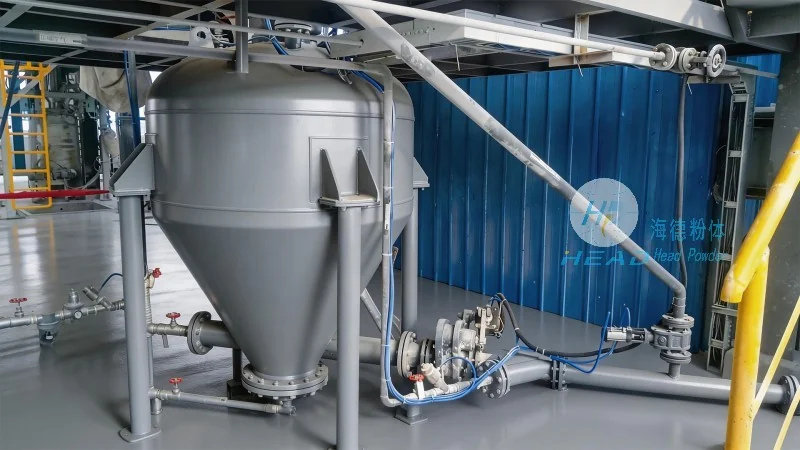
Pneumatic conveying, also known as air conveying, is a widely used method for transporting silicone powder due to its ability to handle fine, abrasive, or sensitive materials without causing degradation. This technique utilizes compressed air to move powder through a pipeline system, offering several advantages over traditional mechanical conveying methods. The process involves feeding the silicone powder into a hopper, where it is then drawn into a pipeline by the air flow. As the powder travels through the system, it is separated from the air at the discharge point, allowing for clean and efficient material transfer. Pneumatic conveying systems can be designed in various configurations, including dilute-phase and dense-phase systems, each tailored to specific material characteristics and application requirements. For silicone powder, which is often fine and light, dilute-phase pneumatic conveying is commonly employed, as it minimizes material degradation and ensures consistent flow rates.
Other Conveying Methods for Silicone Powder
While pneumatic conveying is a popular choice, other methods are also used for silicone powder transport, depending on the specific needs of the application. Mechanical conveying methods, such as screw conveyors and belt conveyors, are sometimes employed for bulk handling of silicone powder. These systems are generally more suitable for larger particle sizes or when the material is less sensitive to air flow. However, they may not be as effective for fine silicone powders, as they can cause particle attrition and agglomeration. Another method is vacuum conveying, which uses a vacuum to draw silicone powder from a source to a destination. This technique is particularly useful for applications where the powder needs to be transported over short distances or where the material is prone to dusting. Vacuum conveying systems are often more compact and can be integrated into existing production lines, making them a practical option for many industries.
Factors to Consider When Choosing a Conveying Method for Silicone Powder
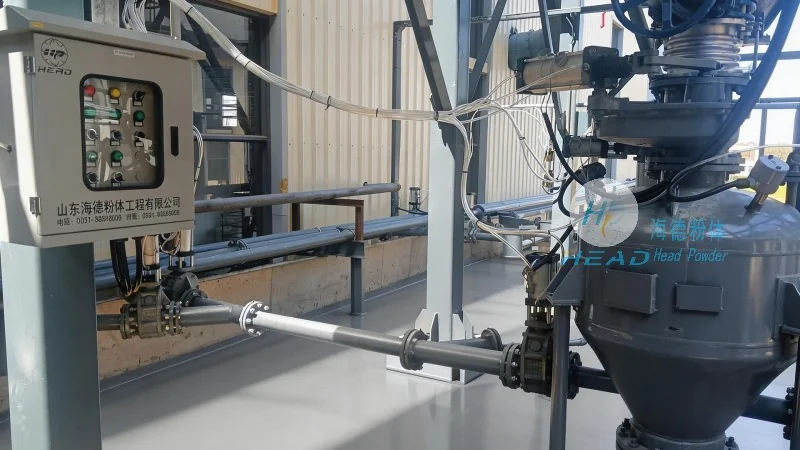
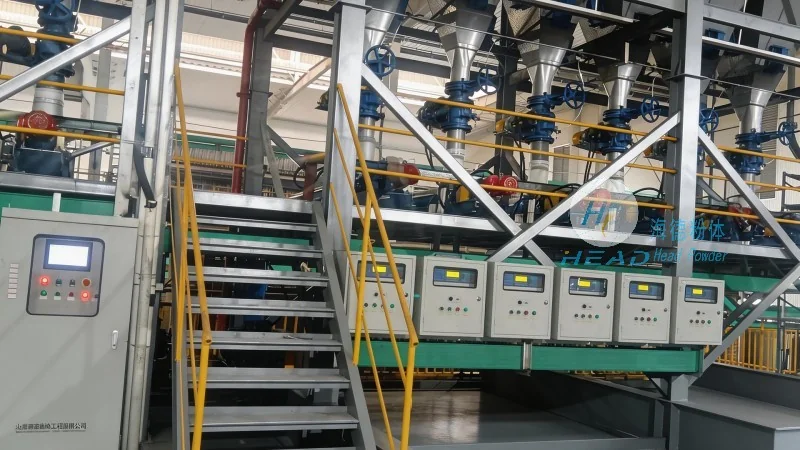
The selection of an appropriate conveying method for silicone powder depends on several factors, including the material's properties, the required conveying distance, the desired flow rate, and the overall production environment. The particle size, density, and moisture content of the silicone powder are critical considerations, as they affect the system's design and performance. For example, fine silicone powders with high moisture content may require additional drying or conditioning steps before conveying to prevent clogging or material degradation. The conveying distance also plays a role, as longer distances may necessitate more powerful air compressors or additional boosters to maintain adequate air pressure. Additionally, the production environment, such as the presence of other materials or equipment, may influence the choice of conveying method. For instance, in a cleanroom environment, pneumatic conveying may be preferred to minimize dust contamination and maintain air quality standards.
About Shandong HeadPowder Engineering Co., Ltd.
Shandong HeadPowder Engineering Co., Ltd., commonly known as HeadPowder, is a leading provider of silicone powder handling solutions. With a focus on innovation and quality, HeadPowder specializes in designing and manufacturing conveying systems tailored to the unique needs of silicone powder applications. The company's expertise in pneumatic conveying and other material handling technologies ensures that clients receive efficient and reliable solutions for their production processes. HeadPowder's commitment to customer satisfaction and technical excellence has made it a trusted partner in the industry, serving a wide range of sectors that rely on silicone powder in their operations. Based in Shandong, China, HeadPowder leverages its local resources and industry knowledge to deliver high-quality products and services to clients worldwide.

 Công ty TNHH Kỹ thuật Công trình Bột Hải Đức Sơn Đông
 156-6277-7102(Quản lý Trương)
  0531-83386006
  Quận Chương Khâu, Thành phố Tế Nam, Tỉnh Sơn Đông, Trung Quốc
Điện thoại
WeChatTư vấn
Lên đầu