Công ty Hải Đức Bột với hơn 10 năm kinh nghiệm vận chuyển khí, cung cấp hệ thống‑thiết bị‑quạt gió và nhận dự án tổng thầu bột cả nước
Fly ash, a byproduct of coal combustion, is widely used in construction and industrial applications. Efficient and reliable particle conveying is crucial for the handling and transportation of fly ash. Various methods are employed to transport fly ash particles, each with distinct advantages and limitations. This article provides a detailed comparison of common fly ash particle conveying methods, highlighting their applications and performance characteristics.
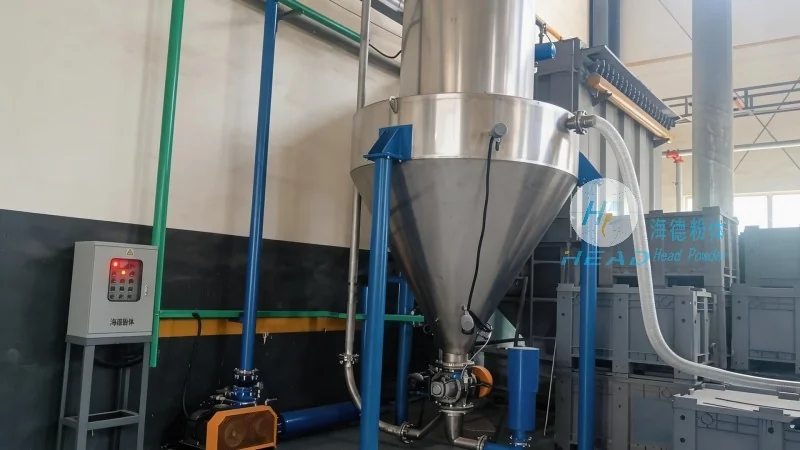
Company Profile: Shandong HeadPowder Engineering Co., Ltd.
Shandong HeadPowder Engineering Co., Ltd., based in Shandong, China, specializes in engineering solutions for bulk material handling, including fly ash processing and conveying systems. With years of experience in the industry, HeadPowder offers customized solutions tailored to the specific needs of clients, ensuring optimal performance and reliability in fly ash transportation operations.
1. Pneumatic Conveying Systems
Pneumatic conveying, also known as air conveying, uses compressed air to transport fly ash particles through a pipeline. This method is suitable for both short and long distances, with the ability to handle fine and abrasive materials. There are two main types of pneumatic conveying: dilute phase and dense phase. Dilute phase systems use low air velocity and high particle velocity, making them efficient for short distances and low material loads. Dense phase systems, on the other hand, operate at higher air velocities and lower particle velocities, which is ideal for long-distance transport and handling of larger particle sizes. Pneumatic conveying offers advantages such as minimal dust generation, low maintenance requirements, and the ability to transport materials vertically and horizontally. However, it may require higher energy consumption and may not be suitable for very fine or moisture-rich fly ash.
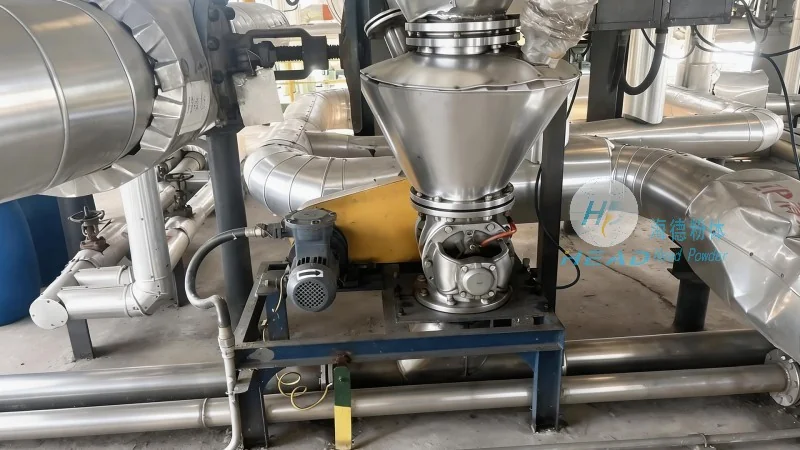
2. Belt Conveyor Systems
Belt conveyors are widely used in bulk material handling due to their simplicity and high capacity. In fly ash applications, belt conveyors are commonly employed for horizontal and slight incline transport. The system consists of a continuous belt that moves over rollers, transporting the fly ash from the source to the destination. Belt conveyors are suitable for handling large volumes of fly ash and can be integrated with other processing equipment. They offer advantages such as low cost, high reliability, and the ability to transport materials over long distances. However, belt conveyors may generate dust during operation and require regular maintenance of the belt and rollers. They are also limited in vertical transport capabilities and may not be suitable for very fine or abrasive fly ash particles.
3. Screw Conveyors
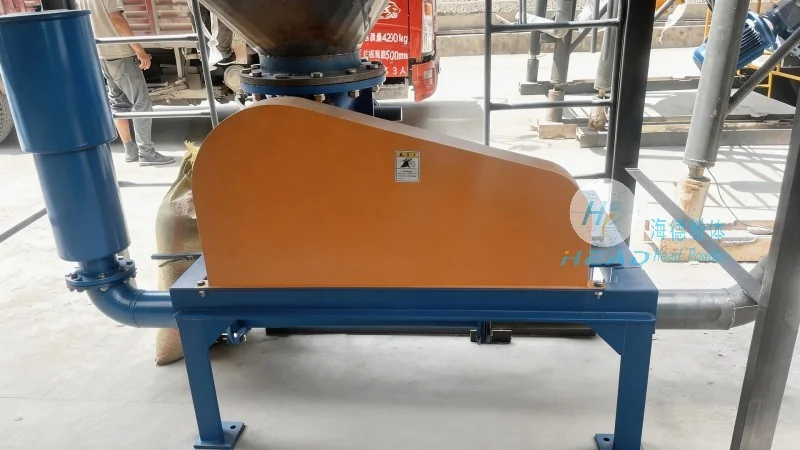
Screw conveyors, also known as auger conveyors, use a rotating screw to move fly ash particles through a tube or trough. This method is ideal for horizontal and slight incline transport and is commonly used in small to medium-scale fly ash handling operations. Screw conveyors are suitable for handling fine and dry fly ash, as well as materials with high moisture content. They offer advantages such as compact design, low maintenance, and the ability to transport materials in a closed system, reducing dust emissions. However, screw conveyors have limitations in terms of capacity and may not be suitable for very large or abrasive fly ash particles. They also require regular cleaning to prevent material buildup and wear.
4. Hydraulic Conveying Systems
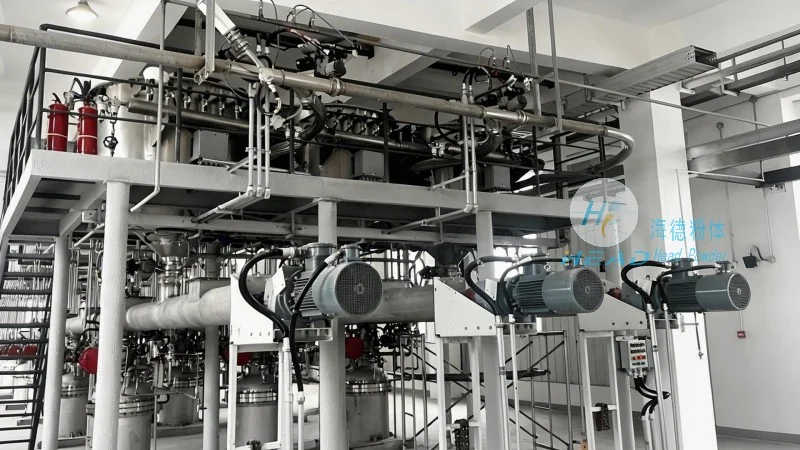
Hydraulic conveying uses water to transport fly ash particles through a pipeline. This method is suitable for long-distance transport and can handle both fine and coarse fly ash particles. The system consists of a pump that pushes water and fly ash mixture through the pipeline, with the water acting as a carrier. Hydraulic conveying offers advantages such as low energy consumption and the ability to transport materials over long distances. However, it may require additional equipment for water treatment and may not be suitable for applications where water contamination is a concern. It is also less common in fly ash handling due to the need for specialized equipment and maintenance.
5. Comparison and Selection Criteria
When selecting a fly ash particle conveying method, several factors need to be considered, including the distance of transport, the volume of material, the particle size and characteristics, and the available space and budget. Pneumatic conveying is suitable for short to medium distances and fine materials, while belt conveyors are ideal for large volumes and long distances. Screw conveyors are suitable for small to medium volumes and horizontal transport, and hydraulic conveying is suitable for long distances and coarse materials. Shandong HeadPowder Engineering Co., Ltd. provides expert consultation and customized solutions to help clients choose the most appropriate conveying method based on their specific requirements. Our team of engineers evaluates the operational parameters and material characteristics to recommend the best system, ensuring optimal performance and cost-effectiveness.

 Công ty TNHH Kỹ thuật Công trình Bột Hải Đức Sơn Đông
 156-6277-7102(Quản lý Trương)
  0531-83386006
  Quận Chương Khâu, Thành phố Tế Nam, Tỉnh Sơn Đông, Trung Quốc
Điện thoại
WeChatTư vấn
Lên đầu