Công ty Hải Đức Bột với hơn 10 năm kinh nghiệm vận chuyển khí, cung cấp hệ thống‑thiết bị‑quạt gió và nhận dự án tổng thầu bột cả nước
When designing a pneumatic conveying system for calcium carbonate powder, it is crucial to consider multiple factors to ensure efficiency, reliability, and cost-effectiveness. The system must be tailored to the specific characteristics of the calcium carbonate material, such as particle size, moisture content, and flowability, as well as the operational requirements of the facility. This article provides a comprehensive guide to designing a reasonable calcium carbonate powder pneumatic conveying system, incorporating key considerations and best practices from industry experts.
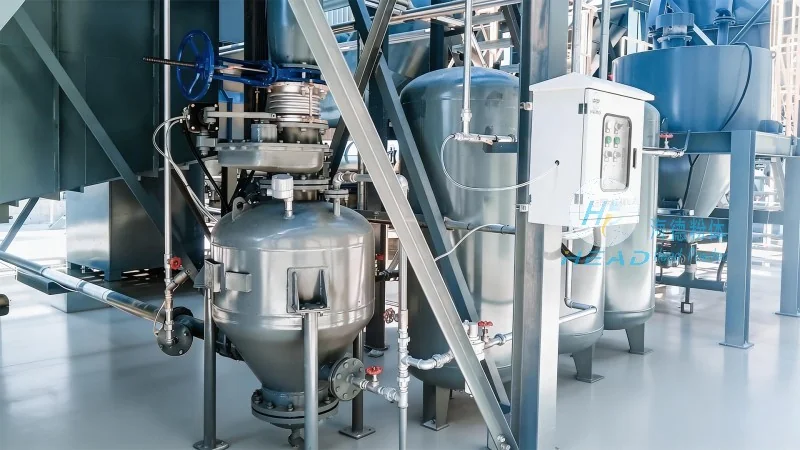
Key Factors in System Design
The first step in designing a pneumatic conveying system for calcium carbonate powder is to assess the material properties. Calcium carbonate, commonly used in industries like paper, plastics, and coatings, has distinct characteristics that influence system selection. For instance, the particle size distribution and bulk density affect the air velocity and pressure required for effective transport. Additionally, moisture content is critical, as excess moisture can lead to material agglomeration and system blockages. By understanding these properties, engineers can select the appropriate conveying method—such as dilute-phase or dense-phase transport—and determine the necessary equipment specifications.
System Components and Equipment Selection
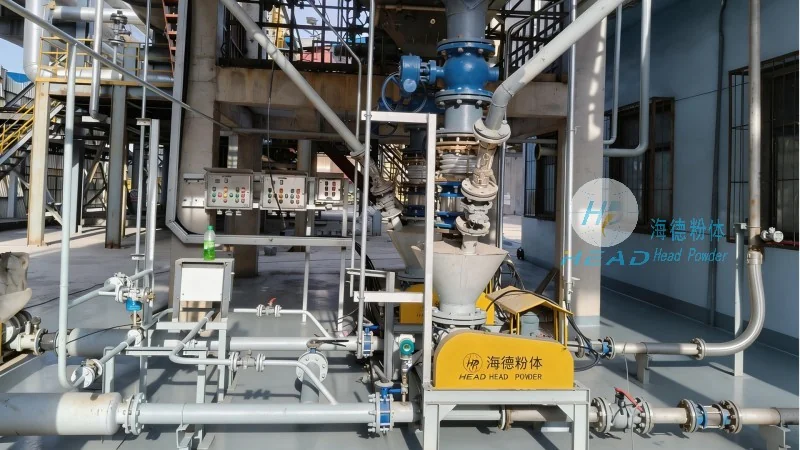
A pneumatic conveying system typically consists of several key components, each playing a vital role in the overall operation. The primary components include a material feeder, a conveying line, a separator, and a dust collection system. For calcium carbonate powder, the material feeder is often a rotary valve or a screw feeder, which ensures a consistent and controlled flow of material into the system. The conveying line, usually made of stainless steel or plastic, must be sized to handle the material's flow rate and pressure requirements. A separator, such as a cyclone or a baghouse, is essential to separate the powder from the air stream and prevent dust emissions. The dust collection system, including filters and a blower, ensures compliance with environmental regulations and maintains air quality.
Conveying Method Selection: Dilute-Phase vs. Dense-Phase
Choosing between dilute-phase and dense-phase pneumatic conveying is a critical decision in system design. Dilute-phase systems use low air velocities and high air-to-material ratios, making them suitable for fine powders like calcium carbonate. These systems are generally more energy-efficient and have lower capital costs but may require longer conveying distances. Dense-phase systems, on the other hand, use higher air velocities and lower air-to-material ratios, resulting in higher pressure and more efficient transport over longer distances. For calcium carbonate powder, the choice depends on the specific application and the distance between the source and destination. For example, if the material needs to be transported over a short distance with minimal pressure loss, a dilute-phase system may be sufficient. Conversely, for long-distance transport or when handling larger particles, a dense-phase system may be more appropriate.
System Sizing and Performance Calculations
Proper system sizing is essential to ensure optimal performance and avoid issues such as under- or over-conveying. Engineers must calculate the required air volume and pressure based on the material's flow rate, particle size, and the system's length and elevation changes. The air velocity in the conveying line is typically maintained above the material's terminal velocity to prevent settling and blockages. For calcium carbonate powder, the terminal velocity can be determined using empirical formulas or experimental data. Additionally, the system's pressure drop must be calculated to ensure that the blower or compressor can provide sufficient pressure to overcome resistance in the line. Accurate calculations help in selecting the right blower size, motor power, and system components, leading to a more reliable and efficient operation.
Installation and Maintenance Considerations
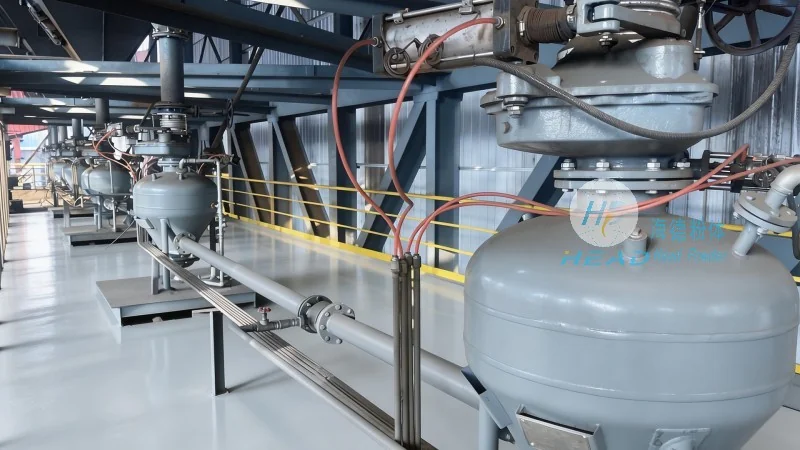
Once the system is designed and manufactured, proper installation and regular maintenance are crucial for long-term performance. The conveying line should be installed with minimal bends and changes in direction to reduce pressure loss and prevent material buildup. Regular cleaning of the separator and dust collection system is necessary to maintain efficiency and prevent clogging. Additionally, monitoring the system's performance, such as air flow rate and pressure, can help identify potential issues early and prevent costly downtime. For calcium carbonate powder, which can be abrasive, the use of wear-resistant materials for the conveying line and components is recommended to extend the system's lifespan.
Case Study: A Successful Calcium Carbonate Powder Pneumatic Conveying System
Shandong HeadPowder Engineering Co., Ltd., a leading provider of pneumatic conveying solutions, recently completed a project for a paper mill in China. The system was designed to transport calcium carbonate powder from a storage silo to a production line over a distance of 150 meters. The system used a dilute-phase design with a rotary valve feeder and a cyclone separator. The initial calculations indicated that a 20 HP blower was sufficient to maintain the required air velocity and pressure. During operation, the system achieved a flow rate of 5 tons per hour with minimal pressure loss, meeting the customer's production requirements. The project demonstrated the effectiveness of the design approach and the reliability of the equipment provided by HeadPowder.

 Công ty TNHH Kỹ thuật Công trình Bột Hải Đức Sơn Đông
 156-6277-7102(Quản lý Trương)
  0531-83386006
  Quận Chương Khâu, Thành phố Tế Nam, Tỉnh Sơn Đông, Trung Quốc
Điện thoại
WeChatTư vấn
Lên đầu