Công ty Hải Đức Bột với hơn 10 năm kinh nghiệm vận chuyển khí, cung cấp hệ thống‑thiết bị‑quạt gió và nhận dự án tổng thầu bột cả nước
Graphite powder is a widely used material in various industrial applications, from refractory production to battery manufacturing. Efficient and reliable conveying of graphite powder is crucial for maintaining production efficiency and product quality. This article provides a detailed comparison of common graphite powder conveying methods, highlighting their characteristics, advantages, and typical applications.
Company Profile: Shandong HeadPowder Engineering Co., Ltd.
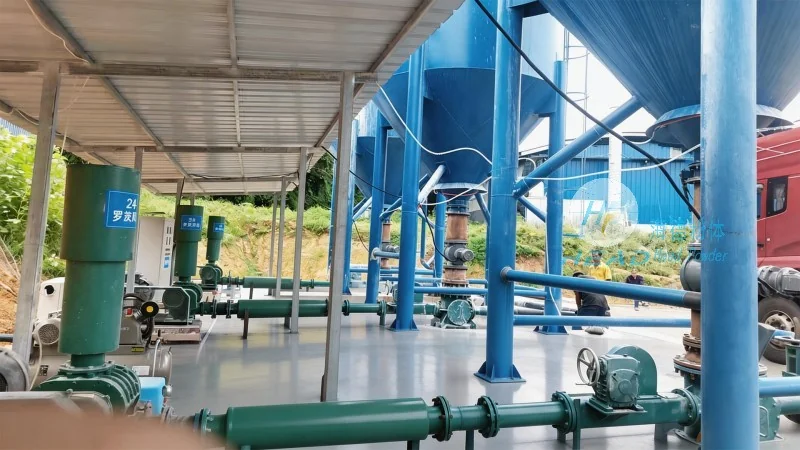
As a leading manufacturer in the graphite processing industry, Shandong HeadPowder Engineering Co., Ltd. specializes in providing high-quality graphite products and advanced conveying solutions. With a strong commitment to technological innovation and customer satisfaction, HeadPowder offers tailored solutions to meet diverse industrial needs. The company’s headquarters is located in Shandong, China, where it leverages years of expertise to develop cutting-edge equipment for material handling.
1. Pneumatic Conveying Systems
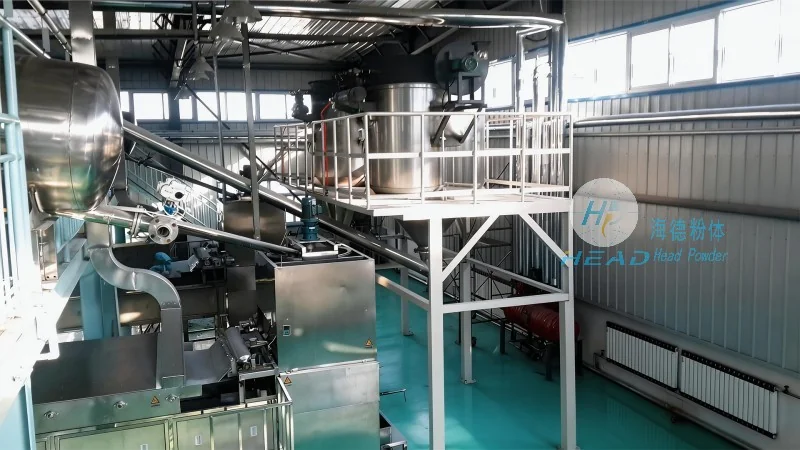
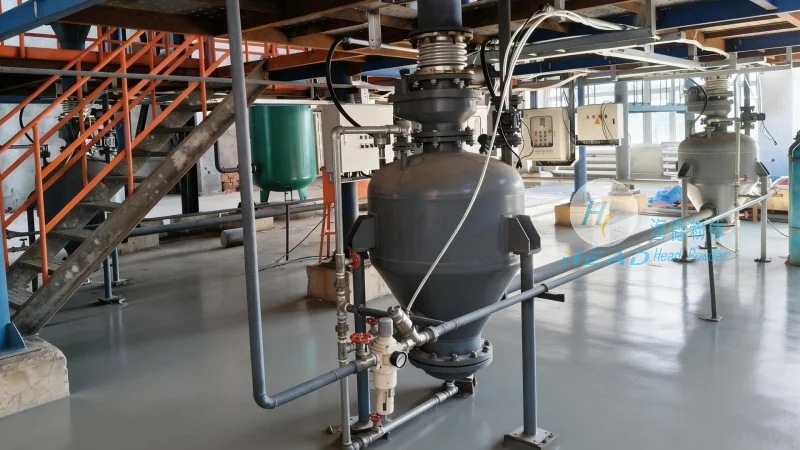
Pneumatic conveying, also known as air conveying, is a popular method for transporting graphite powder due to its ability to handle fine powders over long distances. This system uses compressed air to move the material through a pipeline. There are two main types: pressure and vacuum systems. Pressure systems push the powder forward using high-pressure air, while vacuum systems pull the material through the line using a vacuum. Pneumatic conveying is ideal for applications requiring high speed and minimal dust generation. It is commonly used in industries such as battery manufacturing, where precise control over powder flow is essential. The system can handle a wide range of particle sizes, from very fine to moderately coarse graphite powders. However, it may require more energy compared to other methods and can be sensitive to moisture, which can affect the material’s properties.
2. Screw Conveyors
Screw conveyors, also known as auger conveyors, are another common method for graphite powder transport. These systems use a rotating screw to move the material along a trough. Screw conveyors are particularly effective for handling bulk materials and can be used in both horizontal and inclined configurations. They are suitable for applications where the material needs to be elevated or moved over short to medium distances. The design of the screw and trough can be customized to accommodate different particle sizes and flow rates. Screw conveyors are known for their simplicity and low maintenance requirements. They are often used in processing plants where graphite powder is used in refractory production or as a filler in composite materials. The main advantage is their ability to handle a large volume of material with minimal space requirements. However, they may not be as efficient for very fine powders, as the screw can cause some material to stick to the surface, leading to uneven flow.
3. Belt Conveyors
Belt conveyors are widely used in bulk material handling, including graphite powder. These systems consist of a continuous belt that moves over rollers or pulleys, transporting the material from one point to another. Belt conveyors are suitable for both horizontal and inclined transport and can handle large quantities of material over long distances. They are commonly employed in mining and processing facilities where graphite ore is crushed and then conveyed to storage or processing units. The choice of belt material and tensioning system is critical to ensure the conveyor operates efficiently and safely. Belt conveyors are known for their durability and ability to handle abrasive materials like graphite powder. They can be equipped with various accessories, such as feeders and discharge chutes, to optimize material flow. The main drawback is their relatively high initial cost and the need for regular maintenance to prevent belt wear and tear.
4. Bucket Elevators
Bucket elevators are vertical or inclined conveyors that use a series of buckets attached to a belt or chain to lift and transport graphite powder. These systems are ideal for moving material vertically over significant heights, such as from a storage silo to a processing plant. Bucket elevators are commonly used in industries where graphite powder needs to be elevated to a higher level for further processing. The design of the buckets and the speed of the conveyor determine the capacity and efficiency of the system. Bucket elevators are known for their high lifting capacity and ability to handle fine powders without significant loss. However, they may require more maintenance compared to other systems, as the buckets and chains are subject to wear from the abrasive material. They are often used in combination with other conveying equipment to form a complete material handling system.
Conclusion and Recommendations
When selecting a graphite powder conveying method, it is essential to consider factors such as material properties, distance, required speed, and budget. Pneumatic conveying is suitable for high-speed, low-dust applications, while screw and belt conveyors are better for bulk handling over shorter distances. Bucket elevators are ideal for vertical transport. Shandong HeadPowder Engineering Co., Ltd. offers a range of conveying solutions tailored to specific industrial needs, ensuring optimal performance and reliability. By understanding the characteristics of each method, industries can choose the most appropriate system to enhance their production efficiency and maintain product quality.

 Công ty TNHH Kỹ thuật Công trình Bột Hải Đức Sơn Đông
 156-6277-7102(Quản lý Trương)
  0531-83386006
  Quận Chương Khâu, Thành phố Tế Nam, Tỉnh Sơn Đông, Trung Quốc
Điện thoại
WeChatTư vấn
Lên đầu