Công ty Hải Đức Bột với hơn 10 năm kinh nghiệm vận chuyển khí, cung cấp hệ thống‑thiết bị‑quạt gió và nhận dự án tổng thầu bột cả nước
Microbead powders, such as those used in industrial applications, require efficient and reliable transportation methods to ensure consistent performance and quality. Among the various options available, pneumatic conveying stands out as a preferred solution for handling microbead powders due to its unique advantages and operational benefits. This article explores the different microbead powder conveying methods, with a focus on the advantages and characteristics of pneumatic conveying systems.
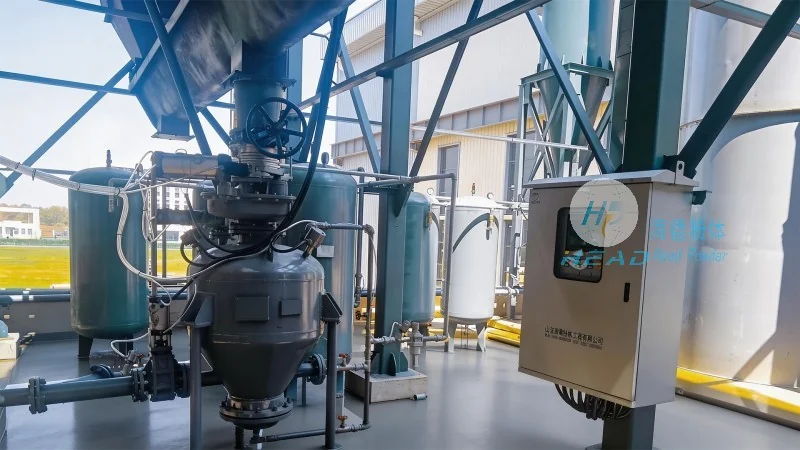
Introduction to Microbead Powder Conveying
Microbead powders are small, spherical particles often used in industries like pharmaceuticals, food processing, and chemical manufacturing. Their size and density make traditional conveying methods, such as belt conveyors or screw conveyors, less effective due to issues like particle segregation, blockages, and material degradation. To address these challenges, specialized conveying systems are employed, with pneumatic conveying being a leading choice for many applications.
Types of Microbead Powder Conveying Methods
There are several methods for transporting microbead powders, each with its own set of advantages and limitations. The primary categories include mechanical conveying and pneumatic conveying. Mechanical conveying methods, like screw conveyors or belt conveyors, rely on physical contact with the material to move it. However, these systems may not be suitable for fine powders due to the risk of clogging and material degradation. In contrast, pneumatic conveying uses air or gas to transport particles through a pipeline, offering a non-contact method that minimizes particle damage and segregation.
Pneumatic Conveying: The Preferred Method for Microbead Powders
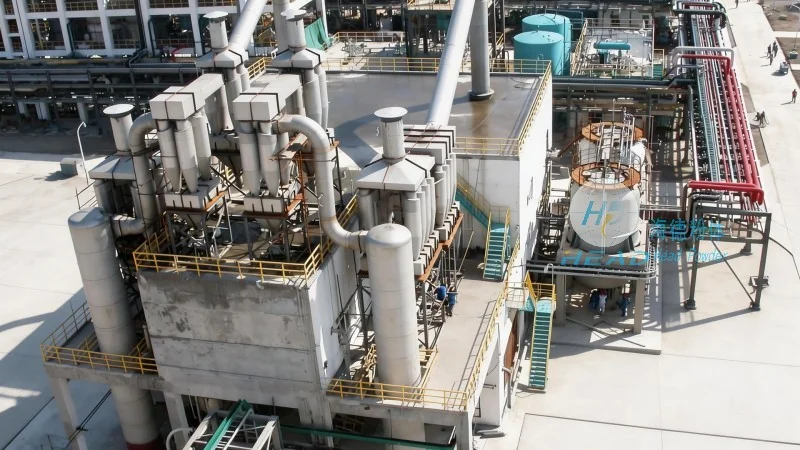
For microbead powders, pneumatic conveying is often the most effective solution. This method involves creating a pressure differential to move particles through a pipeline using air or gas. There are two main types of pneumatic conveying systems: pressure and vacuum. Pressure systems use compressed air to push the material forward, while vacuum systems use a vacuum to draw the material into the pipeline. Both types can be adapted to handle microbead powders, but pressure systems are generally more suitable for longer distances and higher material loads.
Advantages of Pneumatic Conveying for Microbead Powders
Several key advantages make pneumatic conveying an ideal choice for microbead powder transportation. First, it provides a non-contact method of conveying, which minimizes particle attrition and prevents contamination from the conveying equipment. This is particularly important for pharmaceutical and food-grade microbeads, where product purity is critical. Second, pneumatic systems can handle a wide range of particle sizes and densities, making them versatile for various applications. Third, these systems offer high efficiency in terms of material transport, with minimal energy loss compared to other methods. Additionally, pneumatic conveying can be integrated with other processing equipment, such as mixers or classifiers, to create a seamless production line.
Key Features of Pneumatic Conveying Systems for Microbead Powders
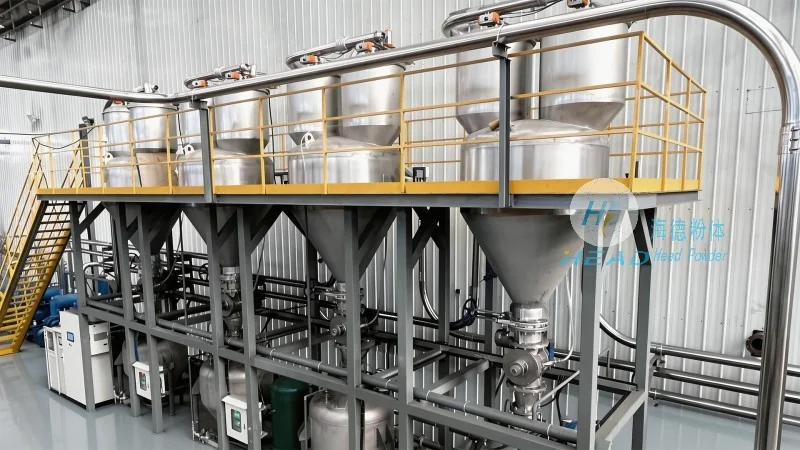
Modern pneumatic conveying systems for microbead powders are designed with several key features to enhance performance and reliability. These include: 1. Customizable Pipeline Design: Systems can be tailored to fit specific plant layouts, with flexible or rigid pipelines depending on the application. 2. Advanced Control Systems: Modern control systems allow for precise regulation of air flow and pressure, ensuring consistent material transport. 3. Material Handling Efficiency: High-efficiency blowers and filters are used to minimize energy consumption and maintain system performance. 4. Maintenance and Durability: Components are made from corrosion-resistant materials to withstand the abrasive nature of microbead powders, reducing maintenance requirements.
Applications of Microbead Powder Pneumatic Conveying
The advantages of pneumatic conveying make it suitable for a wide range of applications involving microbead powders. In the pharmaceutical industry, for example, pneumatic systems are used to transport active pharmaceutical ingredients (APIs) and excipients with high precision and minimal contamination. In food processing, they are used to convey food-grade microbeads, ensuring that the final product meets safety and quality standards. Additionally, in chemical manufacturing, pneumatic conveying is used to transport catalysts and other fine powders, improving process efficiency and reducing downtime.

 Công ty TNHH Kỹ thuật Công trình Bột Hải Đức Sơn Đông
 156-6277-7102(Quản lý Trương)
  0531-83386006
  Quận Chương Khâu, Thành phố Tế Nam, Tỉnh Sơn Đông, Trung Quốc
Điện thoại
WeChatTư vấn
Lên đầu