Công ty Hải Đức Bột với hơn 10 năm kinh nghiệm vận chuyển khí, cung cấp hệ thống‑thiết bị‑quạt gió và nhận dự án tổng thầu bột cả nước
Carbon additive powders are critical raw materials in industrial processes such as steelmaking, foundry operations, and metal casting. Their efficient and reliable transportation from storage to processing equipment is essential for maintaining production efficiency and product quality. Due to the fine particle size, low bulk density, and potential for dust generation of these powders, traditional bulk material handling methods like belt or screw conveyors may not be suitable. Over time, specialized solutions have been developed, with pneumatic conveying emerging as a preferred method for many applications. This article provides an overview of common carbon additive powder conveying methods, with a focus on pneumatic conveying systems.
Overview of Carbon Additive Powder Conveying Methods
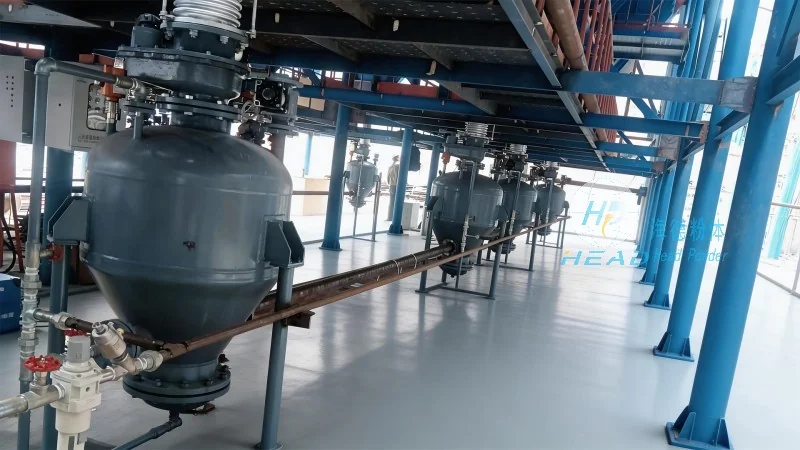
Carbon additive powders, used as deoxidizers or inoculants, require handling methods that minimize particle degradation and dust accumulation. Traditional mechanical conveyors can cause excessive friction and material attrition, making them less ideal. Consequently, alternative systems have been engineered. The primary categories include mechanical conveyors and pneumatic conveying systems. The selection depends on factors like material properties, conveying distance, and required flow rate. Mechanical conveyors like belt or screw systems are suitable for short distances and bulk materials but may not handle fine powders effectively. In contrast, pneumatic systems use air to transport particles, offering better control and suitability for fine powders.
Pneumatic Conveying of Carbon Additive Powders: A Detailed Introduction
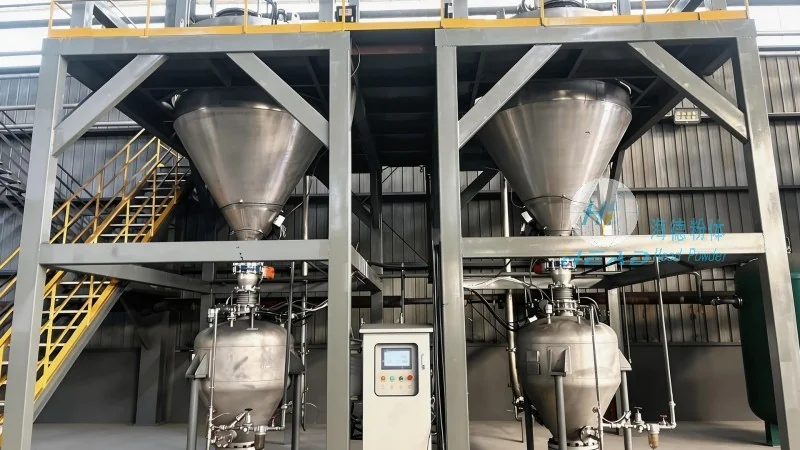
Pneumatic conveying, or air conveying, uses a stream of air to transport solid particles through a pipeline. This method is particularly effective for carbon additive powders due to its ability to handle fine powders without mechanical contact, preserving product integrity. The basic principle involves creating a pressure differential—either by blowing air (positive pressure) or creating a vacuum (negative pressure). The powder is suspended in the air stream and carried to the destination. Pneumatic systems are classified into dilute phase and dense phase. Dilute phase systems use high-velocity air for long-distance, high-capacity transport. Dense phase systems operate at lower velocities, carrying a higher powder concentration, which is beneficial for abrasive or sensitive materials.
Key Advantages of Pneumatic Conveying for Carbon Additive Powders
Compared to mechanical conveyors, pneumatic systems offer several advantages. First, they eliminate physical contact, reducing contamination and product degradation—critical for carbon additive powders sensitive to moisture or temperature. Second, they handle a wide range of particle sizes and shapes, enhancing versatility. Third, they provide precise control over flow rate and direction, enabling accurate dosing into processing equipment. Additionally, they can integrate with other equipment (e.g., mixers, reactors) for seamless material handling. Finally, pneumatic systems are compact and suitable for confined spaces, a key advantage in industrial settings.
Applications of Pneumatic Conveying in Carbon Additive Powder Handling
The effectiveness of pneumatic conveying is demonstrated in industrial applications. In steelmaking, carbon additive powders act as deoxidizers to remove oxygen from molten steel. Pneumatic systems transport these powders from storage to blast furnaces or ladles, ensuring consistent addition. In foundry operations, these powders serve as inoculants to improve cast iron properties. Pneumatic delivery allows precise dosing, preventing over/under-addition that affects casting quality. Similarly, in metal casting, they enhance molten metal fluidity, with pneumatic systems ensuring uniform and controlled addition. The versatility of pneumatic systems also suits applications like carbon black production or handling other fine metallurgical powders.
Considerations for Implementing Pneumatic Conveying Systems
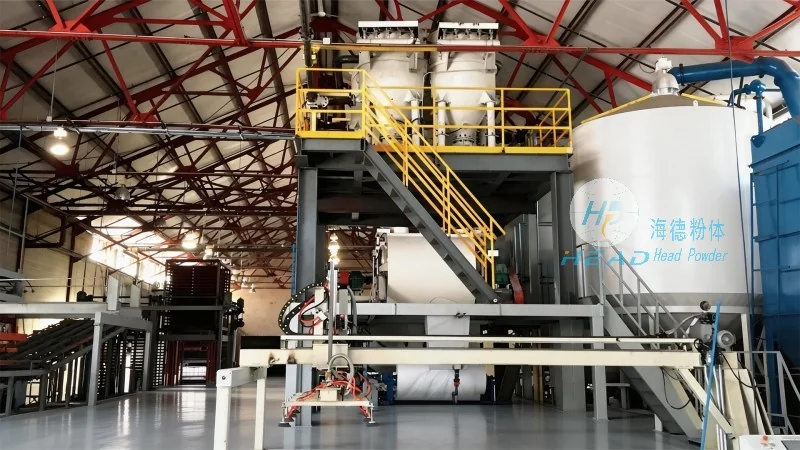
Successful implementation requires careful consideration. First, system design must account for powder properties (particle size, moisture, flowability) to select the appropriate type (dilute/dense phase) and air velocity/pressure. Second, pipeline and component materials must resist abrasion and corrosion—stainless steel or special alloys are common. Third, filtration and dust collection equipment are essential for compliance with environmental regulations and safety. Finally, regular maintenance and monitoring are critical to prevent downtime. Properly maintained systems provide reliable, efficient powder transport for extended periods.
Conclusion
In summary, handling carbon additive powders demands specialized conveying methods to preserve product integrity and operational efficiency. Pneumatic conveying stands out as a highly effective and versatile solution, ideal for fine powders due to its non-contact transport and flow control. As demand for high-quality carbon additive powders grows, advanced pneumatic systems will play a crucial role in meeting production needs. Companies like Shandong HeadPowder Engineering Co., Ltd., based in China, specialize in designing and manufacturing such systems, providing tailored solutions for clients in the metallurgical and related industries.

 Công ty TNHH Kỹ thuật Công trình Bột Hải Đức Sơn Đông
 156-6277-7102(Quản lý Trương)
  0531-83386006
  Quận Chương Khâu, Thành phố Tế Nam, Tỉnh Sơn Đông, Trung Quốc
Điện thoại
WeChatTư vấn
Lên đầu