Công ty Hải Đức Bột với hơn 10 năm kinh nghiệm vận chuyển khí, cung cấp hệ thống‑thiết bị‑quạt gió và nhận dự án tổng thầu bột cả nước
For manufacturers and suppliers in the battery material industry, selecting an efficient and reliable method for conveying anode material particles is crucial to ensuring production line stability and product quality. Among various conveying technologies, pneumatic conveying stands out as a preferred solution due to its unique advantages in handling fine and abrasive materials like anode powders.
Overview of Particle Conveying Methods for Anode Materials
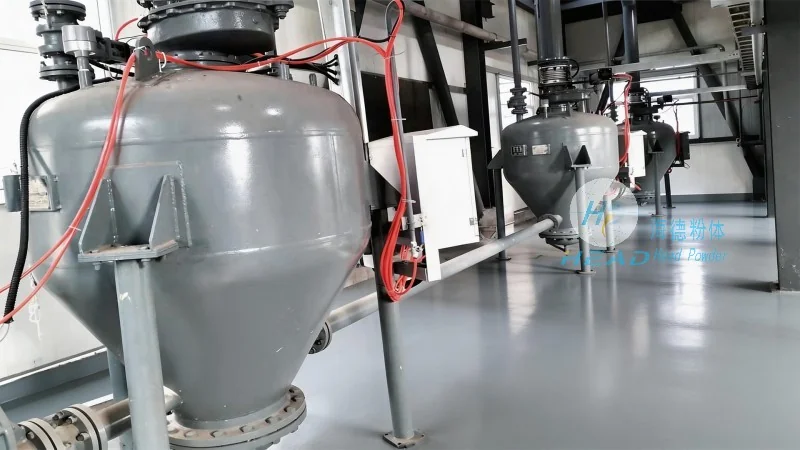
In the battery production process, anode materials such as graphite, silicon, and other carbon-based compounds are typically in powder form. These particles require specialized handling to prevent agglomeration, dust generation, and material loss during transport. Common conveying methods include mechanical systems like screw conveyors, belt conveyors, and pneumatic systems. However, pneumatic conveying, particularly pressure and vacuum systems, offers superior performance for anode material transport due to its ability to handle fine powders and maintain material integrity.
The Advantages of Pneumatic Conveying for Anode Material Particles
Shandong HeadPowder Engineering Co., Ltd., a leading provider of material handling solutions, specializes in designing and manufacturing advanced pneumatic conveying systems tailored for anode material applications. The company, based in Shandong, China, leverages over a decade of industry experience to deliver customized solutions that meet the specific needs of battery manufacturers.
Pneumatic conveying systems for anode materials offer several key advantages over traditional mechanical methods. First, they provide a dust-free and enclosed transport environment, which is critical for maintaining material purity and compliance with environmental regulations. Unlike mechanical conveyors that may cause particle attrition or breakage, pneumatic systems use air flow to gently move particles, preserving their size and shape. This is particularly important for high-value anode materials where particle integrity directly impacts battery performance.
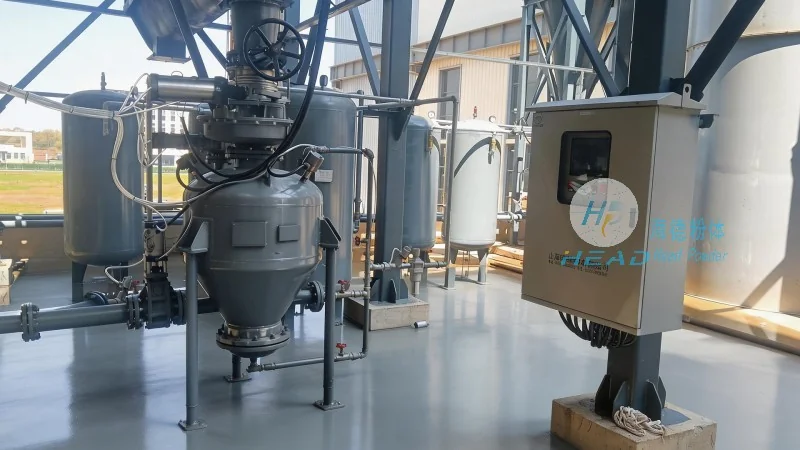
Second, pneumatic conveying offers high efficiency and flexibility in material handling. Systems can be designed to transport materials over long distances and through complex layouts, including vertical lifts and horizontal runs, without the need for multiple transfer points. This reduces downtime and improves overall production throughput. Additionally, pneumatic systems can handle a wide range of particle sizes and densities, making them suitable for diverse anode material formulations.
Third, the technology is energy-efficient and cost-effective in the long run. While initial setup costs may be higher than basic mechanical conveyors, the reduced maintenance requirements and lower material loss result in significant operational savings. Pneumatic systems also minimize labor costs associated with manual handling and cleaning, as the enclosed design prevents dust accumulation and contamination.
Key Features of Pneumatic Conveying Systems for Anode Materials
Shandong HeadPowder Engineering Co., Ltd. integrates advanced features into their pneumatic conveying systems to enhance performance and reliability. These features include:
High-Pressure Air Systems: Utilizing compressed air to generate sufficient pressure for transporting fine powders over extended distances. The company’s systems are equipped with high-efficiency air compressors and pressure regulators to ensure consistent performance.
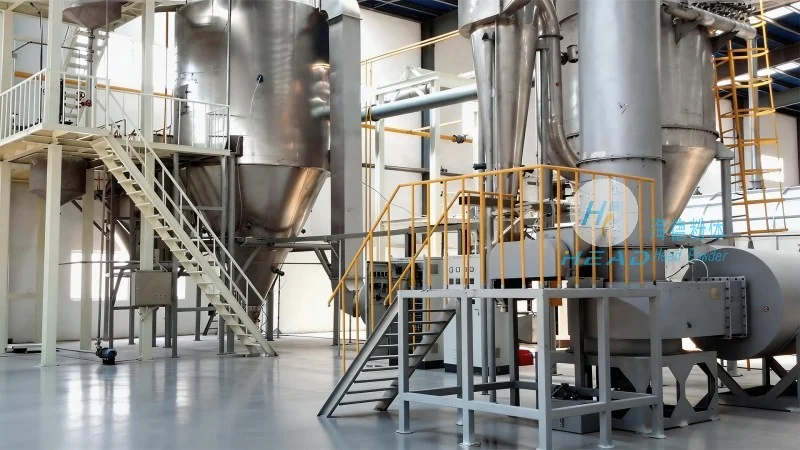
Vacuum Conveying: Ideal for short-distance or low-volume transport, vacuum systems use negative pressure to draw materials into the conveying line. This method is particularly effective for handling sensitive materials that require minimal agitation.
Multi-Stage Conveying: For complex production lines, multi-stage systems combine pressure and vacuum stages to optimize material flow. This approach minimizes pressure drops and ensures smooth transport through various process stages.
Dust Control and Filtration: Advanced filtration systems are integrated to capture and recycle fine particles, reducing environmental impact and maintaining material purity. The company’s systems comply with international standards for air quality and dust emission.
Customization and Application Examples
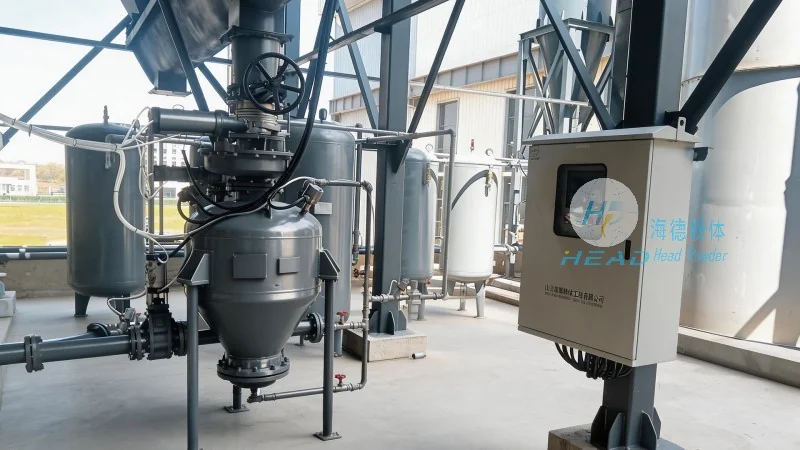
Shandong HeadPowder Engineering Co., Ltd. offers customized pneumatic conveying solutions based on specific customer requirements. For example, in a lithium-ion battery production facility, the company designed a pressure pneumatic system to transport graphite anode powders from a storage silo to a mixing and coating line. The system included a rotary valve feeder, a high-pressure air pump, and a series of pipeline components to ensure continuous and reliable material flow. The result was a 30% reduction in material loss and a 20% increase in production efficiency compared to the previous mechanical conveyor system.
Another application involved the transport of silicon anode materials, which are more abrasive and require higher air pressure. The company’s engineers developed a specialized high-pressure conveying system with reinforced pipelines and wear-resistant components to handle the harsh conditions. This system successfully maintained material integrity and reduced equipment wear, extending the lifespan of the conveying line by 50%.
Conclusion
Pneumatic conveying has become the preferred method for transporting anode material particles in modern battery production. The technology’s ability to handle fine powders, maintain material purity, and offer high efficiency makes it indispensable for manufacturers seeking to optimize their production processes. Shandong HeadPowder Engineering Co., Ltd. continues to lead the industry with innovative solutions that address the evolving needs of battery material handling, ensuring quality, reliability, and cost-effectiveness for its clients.

 Công ty TNHH Kỹ thuật Công trình Bột Hải Đức Sơn Đông
 156-6277-7102(Quản lý Trương)
  0531-83386006
  Quận Chương Khâu, Thành phố Tế Nam, Tỉnh Sơn Đông, Trung Quốc
Điện thoại
WeChatTư vấn
Lên đầu