Công ty Hải Đức Bột với hơn 10 năm kinh nghiệm vận chuyển khí, cung cấp hệ thống‑thiết bị‑quạt gió và nhận dự án tổng thầu bột cả nước
Carboxymethyl cellulose (CMC) is a widely used industrial chemical with applications in various sectors such as food, pharmaceuticals, and construction. The efficient and safe transportation of CMC is crucial for industrial processes, and different conveying methods are employed based on the specific requirements of the application. This article provides an overview of common CMC conveying methods, with a particular focus on air-driven (pneumatic) conveying systems.
Understanding Carboxymethyl Cellulose and Its Conveying Challenges
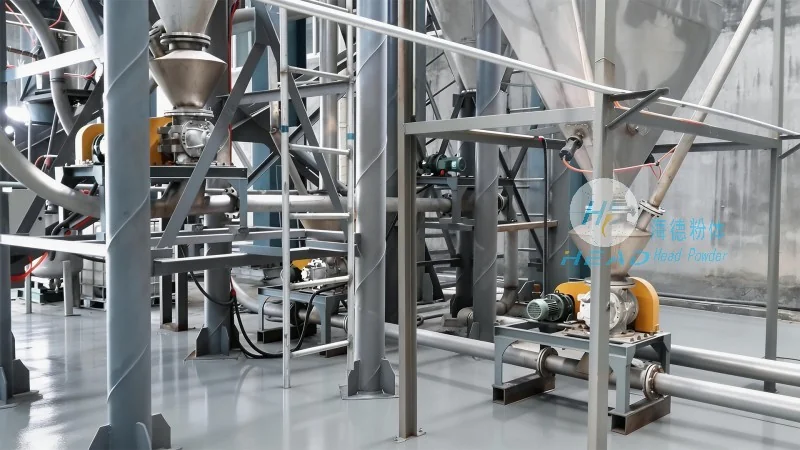
Carboxymethyl cellulose is a water-soluble polymer derived from cellulose, which is commonly used as a thickener, stabilizer, and binder. Due to its fine particle size and hygroscopic nature, CMC presents unique challenges during transportation. Traditional methods like bucket elevators or belt conveyors may not be suitable for handling fine powders, as they can lead to material buildup, clogging, and dust emissions. Therefore, specialized conveying systems are required to ensure reliable and efficient movement of CMC.
Common Conveying Methods for Carboxymethyl Cellulose
Several methods are utilized for the transportation of carboxymethyl cellulose, each with its own advantages and limitations. The choice of method depends on factors such as the material's properties, the distance to be conveyed, and the required flow rate. The primary methods include:
Pneumatic Conveying Systems: The Preferred Solution for CMC
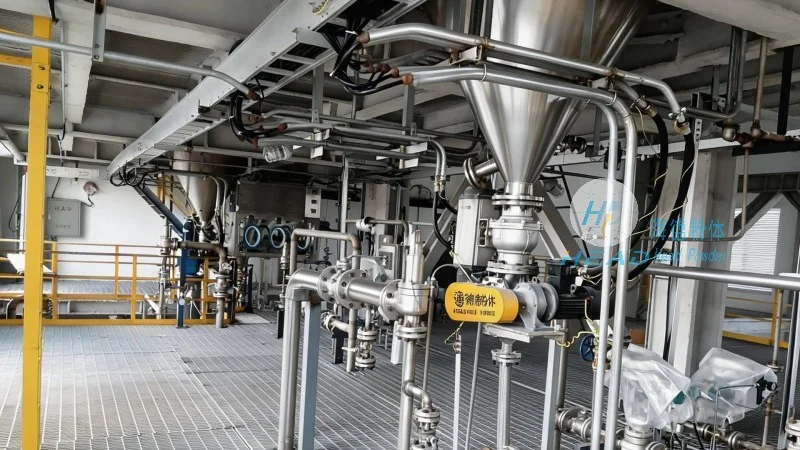
Among the various conveying techniques, air-driven (pneumatic) conveying is widely regarded as the most effective method for handling carboxymethyl cellulose. Pneumatic systems use compressed air to transport the powder through a pipeline, eliminating the need for mechanical components that can cause clogging or material degradation. This method is particularly suitable for fine powders like CMC, as it minimizes dust generation and ensures a smooth flow.
The core components of a pneumatic conveying system for CMC include a hopper, a rotary valve, a venturi or pressure drop device, and a receiver. The material is fed from the hopper into the system via the rotary valve, which controls the flow rate. Compressed air is then introduced into the pipeline, creating a pressure differential that propels the CMC particles forward. The venturi or pressure drop device ensures consistent air flow and particle suspension, preventing blockages and maintaining system efficiency.
Advantages of Air-Driven Conveying for Carboxymethyl Cellulose
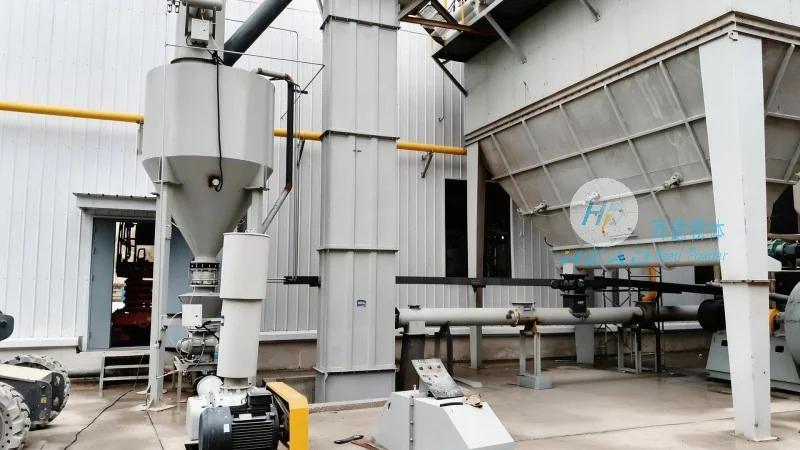
Pneumatic conveying offers several advantages over traditional mechanical methods for CMC transportation. Firstly, it provides a dust-free environment, which is critical for maintaining product quality and ensuring workplace safety. Secondly, the system is highly flexible, allowing for changes in flow rate and direction without the need for extensive modifications. Thirdly, it minimizes material degradation due to reduced friction and impact compared to mechanical conveyors. Additionally, pneumatic systems can handle both low and high flow rates, making them suitable for a wide range of industrial applications.
Application Examples of CMC Pneumatic Conveying
Carboxymethyl cellulose is used in various industries, and the pneumatic conveying method is applied in several scenarios. For instance, in the food industry, CMC is used as a thickener in sauces and beverages, and pneumatic systems are employed to transport it from storage silos to production lines. In the pharmaceutical sector, CMC is used as a binder in tablets and capsules, and the air-driven system ensures precise dosing and minimal contamination. In the construction industry, CMC is used as a binder in adhesives and mortars, and the pneumatic conveying method facilitates efficient delivery to mixing sites.
Conclusion
In conclusion, the choice of conveying method for carboxymethyl cellulose is critical to ensure efficient and safe operation. While various methods exist, air-driven (pneumatic) conveying stands out as the most effective solution due to its ability to handle fine powders, minimize dust, and maintain product quality. Companies such as Shandong HeadPowder Engineering Co., Ltd., based in China, specialize in designing and manufacturing advanced pneumatic conveying systems tailored to the specific needs of CMC and other fine powders. By leveraging such specialized systems, industries can enhance their production efficiency and ensure consistent product quality.

 Công ty TNHH Kỹ thuật Công trình Bột Hải Đức Sơn Đông
 156-6277-7102(Quản lý Trương)
  0531-83386006
  Quận Chương Khâu, Thành phố Tế Nam, Tỉnh Sơn Đông, Trung Quốc
Điện thoại
WeChatTư vấn
Lên đầu