Công ty Hải Đức Bột với hơn 10 năm kinh nghiệm vận chuyển khí, cung cấp hệ thống‑thiết bị‑quạt gió và nhận dự án tổng thầu bột cả nước
For industrial applications, the efficient and reliable transport of limestone powder granules is crucial for maintaining production flow and ensuring product quality. Various conveying methods are available, each with distinct characteristics suited to different operational requirements. This article explores the primary methods used for limestone powder granule conveying, highlighting their advantages and typical applications.
Introduction to Limestone Powder Granule Conveying
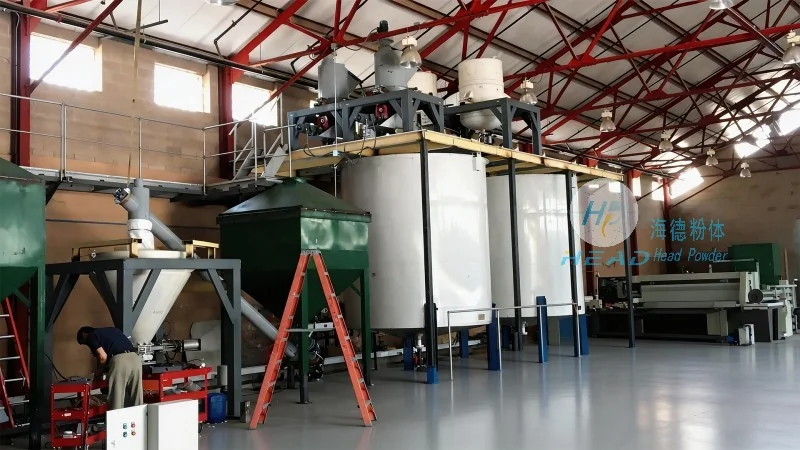
Limestone powder granules are commonly used in construction, manufacturing, and chemical industries due to their versatility and availability. Conveying these materials requires systems that can handle fine particles without excessive wear or blockage. The choice of conveying method depends on factors such as material properties, distance, volume, and environmental considerations. Below, we examine several effective approaches to limestone powder granule transport.
Key Considerations for Choosing a Conveying System
Before selecting a conveying method, it is essential to evaluate several factors that influence system performance. The particle size, moisture content, and bulk density of limestone powder granules affect how easily they can be moved. Additionally, the distance between the source and destination, as well as the required throughput, play critical roles in determining the most suitable technology. Environmental regulations and space constraints also impact the decision-making process. By addressing these considerations, businesses can select a conveying system that maximizes efficiency and minimizes operational costs.
1. Air-Flow Conveying Systems
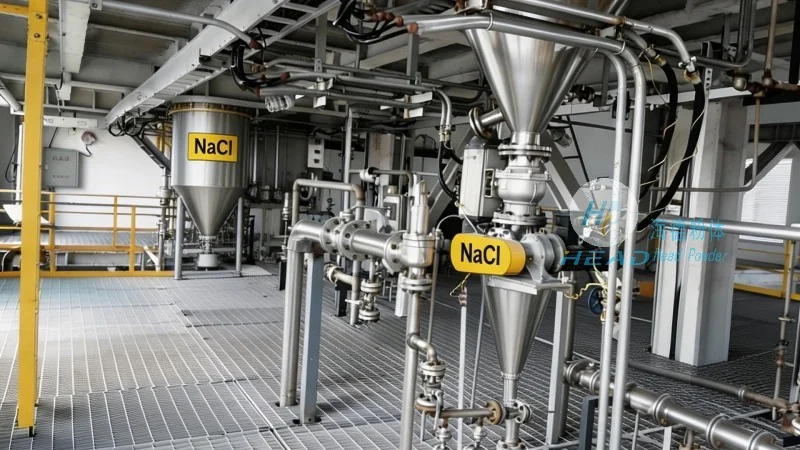
Air-flow or pneumatic conveying systems utilize compressed air to transport limestone powder granules through a pipeline. This method is ideal for handling fine powders and granules over moderate distances. There are two main types of pneumatic conveying: pressure and vacuum systems. Pressure systems use positive pressure to push material through the line, while vacuum systems create a negative pressure to draw material in. The choice between these depends on the distance and material characteristics. For limestone powder granules, pressure systems are often preferred due to their ability to handle larger volumes and higher pressures. The system typically includes a hopper, a rotary valve, a conveyor line, and a dust collector. The rotary valve feeds the material into the pipeline, and the air flow propels it to the destination. Key advantages include minimal equipment wear, as the material is not in direct contact with the conveyor components, and the ability to transport materials over long distances without the need for intermediate transfer points. However, air-flow systems require significant energy input and may not be suitable for very fine or moisture-rich powders, as they can lead to clogging or reduced efficiency.
2. Screw Conveyors
Screw conveyors, also known as auger conveyors, are mechanical devices that use a rotating screw to move limestone powder granules along a trough or tube. This method is well-suited for horizontal or slightly inclined transport over shorter distances. The screw, which is typically made of stainless steel or other corrosion-resistant materials, rotates within a housing, pushing the material forward. Screw conveyors are particularly effective for handling bulk materials with moderate to high bulk density. They are commonly used in applications where the material needs to be elevated or moved horizontally, such as in feed mills or material handling systems. The design of the screw, including its pitch and diameter, can be adjusted to optimize material flow and prevent clogging. For limestone powder granules, a helical screw with a moderate pitch is often used to ensure smooth transport. Screw conveyors offer advantages such as simplicity, low maintenance, and the ability to handle a wide range of materials. However, they are less effective for long-distance transport and may experience wear on the screw and housing over time, especially with abrasive materials like limestone.
3. Belt Conveyors
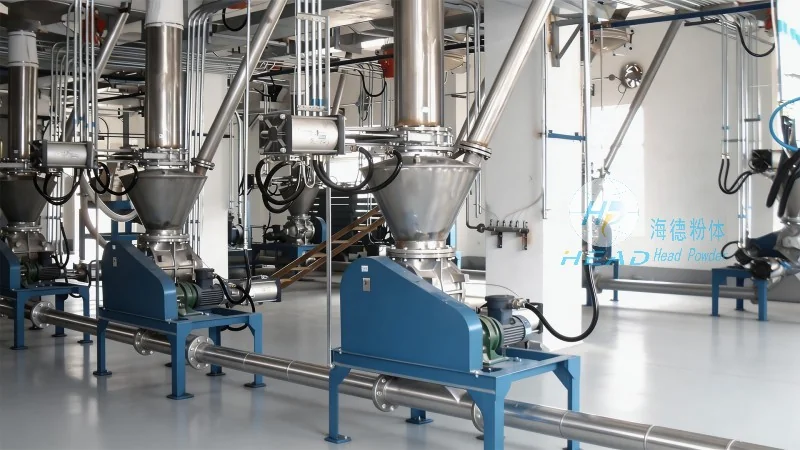
Belt conveyors are widely used for transporting limestone powder granules over longer distances, both horizontally and at an incline. This method involves a continuous belt that moves over rollers or pulleys, carrying the material from the source to the destination. The belt is typically made of durable materials such as rubber or synthetic fabrics, designed to withstand the abrasive nature of limestone powder granules. Belt conveyors are suitable for high-volume applications and can handle large quantities of material efficiently. They are commonly used in mining, construction, and manufacturing industries where bulk material transport is required. The system includes a drive unit, idlers, and a tensioning mechanism to maintain the belt's tension and ensure smooth operation. The speed of the belt and the angle of inclination can be adjusted to control the material flow rate. Belt conveyors offer advantages such as high throughput, low energy consumption per unit of material, and the ability to transport materials over long distances without intermediate transfers. However, they require regular maintenance to prevent belt wear and ensure proper alignment, and they may not be suitable for very fine powders that could cause dust accumulation or belt damage.
4. Hydraulic Conveying
Hydraulic conveying systems use water or a slurry to transport limestone powder granules through a pipeline. This method is particularly effective for handling fine powders that are prone to clogging in other systems. The material is mixed with water to form a slurry, which is then pumped through the pipeline using a high-pressure pump. The slurry flows to the destination, where it is separated from the water and the material is recovered. Hydraulic conveying is commonly used in applications where the material has high moisture content or is very fine, such as in the mining of limestone or in the processing of limestone for cement production. The system includes a slurry tank, a pump, and a pipeline network. The slurry is pumped through the line, and the water is separated at the end of the pipeline, either by gravity or through a filtration system. Key advantages of hydraulic conveying include its ability to handle very fine particles and high moisture content, as well as its low wear on equipment components. However, the system requires additional equipment for slurry separation and water treatment, and it may not be suitable for applications where water usage is restricted or where the material is highly abrasive.
5. Vibrating Conveyors
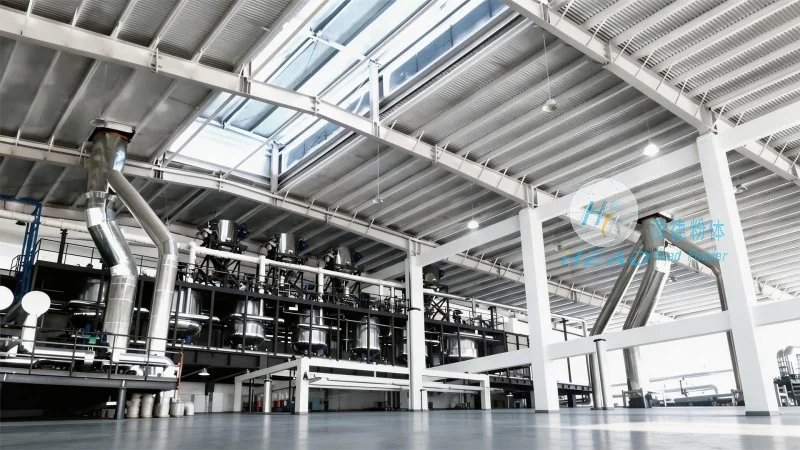
Vibrating conveyors use vibrations to move limestone powder granules along a trough. The conveyor consists of a flexible or rigid trough that is mounted on vibration motors or an unbalanced drive. The vibrations cause the material to move forward along the trough. This method is effective for handling bulk materials with moderate to high bulk density and is commonly used in applications where the material needs to be elevated or moved horizontally. Vibrating conveyors are particularly suitable for materials that are prone to clogging or have a tendency to stick to the conveyor surface, such as limestone powder granules. The frequency and amplitude of the vibrations can be adjusted to optimize material flow and prevent clogging. Key advantages include low maintenance, the ability to handle a wide range of materials, and the simplicity of the design. However, vibrating conveyors may not be suitable for very fine powders, as the vibrations can cause dust to become airborne, and they require regular inspection to ensure the vibration motors are functioning correctly.
Conclusion
The choice of limestone powder granule conveying method depends on several factors, including material properties, distance, volume, and operational requirements. Air-flow systems are ideal for fine powders over moderate distances, while screw conveyors are suitable for shorter horizontal or inclined transport. Belt conveyors are effective for long-distance transport and high volumes, and hydraulic conveying is best for fine, moisture-rich materials. Vibrating conveyors offer a simple solution for handling bulk materials. By carefully evaluating these options and considering the specific needs of the application, businesses can select the most efficient and cost-effective conveying system for their limestone powder granule transport needs. Shandong HeadPowder Engineering Co., Ltd., a leading provider of material handling solutions, specializes in designing and manufacturing custom conveying systems tailored to the unique requirements of each client. With a focus on quality and innovation, the company ensures that its systems meet the highest standards of performance and reliability, helping businesses optimize their material transport processes and improve overall operational efficiency.

 Công ty TNHH Kỹ thuật Công trình Bột Hải Đức Sơn Đông
 156-6277-7102(Quản lý Trương)
  0531-83386006
  Quận Chương Khâu, Thành phố Tế Nam, Tỉnh Sơn Đông, Trung Quốc
Điện thoại
WeChatTư vấn
Lên đầu