Công ty Hải Đức Bột với hơn 10 năm kinh nghiệm vận chuyển khí, cung cấp hệ thống‑thiết bị‑quạt gió và nhận dự án tổng thầu bột cả nước
When it comes to handling and transporting peanut kernels in industrial settings, selecting the right conveying method is crucial for efficiency, cost-effectiveness, and product integrity. Various technologies are available, each with its own advantages and applications. This article provides a detailed comparison of common peanut kernel conveying methods, helping businesses make informed decisions based on their specific operational needs. HeadPowder, a leading engineering company based in Shandong, China, specializes in designing and implementing efficient conveying solutions tailored to the unique requirements of food processing industries.
Key Factors in Choosing a Conveying System
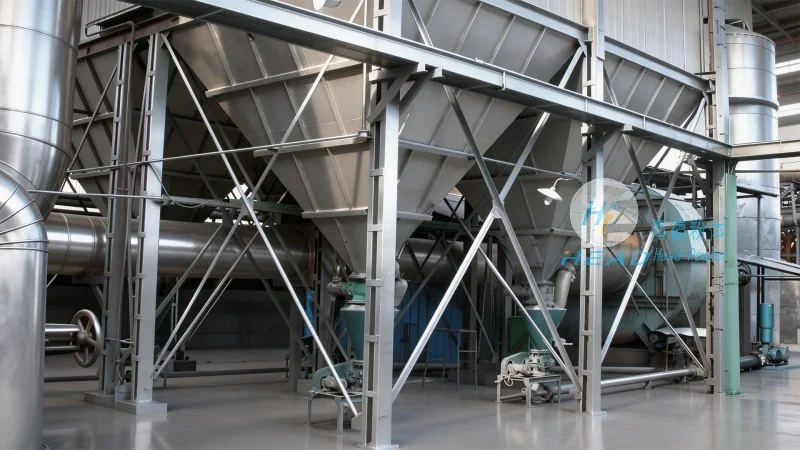
Before diving into specific methods, it's essential to consider several key factors that influence the choice of a conveying system. These include the volume of material to be handled, the distance over which it needs to be moved, the physical properties of the peanut kernels (such as size, shape, and moisture content), and the required speed and accuracy of the process. Additionally, factors like space availability, budget constraints, and the need for minimal product damage are critical considerations. Understanding these aspects ensures that the selected conveying method aligns with the overall production goals and operational requirements.
1. Gravity Conveying Systems
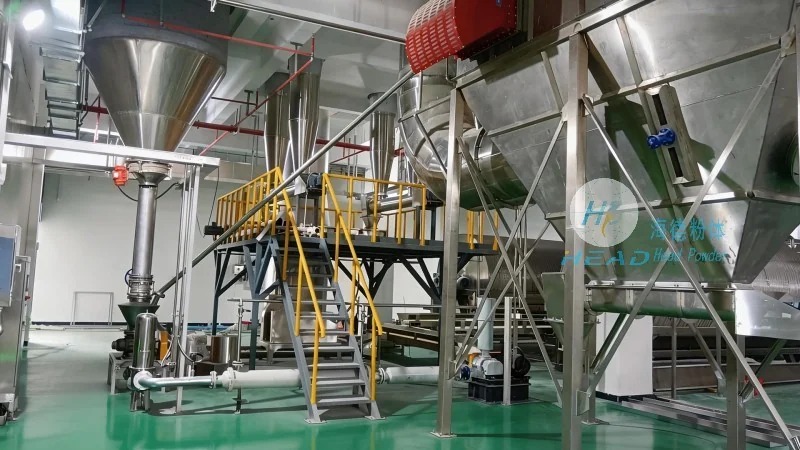
Gravity conveying systems utilize the natural force of gravity to move peanut kernels from one location to another. These systems typically consist of inclined chutes or troughs that allow the material to flow downward under the influence of gravity. The primary advantage of gravity conveying is its simplicity and low operational cost, as it requires minimal energy input and has few moving parts. This makes it an ideal choice for short-distance transfers where the material can be easily guided by gravity. However, gravity conveying is limited by the need for a suitable slope and is not suitable for long-distance or vertical transport. The system is also sensitive to material properties, as overly wet or sticky peanut kernels may not flow smoothly, leading to blockages or uneven flow. In such cases, additional equipment like vibrators or air-assisted systems may be required to maintain consistent performance.
2. Mechanical Conveying Systems
Mechanical conveying systems employ mechanical components to move peanut kernels. The most common types include belt conveyors, screw conveyors, and bucket elevators. Belt conveyors use a continuous belt that transports the material along a fixed path, making them suitable for both horizontal and inclined transport. They are highly versatile and can handle a wide range of material sizes and quantities. Screw conveyors, also known as augers, use a rotating screw to push the material forward. This method is particularly effective for handling bulk materials and can be used in both horizontal and vertical orientations. However, screw conveyors may cause more product damage due to the friction between the material and the screw, especially for delicate peanut kernels. Bucket elevators use a series of buckets attached to a chain or belt that lifts the material vertically and then deposits it at the desired location. They are ideal for vertical transport and can handle large volumes efficiently. The main drawback of mechanical conveyors is their higher initial cost and the need for regular maintenance to ensure smooth operation. Additionally, they may generate more noise and require more space compared to other methods.
3. Air-Assisted Conveying Systems
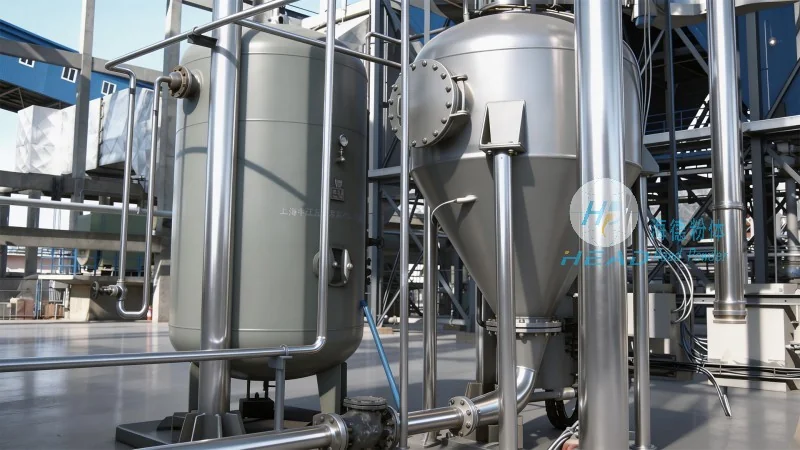
Air-assisted conveying systems, also known as pneumatic conveying, use compressed air to transport peanut kernels through a pipeline. The material is suspended in the air stream and carried to the destination. This method is highly flexible and can handle both horizontal and vertical transport over long distances. It is particularly useful for applications where the material needs to be moved through existing infrastructure or around obstacles. Air-assisted systems are also capable of handling a wide range of material sizes and can be integrated with other processing equipment. However, they require a significant amount of energy to operate and may be less efficient for very fine or lightweight materials. The system's performance can be affected by changes in air pressure and temperature, which may impact the flow rate and consistency. Additionally, the cost of compressed air and the need for proper filtration to prevent dust accumulation are important considerations.
4. Combination Conveying Systems
Many industrial applications benefit from combining different conveying methods to achieve optimal performance. For example, a gravity conveyor might be used for the initial short-distance transport, followed by a mechanical conveyor for longer distances. Alternatively, an air-assisted system could be integrated with a mechanical component to handle both vertical and horizontal transport. Combination systems allow for greater flexibility and can adapt to varying production demands. They are particularly useful in large-scale operations where different stages of the production process require different conveying technologies. However, the design and integration of combination systems can be complex and may require specialized expertise to ensure smooth operation and minimal downtime.
Conclusion and Recommendations
Choosing the right peanut kernel conveying method depends on a careful evaluation of operational requirements, material characteristics, and budget constraints. Gravity conveying offers simplicity and low cost for short-distance transfers, while mechanical systems provide versatility and efficiency for various applications. Air-assisted systems excel in long-distance and flexible transport but require more energy. Combination systems offer the best of all worlds, allowing for tailored solutions to specific needs. Ultimately, the goal is to select a conveying method that maximizes productivity, minimizes costs, and ensures the quality of the peanut kernels throughout the process. By understanding the strengths and limitations of each method, businesses can make informed decisions that align with their long-term operational goals.

 Công ty TNHH Kỹ thuật Công trình Bột Hải Đức Sơn Đông
 156-6277-7102(Quản lý Trương)
  0531-83386006
  Quận Chương Khâu, Thành phố Tế Nam, Tỉnh Sơn Đông, Trung Quốc
Điện thoại
WeChatTư vấn
Lên đầu