Công ty Hải Đức Bột với hơn 10 năm kinh nghiệm vận chuyển khí, cung cấp hệ thống‑thiết bị‑quạt gió và nhận dự án tổng thầu bột cả nước
Vanadium oxide is a critical material in various industrial applications, including the production of vanadium compounds, steel alloying, and as a catalyst in chemical processes. The efficient and reliable transportation of vanadium oxide from storage to processing units is essential for maintaining production efficiency and product quality. Different conveying methods are employed based on the material properties, production scale, and operational environment. Among these, pneumatic conveying stands out as a versatile and effective solution for handling vanadium oxide, offering advantages such as minimal product contamination, reduced labor costs, and the ability to transport materials over long distances.
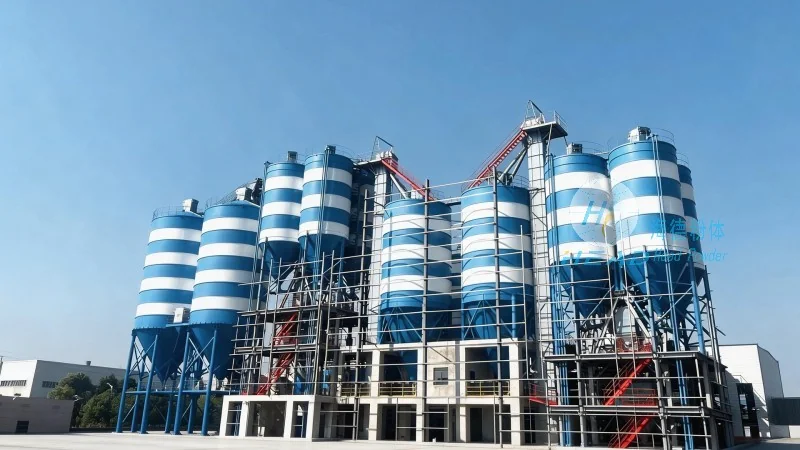
Overview of Common Vanadium Oxide Conveying Methods
Vanadium oxide, with its fine particle size and potentially abrasive nature, requires specialized conveying systems to prevent material degradation and equipment wear. Traditional methods like belt conveyors or screw conveyors may not be suitable due to the risk of particle segregation, dust generation, and mechanical stress. Therefore, several advanced conveying techniques have been developed to address these challenges. The primary methods used for vanadium oxide transportation include pneumatic conveying, hydraulic conveying, and mechanical conveying systems. Each method has its own set of advantages and limitations, making the selection dependent on specific operational requirements.
Pneumatic Conveying: A Detailed Introduction
Pneumatic conveying, also known as air conveying, is a widely adopted method for transporting vanadium oxide due to its ability to handle fine powders and abrasive materials. This technique involves the use of compressed air to move the material through a pipeline system. There are two main types of pneumatic conveying: dilute phase and dense phase. Dilute phase conveying uses low air velocity and high air-to-material ratios, suitable for short to medium distances and low to medium material flow rates. Dense phase conveying, on the other hand, employs higher air pressure and lower air-to-material ratios, ideal for longer distances and higher material flow rates, while maintaining better control over particle velocity and minimizing product degradation.
For vanadium oxide, the choice between dilute and dense phase depends on factors such as the particle size distribution, moisture content, and the distance between the source and destination. Dilute phase systems are often preferred for shorter transport distances and when the material is relatively dry and non-abrasive. Dense phase systems are more suitable for longer distances, higher material loads, and when the material has a tendency to agglomerate or is more sensitive to handling. The pneumatic conveying system typically consists of a blower or compressor, a hopper for material storage, a feed mechanism to introduce the material into the pipeline, and a receiver or discharge unit at the destination. The compressed air creates a flow that carries the vanadium oxide particles through the pipeline, ensuring a continuous and controlled transport process.
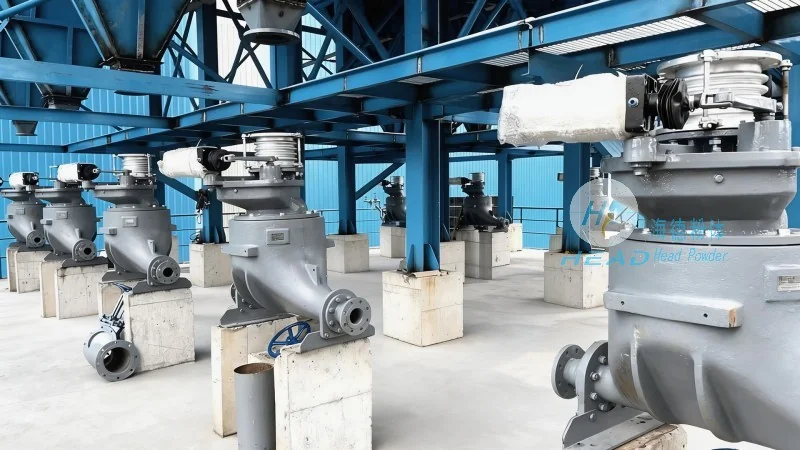
Key Advantages of Pneumatic Conveying for Vanadium Oxide
Implementing pneumatic conveying for vanadium oxide offers several key benefits that make it a preferred choice in industrial settings. First, it provides a closed system, which significantly reduces dust emissions and environmental contamination. This is particularly important for vanadium oxide, as it can be hazardous if released into the air. The closed system also prevents cross-contamination with other materials and protects the material from moisture and atmospheric exposure, maintaining its purity and quality. Second, pneumatic conveying minimizes mechanical stress on the material, as the particles are carried by air rather than being subjected to mechanical forces like those in belt or screw conveyors. This helps preserve the particle size and shape of vanadium oxide, which is crucial for its downstream applications. Third, the system is highly flexible and can be easily integrated with existing production lines. It allows for changes in material flow rates and transport distances without significant modifications to the equipment. Additionally, pneumatic conveying can handle a wide range of material properties, including different particle sizes, densities, and moisture contents, making it adaptable to various production scenarios.
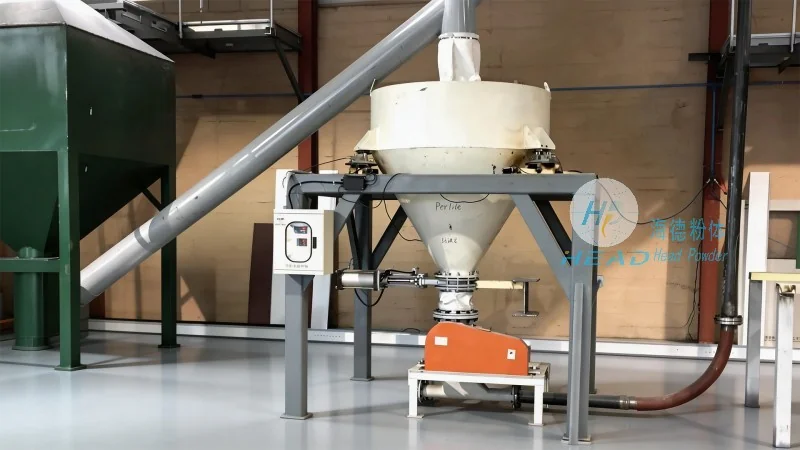
Considerations and Best Practices in Vanadium Oxide Pneumatic Conveying
While pneumatic conveying offers numerous advantages, proper design and operation are essential to maximize its effectiveness and prevent issues. One of the primary considerations is the selection of the appropriate air velocity and pressure. Too low a velocity may cause material deposition or blockages in the pipeline, while too high a velocity can lead to excessive wear on the system components and increased energy consumption. The air-to-material ratio is another critical parameter that must be optimized to ensure efficient transport without excessive energy use. Proper maintenance of the system components, such as the blower, filters, and pipeline, is also vital to prevent downtime and ensure long-term reliability. Regular cleaning of the filters and inspection of the pipeline for any signs of wear or blockages are recommended to maintain optimal performance. Additionally, the use of appropriate materials for the construction of the conveying system, such as stainless steel or corrosion-resistant alloys, is important to handle the potentially corrosive nature of vanadium oxide and prevent equipment degradation.
Conclusion
In conclusion, pneumatic conveying is a highly effective method for transporting vanadium oxide, offering a combination of efficiency, reliability, and environmental benefits. The choice between dilute and dense phase systems depends on the specific operational requirements, such as distance, material flow rate, and material properties. By carefully selecting and maintaining the pneumatic conveying system, industrial facilities can ensure the safe and efficient handling of vanadium oxide, contributing to improved production outcomes and operational efficiency. As a leading provider of specialized conveying solutions, Shandong HeadPowder Engineering Co., Ltd. offers tailored pneumatic conveying systems designed to meet the unique needs of vanadium oxide transportation, ensuring optimal performance and reliability in industrial applications.

 Công ty TNHH Kỹ thuật Công trình Bột Hải Đức Sơn Đông
 156-6277-7102(Quản lý Trương)
  0531-83386006
  Quận Chương Khâu, Thành phố Tế Nam, Tỉnh Sơn Đông, Trung Quốc
Điện thoại
WeChatTư vấn
Lên đầu