Công ty Hải Đức Bột với hơn 10 năm kinh nghiệm vận chuyển khí, cung cấp hệ thống‑thiết bị‑quạt gió và nhận dự án tổng thầu bột cả nước
For manufacturers and engineers in the lithium-ion battery industry, the efficient and reliable transport of nanomaterials is a critical factor influencing production efficiency and product quality. The choice of transport method directly affects the stability of material handling, the preservation of material properties, and the overall cost of the production process. This article provides a detailed comparison of common transport methods for lithium-ion battery nanomaterials, focusing on their advantages and disadvantages, to help professionals make more informed decisions.
Introduction to Lithium-Ion Battery Nanomaterials and Transport Challenges
Lithium-ion battery nanomaterials, such as graphite anode materials, silicon-based anode materials, and cathode active materials (e.g., lithium cobalt oxide, lithium nickel manganese cobalt oxide), often have particle sizes in the nanometer range. These materials are characterized by high surface area, high reactivity, and complex particle size distributions. During the production process, they need to be transported from one production stage to another, such as from the grinding and classification stage to the mixing and coating stage. The traditional transport methods may not be suitable for nanomaterials due to their small particle size, high specific surface area, and tendency to agglomerate. Therefore, selecting an appropriate transport method is crucial to ensure the material's integrity and the stability of the production line.
1. Airflow Transport (Pneumatic Conveying)
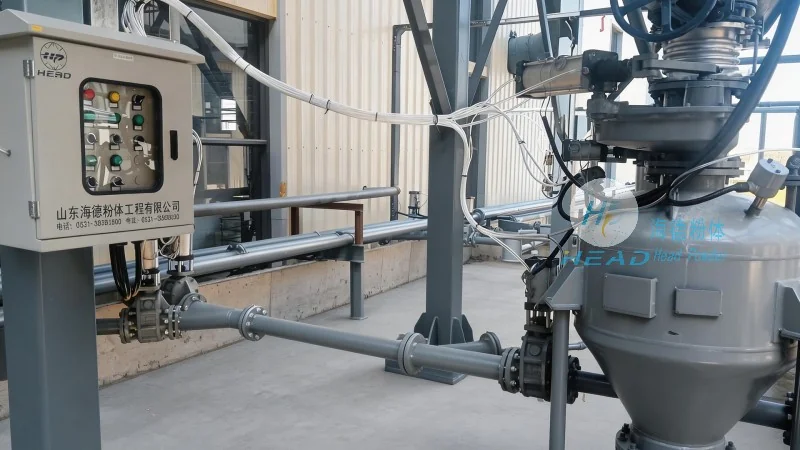
Airflow transport is a common method for transporting powders, especially for nanomaterials that are light and have good fluidity. This method uses compressed air to generate a flow that carries the material through pipelines. The advantages of airflow transport include: high transport efficiency, ability to transport materials over long distances, and low material contact with equipment, which can reduce contamination and material degradation. However, there are also some disadvantages: the system requires a stable air supply and pressure control, which increases energy consumption; for materials with poor fluidity or high moisture content, the system may be prone to blockages; and the equipment cost is relatively high, especially for large-scale production lines.
2. Screw Conveyor
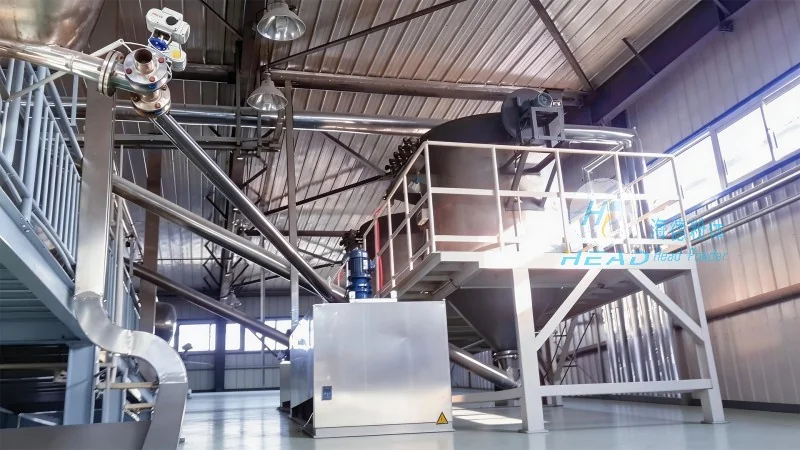
Screw conveyor is a mechanical transport device that uses a rotating screw to push materials forward. It is widely used in the transport of bulk materials, including nanomaterials. The advantages of screw conveyor include: simple structure, low cost, and easy maintenance; it can transport materials horizontally or at a small angle, and the speed can be adjusted according to the production requirements. However, the disadvantages are: the material is in direct contact with the screw and the casing, which may cause material contamination or wear; for materials with poor fluidity or high moisture content, the screw may be prone to blockage; and the transport capacity is limited, which may not meet the needs of large-scale production.
3. Vibrating Conveyor
Vibrating conveyor uses vibration to move materials along a conveyor belt or trough. This method is suitable for transporting materials with poor fluidity or high moisture content. The advantages of vibrating conveyor include: can transport materials with high moisture content or sticky materials; the material is in contact with the conveyor surface, which can prevent material segregation; and the structure is simple, with low energy consumption. However, the disadvantages are: the vibration may affect the material's particle size and shape; the system requires regular maintenance of the vibration device; and the transport capacity is limited compared to other methods.
4. Bucket Elevator
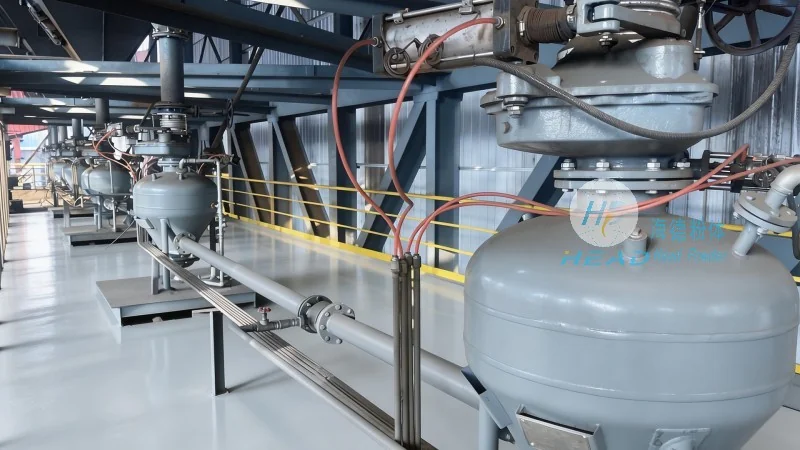
Bucket elevator is a vertical transport device that uses a chain or belt with buckets to lift materials. It is suitable for transporting materials vertically or at a large angle. The advantages of bucket elevator include: high transport capacity, stable operation, and can transport materials over long vertical distances. However, the disadvantages are: the structure is complex, with high equipment cost; the material is in direct contact with the buckets and the casing, which may cause contamination; and the maintenance cost is relatively high.
5. Combination Transport Methods
In actual production, a single transport method may not meet all the requirements. Therefore, some manufacturers use a combination of transport methods. For example, combining airflow transport with a screw conveyor can improve the transport efficiency and reduce the risk of blockages. Combining a vibrating conveyor with a bucket elevator can transport materials from a horizontal position to a vertical position. The combination of transport methods can make up for the shortcomings of each single method and improve the overall transport performance.
Company Introduction: Shandong HeadPowder Engineering Co., Ltd.
Shandong HeadPowder Engineering Co., Ltd., a professional manufacturer of powder processing equipment, provides customized solutions for the transport of lithium-ion battery nanomaterials. The company's products include various types of conveyors, such as airflow conveyors, screw conveyors, and vibrating conveyors, which are suitable for different production needs. The company's products are characterized by high quality, stable performance, and low maintenance cost. HeadPowder has rich experience in the lithium-ion battery industry and can provide professional technical support and after-sales service. The company's goal is to help customers improve production efficiency and product quality, and to promote the development of the lithium-ion battery industry.

 Công ty TNHH Kỹ thuật Công trình Bột Hải Đức Sơn Đông
 156-6277-7102(Quản lý Trương)
  0531-83386006
  Quận Chương Khâu, Thành phố Tế Nam, Tỉnh Sơn Đông, Trung Quốc
Điện thoại
WeChatTư vấn
Lên đầu