Công ty Hải Đức Bột với hơn 10 năm kinh nghiệm vận chuyển khí, cung cấp hệ thống‑thiết bị‑quạt gió và nhận dự án tổng thầu bột cả nước
When it comes to transporting limestone powder, selecting the right conveying method is crucial for efficiency, cost-effectiveness, and operational safety. Limestone powder, often used in industries such as cement production, construction, and chemical processing, requires specialized handling due to its fine particle size and potential for dust generation. This article provides a detailed comparison of common limestone powder conveying methods, highlighting their advantages and disadvantages, to help industrial operators make informed decisions. The information in this article is provided by Shandong HeadPowder Engineering Co., Ltd., a leading manufacturer of limestone powder handling equipment based in China.
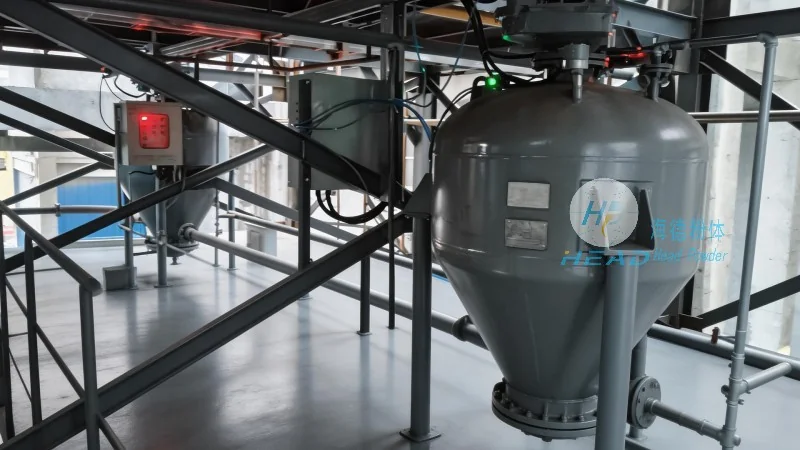
Overview of Limestone Powder and Conveying Challenges
Limestone powder, derived from crushed limestone, is a fine-grained material with a high density and low moisture content. Its small particle size (typically 0.1 to 0.5 mm) makes it prone to caking, segregation, and dust dispersion during handling. Conveying limestone powder efficiently while minimizing material loss, equipment wear, and environmental impact is a key challenge for many industries. The choice of conveying method depends on factors such as the material's properties, production scale, distance to be transported, and budget constraints.
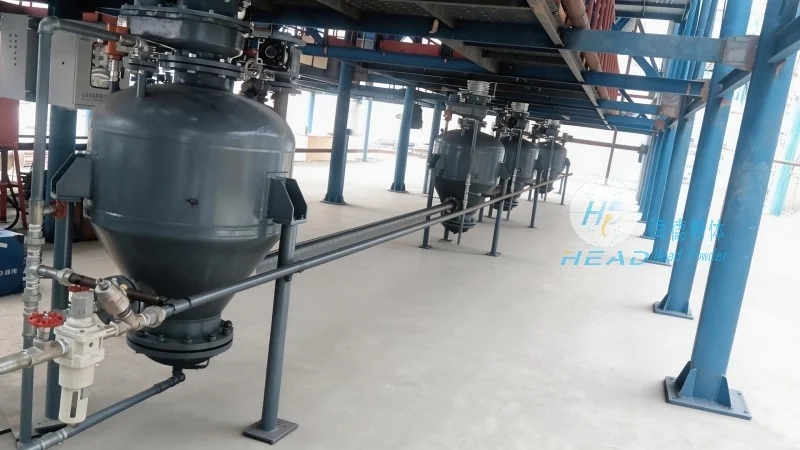
1. Pneumatic Conveying Systems
Pneumatic conveying uses air or other gases to transport limestone powder through a pipeline. This method is suitable for short to medium distances and can handle both dry and slightly moist powders. There are two main types: pressure and vacuum systems. Pressure systems use compressed air to push the material, while vacuum systems use suction to draw it. The advantages of pneumatic conveying include high flexibility, ability to transport materials over long distances, and minimal equipment wear. However, it has significant drawbacks, including high energy consumption, potential for material degradation due to friction and heat, and the need for specialized filters to control dust emissions. Additionally, pressure systems require robust seals and may experience blockages if the powder is too fine or contains moisture.
2. Screw Conveyors
Screw conveyors, also known as auger conveyors, use a rotating screw to move limestone powder along a trough. This method is ideal for horizontal or slight incline transport and is commonly used in bulk material handling. The advantages of screw conveyors include low cost, simplicity, and the ability to handle a wide range of materials, including abrasive ones like limestone powder. They are also relatively easy to install and maintain. However, screw conveyors have limitations, such as the risk of material buildup and clogging, especially with fine powders. They are not suitable for long vertical lifts and may cause particle segregation due to the rotating screw's action. Additionally, the material can wear down the screw and trough over time, leading to increased maintenance costs.
3. Belt Conveyors
Belt conveyors use a continuous belt to transport limestone powder horizontally or at a slight incline. This method is widely used in mining and construction due to its high capacity and ability to handle large volumes of material. The advantages of belt conveyors include high throughput, low energy consumption per ton-mile, and minimal material degradation. They are also relatively simple to operate and maintain. However, belt conveyors have drawbacks, including the need for regular tensioning and cleaning, and the risk of material spillage or belt damage from abrasive particles. They are not suitable for vertical transport and may require additional equipment to handle changes in elevation. The belt and pulleys can also wear down quickly with limestone powder, leading to higher replacement costs.

 Công ty TNHH Kỹ thuật Công trình Bột Hải Đức Sơn Đông
 156-6277-7102(Quản lý Trương)
  0531-83386006
  Quận Chương Khâu, Thành phố Tế Nam, Tỉnh Sơn Đông, Trung Quốc
Điện thoại
WeChatTư vấn
Lên đầu