Công ty Hải Đức Bột với hơn 10 năm kinh nghiệm vận chuyển khí, cung cấp hệ thống‑thiết bị‑quạt gió và nhận dự án tổng thầu bột cả nước
Carbon powder, a crucial material in various industrial applications, requires efficient and reliable conveying methods to ensure smooth production processes. The choice of conveying system significantly impacts operational efficiency, material integrity, and environmental compliance. This article explores common carbon powder conveying methods and highlights the advantages and features of HeadPowder's pneumatic conveying system, a leading solution from Shandong HeadPowder Engineering Co., Ltd. based in China.
Common Carbon Powder Conveying Methods
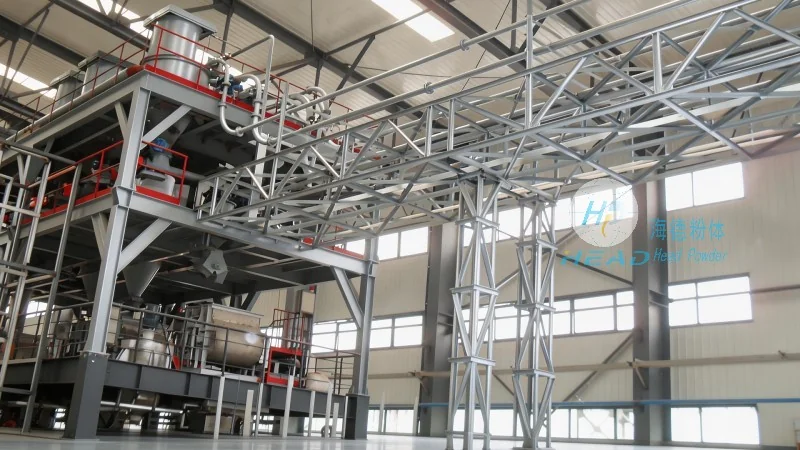
Several conventional methods are employed for transporting carbon powder, each with distinct characteristics and suitability for different scenarios. The primary options include gravity conveying, mechanical conveying, and pneumatic conveying. Understanding these methods helps in selecting the most appropriate system for specific industrial needs.
Gravity Conveying
Gravity conveying relies on the natural descent of particles under the influence of gravity. This method is typically used for small-sized carbon powders with low bulk density and minimal moisture content. It involves setting up inclined chutes or hoppers that allow the powder to flow from a higher to a lower level. While simple and low-cost, gravity conveying has limitations in terms of distance and particle size. It is suitable for short-distance, low-capacity applications where the powder can flow freely without excessive resistance.
Mechanical Conveying
Mechanical conveying systems utilize mechanical components such as belt conveyors, screw conveyors, and bucket elevators to transport carbon powder. Belt conveyors are widely used for bulk material handling, offering high capacity and durability. Screw conveyors are effective for transporting dry, free-flowing powders but may cause particle degradation due to friction and shear forces. Bucket elevators are suitable for vertical or inclined transport, providing reliable performance in dusty environments. However, mechanical systems often face challenges with dust generation, maintenance requirements, and the risk of material contamination, especially when handling fine carbon powders.
Pneumatic Conveying
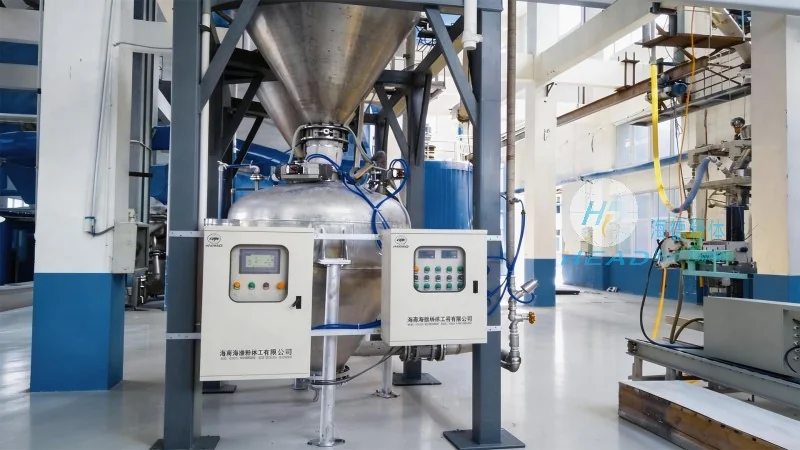
Pneumatic conveying, or air-assisted transport, is a versatile method that uses compressed air to move carbon powder through a pipeline. It can be categorized into two main types: suction (or vacuum) conveying and pressure conveying. Suction conveying draws material from a source using a vacuum pump, while pressure conveying pushes material through a pipeline using a blower or compressor. Pneumatic systems are ideal for transporting fine, dry, or dusty carbon powders over medium to long distances. They offer advantages such as enclosed transport, reduced dust exposure, and the ability to handle varying particle sizes and flow rates.
Advantages of HeadPowder's Pneumatic Conveying System
HeadPowder, as a professional manufacturer of carbon powder handling equipment, has developed advanced pneumatic conveying systems tailored to the unique requirements of carbon powder applications. The system offers several key advantages that set it apart from conventional methods.
Efficient and High-Capacity Transport
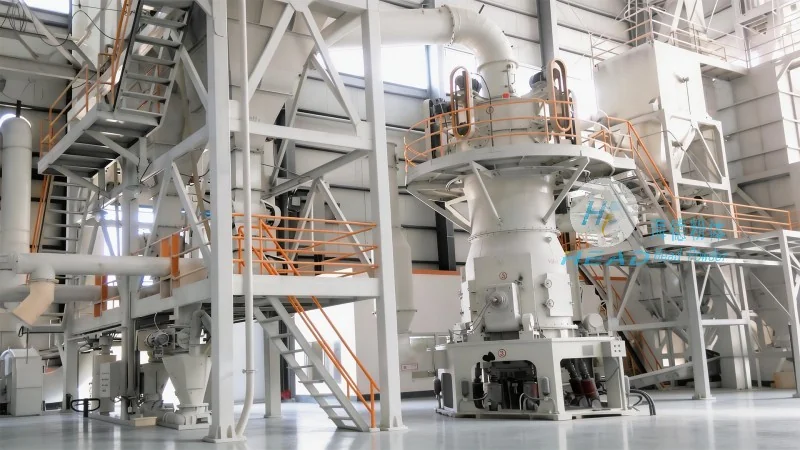
HeadPowder's pneumatic conveying system is designed to deliver high transport efficiency and capacity. By utilizing optimized air flow and pipeline design, the system ensures consistent and reliable movement of carbon powder, even for fine or cohesive particles. The use of high-performance blowers and vacuum pumps allows for efficient material handling, reducing downtime and increasing overall productivity. This capability is particularly beneficial for industrial-scale operations where large volumes of carbon powder need to be transported regularly.
Low Material Loss and High Purity
One of the significant advantages of HeadPowder's pneumatic conveying system is its ability to minimize material loss and maintain product purity. The enclosed pipeline design prevents dust leakage and contamination from external sources. Additionally, the system incorporates features such as air filtration and particle separation to ensure that the carbon powder remains clean and free from impurities. This is crucial for applications where the quality of the carbon powder directly impacts downstream processes, such as in battery manufacturing or carbon black production.
Environmental Friendliness and Safety
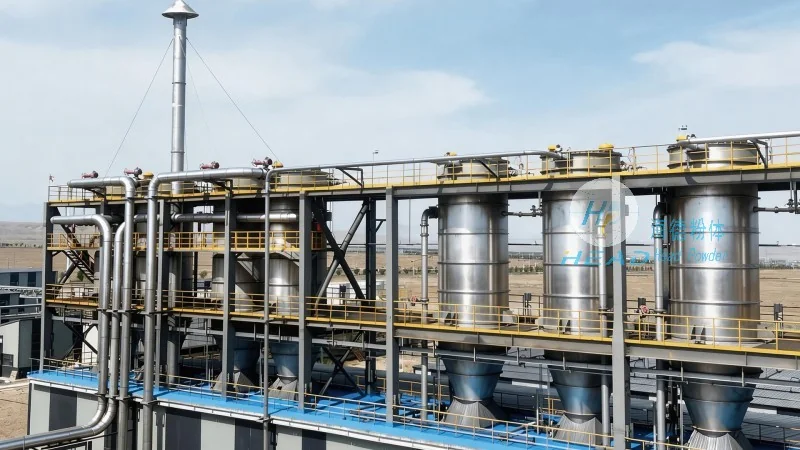
HeadPowder's pneumatic conveying system is engineered with environmental and safety considerations in mind. The enclosed transport process significantly reduces dust emissions, contributing to a cleaner working environment and compliance with environmental regulations. The system also minimizes the risk of dust explosions by controlling the concentration of dust in the air and using appropriate explosion-proof components. Furthermore, the design of the conveying lines and equipment ensures safe operation, reducing the likelihood of accidents and improving workplace safety.
Flexible and Scalable Solutions
HeadPowder provides flexible and scalable pneumatic conveying solutions that can be customized to meet the specific needs of different industrial applications. The system can be adapted for various distances, from short horizontal runs to long vertical or horizontal pipelines. It can also accommodate changes in production capacity by adjusting the air flow rate and pipeline diameter. This flexibility allows companies to scale their operations without the need for extensive system overhauls, making it a cost-effective and adaptable solution for evolving production requirements.
Reliable and Low-Maintenance Operation
The pneumatic conveying system from HeadPowder is built with durable components and advanced technology to ensure reliable operation and minimal maintenance. High-quality materials and robust construction resist wear and tear, extending the lifespan of the equipment. The system incorporates features such as automatic cleaning and monitoring to detect and address issues promptly, reducing the risk of breakdowns and maintenance costs. This reliability is essential for continuous production processes, where downtime can lead to significant financial losses.
Conclusion
Carbon powder conveying is a critical aspect of industrial operations, and the choice of conveying method directly impacts efficiency, safety, and product quality. While gravity and mechanical conveying methods have their uses, pneumatic conveying offers superior advantages for handling carbon powders, especially in terms of efficiency, purity, and environmental compliance. HeadPowder's pneumatic conveying system, developed by Shandong HeadPowder Engineering Co., Ltd. in China, stands out as a reliable and advanced solution that addresses the unique challenges of carbon powder transport. By leveraging its expertise and innovative design, HeadPowder provides tailored solutions that enhance operational performance and support sustainable industrial practices.

 Công ty TNHH Kỹ thuật Công trình Bột Hải Đức Sơn Đông
 156-6277-7102(Quản lý Trương)
  0531-83386006
  Quận Chương Khâu, Thành phố Tế Nam, Tỉnh Sơn Đông, Trung Quốc
Điện thoại
WeChatTư vấn
Lên đầu